
Lamar, Colorado
Want to see how Lamar compares to other top cities in Colorado? Explore all city regulations in Colorado. →
Lamar, CO
Challenging To Investors
STR Regulations for Lamar, Colorado
Important note on scope: The provided sources do not contain a dedicated city ordinance that specifically authorizes, licenses, or regulates short‑term rentals in Lamar. The Lamar Zoning Code defines short‑term rental and vacation rental, and it treats long‑term rentals (30 days or more) as a permitted residential use; however, it does not include a specific listing for short‑term rentals in the Schedule of Uses (Tables 30 D & E) included in the excerpt, and it does not provide city‑specific STR rules, fees, caps, or a licensing process. Where city‑specific rules are absent, this guide flags Colorado state‑level provisions that commonly apply to STRs and directs you to confirm any local details with Lamar authorities.
Overview: Are short‑term rentals allowed in Lamar, CO?
- Short‑term rentals appear permissible as a residential use, subject to underlying zoning. The Lamar Zoning Code defines short‑term rental (rental of a furnished residential dwelling for less than 30 days) and separately defines vacation rental (a property intended for permanent occupancy that is occupied on a transient basis). The code treats rentals of 30 days or more as a standard residential use. It does not expressly ban STRs in residential zones, nor does it expressly list them as a permitted or conditional use in the excerpts provided.
- Treat STRs as a residential use until Lamar confirms otherwise. Because the Schedule of Uses tables are incomplete in the excerpt, investors should verify with the City whether an STR requires a conditional use permit or other approval in R‑1/R‑2/R‑3 or any overlay districts.
- State framework applies. Colorado’s Vacation Rental Act establishes a baseline statewide system for STR licensing and regulation. If Lamar has not adopted a local STR licensing ordinance that fully preempts state rules, operators typically must comply with state‑level requirements and any local land‑use provisions.
Bottom line for investors: STRs are likely allowed as a residential use in Lamar, but you must confirm zoning approvals and any local licensing, taxes, or occupancy rules with the City before operations.
What do Airbnb hosts actually earn in Lamar?
Lamar hosts earn a median $27,044/year with $171 ADR and 68% occupancy.
Top performers pull in $33,977+ per year.
See the full Lamar market breakdownHow to start a short‑term rental business in Lamar, CO
- Confirm zoning compliance
- Determine your property’s zoning district (e.g., R‑1, R‑2, R‑3) and verify STRs are allowed (as of right or via a conditional use permit).
- Confirm building standards: single‑family vs multifamily structures, accessory dwelling units, and any historic district overlays may carry different requirements.
- Request a zoning determination letter from the City if the permitted status of STR is unclear. Keep written confirmation in your records.
- Secure approvals
- If STRs require a conditional use permit, follow Lamar’s process in Article II (Section 30‑12 through 30‑15). Expect a public hearing before the Planning & Zoning Commission and possibly City Council (depending on the action).
- Prepare submittals consistent with Section 30‑12(f) (site plan, parking/transportation study, utilities/grading plan, landscape plan, architectural elevations, lighting, narrative of how the proposal meets zoning).
- Meet building and life safety requirements
- Obtain any required building permits and inspections prior to advertising or hosting.
- Ensure compliance with adopted building and fire codes for the type of structure and occupancy.
- Address lodging taxes
- At a minimum, expect state lodging tax obligations (see “Colorado State-Level Rules” below) and any county lodging tax for Prowers County. The sources do not include current rates.
- Operate professionally
- Maintain consistent occupancy, parking, and noise control to avoid nuisance complaints.
- Keep permits, approvals, and tax registrations current; respond promptly to any notices of violation.
Required documents, permits, licenses, and guidelines
Local authority documents (Lamar Zoning Code)
- Zoning Development Application (Section 30‑12)
- Conditional Use Permit (if required) per Article II and Section 30‑35
- Building Permit (see Chapter 6 references)
- Public notice materials per Section 30‑13 (mail notice to owners within 200 ft, newspaper publication, posting on property at least 15 days before the hearing)
Standard STR documentation (confirm with Lamar and the State of Colorado)
- Property owner authorization (if leasing to a host)
- Site plan and floor plans showing sleeping/life‑safety details
- Emergency information (local contacts, posted evacuation routes)
- Proof of compliance with any state‑level licensing and safety inspection requirements (if applicable under Colorado’s Vacation Rental Act framework)
Guidance standards (from Lamar Code)
- Compliance with the dimensional standards of the subject district (Section 30‑33 and Tables 30‑B and 30‑C)
- Adherence to use standards and compatibility provisions (Sections 30‑35, 30‑38, and any specific use standards in Section 30‑39)
- Signs, parking, landscaping, lighting, and other site‑development standards as applicable
Taxes
- State lodging tax and any county lodging tax; rates not provided in the sources
City‑specific regulations (what the Lamar Zoning Code covers)
Definitions relevant to STRs
- Short‑term rental: Rental of all of a furnished residential dwelling (with kitchen, sanitation facilities, bedrooms, etc.) for less than 30 days. Hotels, motels, boarding houses, and bed & breakfasts are excluded from this definition.
- Vacation rental: A property with a dwelling unit or guest house intended for permanent occupancy that is occupied by any person other than the primary owner for transient (short‑term) use. Bed & breakfasts operated per code and occasional home exchanges are excluded.
- Dwelling unit: Separate, independent housekeeping establishment for owner occupancy, rental, or lease on a weekly, monthly, or longer basis (i.e., long‑term rentals are clearly allowed by the code’s definition of dwelling unit).
- Accessory dwelling unit: Smaller, independent residential unit with separate cooking/bathroom facilities on the same lot as the primary dwelling; must be on a permanent foundation and connected to city utilities. Does not include mobile homes, RVs, or travel trailers.
Zoning and development procedures (key excerpts)
- Section 30‑12: Zoning development applications, pre‑application conference (when a public hearing is required), completeness review (15 days), and scheduling for hearing (within 45 days of completeness). Submittal list includes survey, site plan, parking/traffic, utilities/grading, landscaping, architectural elevations, lighting, vicinity map, and a narrative.
- Section 30‑13: Public noticing standards for hearings (mail to 200 ft, newspaper publication, and on‑site posting at least 15 days prior). Notices include the nature of the matter, hearing time/date/place, agency contact, and property legal description/address.
- Section 30‑35: Conditional use criteria (consistency with the Comprehensive Plan; conformance with zoning district standards and site‑development standards; compatibility with neighboring uses; traffic and nuisance impacts; adequacy of public facilities; environmental protection).
- Section 30‑36: Conditional use permit expiration and enforcement (automatic expiration if not established within the time allowed; renewals, extension requests, violation notices, and revocation authority).
- Section 30‑33 and Tables 30‑B/30‑C: Dimensional standards by district (e.g., minimum lot size, setbacks, height, lot coverage).
Important gaps in the provided materials
- The Schedule of Uses (Tables 30 D & E) is truncated; whether STRs are listed as permitted, conditional, or prohibited in each residential district is not shown in the excerpts.
- No city‑specific STR licensing or registration ordinance, no occupancy caps, no host license fees, and no local lodging tax rate are provided.
- No Lamar Fire Department or Building Department rules specific to STRs (e.g., safety inspection checklists) are included.
- No city contact information is provided in the sources.
County‑level regulations
- The first source is about Larimer County, not Prowers County. It does not apply to Lamar (located in Prowers County). No Prowers County‑specific STR regulations or tax information were provided in the materials.
Colorado state‑level rules for STRs (baseline framework)
Colorado’s Vacation Rental Act establishes a statewide licensing and regulatory framework for short‑term rentals. While this guide does not quote statutory citations from your sources, investors should expect the following under state law unless Lamar has adopted an alternative local process that fully preempts state rules:
- License and identification: STR hosts are typically required to obtain a state lodging license/registration and display/quote the license number in advertisements and booking confirmations.
- Safety and inspections: Properties must meet specified safety standards (e.g., smoke and carbon monoxide alarms, fire extinguishers) and may be subject to inspection.
- Taxes: Hosts generally must collect and remit state lodging taxes and any applicable local lodging taxes. The sources do not provide rates or instructions for Prowers County.
- Advertising and booking compliance: Listings must include required disclosures (license number, contact information, occupancy limits, etc.) and follow booking platform rules.
- Enforcement and local overlay: State authorities and local governments share enforcement roles. Cities may impose additional land‑use, safety, or tax rules that supplement or, in some cases, preempt state provisions.
Given the absence of Lamar‑specific STR rules in your materials, you should assume state requirements apply and contact the City to confirm whether Lamar has adopted a separate STR licensing/registration ordinance that affects your obligations.
Contact information (where to verify and apply)
The sources do not include email addresses or direct phone numbers for Lamar’s Planning & Zoning, Building, or City Administration. Because the provided materials are incomplete, contact information is not available from the content supplied.
What to ask Lamar authorities
- Zoning: Is an STR a permitted, conditional, or prohibited use in R‑1/R‑2/R‑3 and any applicable overlay districts?
- Permitting: What building and life‑safety requirements apply (inspections, posted emergency info)?
- Licensing/registration: Does the City require an STR host license or registration?
- Taxes: City or county lodging tax rate, collection/remittance procedures, and any business license requirements.
- Occupancy and operations: Maximum occupancy, parking, noise, and signage rules specific to STRs.
- Enforcement: Complaint process, penalties, and revocation standards for STR permits.
Links to source pages (provided)
- Larimer County – Short‑Term Rentals Regulation Update: www.larimer.gov/planning/short-term-rentals-regulation-updates
- City of Lamar – Zoning Code (Chapter 30): ci.lamar.co.us/files/bcb598277/Chapter_30___ZONING+Updated+Code+final.pdf
Key takeaways for STR investors in Lamar
- STRs appear compatible with the Code’s residential use framework, but the provided Zoning Code excerpt does not list STRs in the Schedule of Uses. Confirm permitted status and any conditional use requirements before purchase or listing.
- If Lamar has not adopted a local STR licensing ordinance, plan to comply with Colorado’s Vacation Rental Act (state licensing, safety standards, taxes, and advertising rules).
- Secure written zoning confirmation, obtain all required building permits, and prepare for public hearing processes if a conditional use permit is needed. Maintain robust compliance to avoid enforcement.
Next step
Found a property in Lamar?
Paste any address and get estimated revenue, cash-on-cash return, and comparable STR performance in under 5 minutes. 3 free analyses per day.
Free brief
Get the free Lamar STR Investment Brief
Revenue data, top neighborhoods, seasonal trends, and the key regulations for Lamar, Colorado in one email.
Lamar
Market Saturation Score
Photos of Lamar


Overview of Lamar
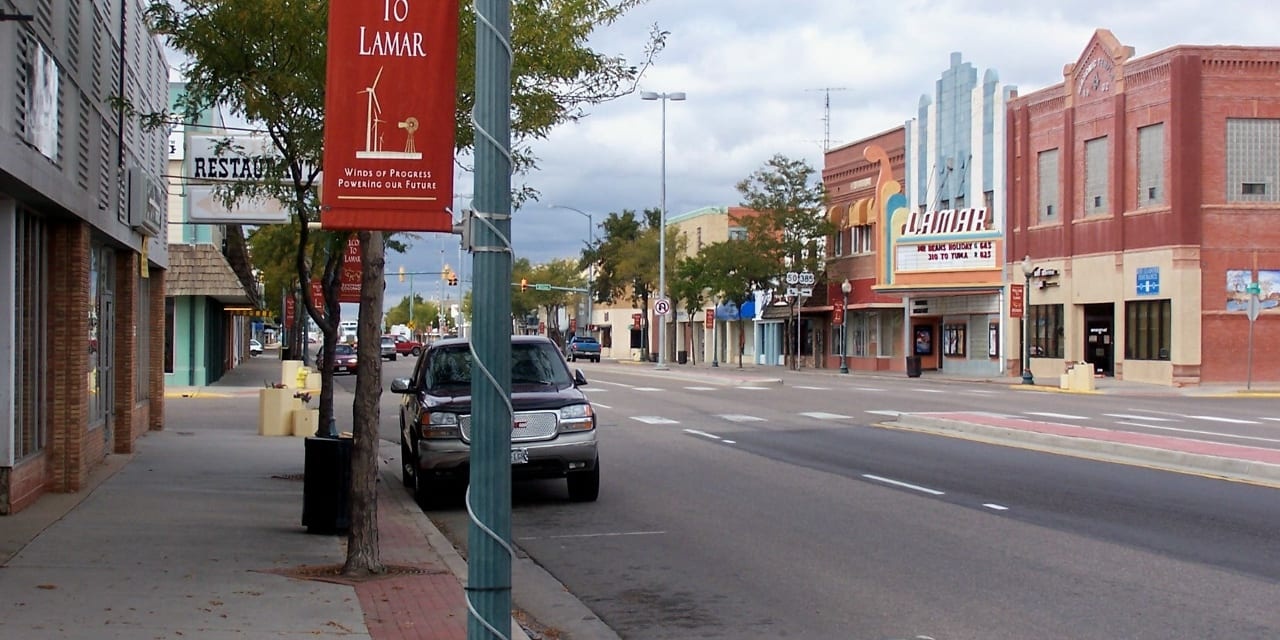
Lamar is a small, high-plains city in Prowers County in southeastern Colorado, with a population of approximately 7,800. It sits along the Arkansas River and serves as the commercial and agricultural hub of a wide, flat region of rangeland and irrigated farms. The town has a quiet, working Western character, anchored by a historic brick downtown and a slow, easygoing pace. It is best known as a gateway to the surrounding prairie and to outdoor areas like the Comanche National Grassland, and it lies roughly 120 miles east of Pueblo and about 170 miles southeast of Colorado Springs.
Just south and west of Lamar lies the Comanche National Grassland, a vast expanse of shortgrass prairie managed by the U.S. Forest Service. The grassland covers hundreds of thousands of acres of canyons, bluffs, and rolling plains, and offers visitors a chance to see prehistoric petroglyphs, dinosaur track sites, remnants of pioneer-era history, and a surprising abundance of wildlife. Depending on which unit travelers head for, drive times from Lamar range from about half an hour to a little over an hour.
About twenty minutes east of Lamar, near the small community of Hasty, sits John Martin Reservoir State Park, one of Colorado's larger lakes and a popular regional destination for fishing, boating, swimming, and camping. The reservoir was created by a dam on the Arkansas River, and the surrounding park offers full-service campgrounds, a swim beach, and reliable catfish and walleye fishing. It is the kind of low-key, family-friendly outdoor stop that pairs naturally with a stay in Lamar.
South of town, a stretch of the Arkansas River known as Big Timbers preserves one of the last remaining stands of native cottonwood forest along this reach of the river, a place once famously visited by Kit Carson and other early travelers. The same area lies along the historic Santa Fe Trail, and travelers can still find wagon ruts and interpretive markers in the countryside around Lamar. Together, these historical and natural touches give the area a sense of depth that goes well beyond its wide-open scenery.
Lamar appeals to short-term rental owners because it sits at a quiet crossroads of the Southern Plains: close enough to Colorado's larger Front Range cities to draw road-trippers, yet far enough out to feel like a real departure. Visitors come for the grassland, the reservoir, the river, and the trail, and they appreciate having a comfortable base between the prairie and the highway. With its small-town character and easy access to a surprising mix of outdoor and historical attractions, Lamar offers steady, niche appeal for travelers who prefer open country over the usual resort destinations.
Want to know if a property in Lamar is a good investment?
Enter an address to get instant revenue potential and comps.