
Frisco, Colorado
Want to see how Frisco compares to other top cities in Colorado? Explore all city regulations in Colorado. →
Frisco, CO
Challenging To Investors
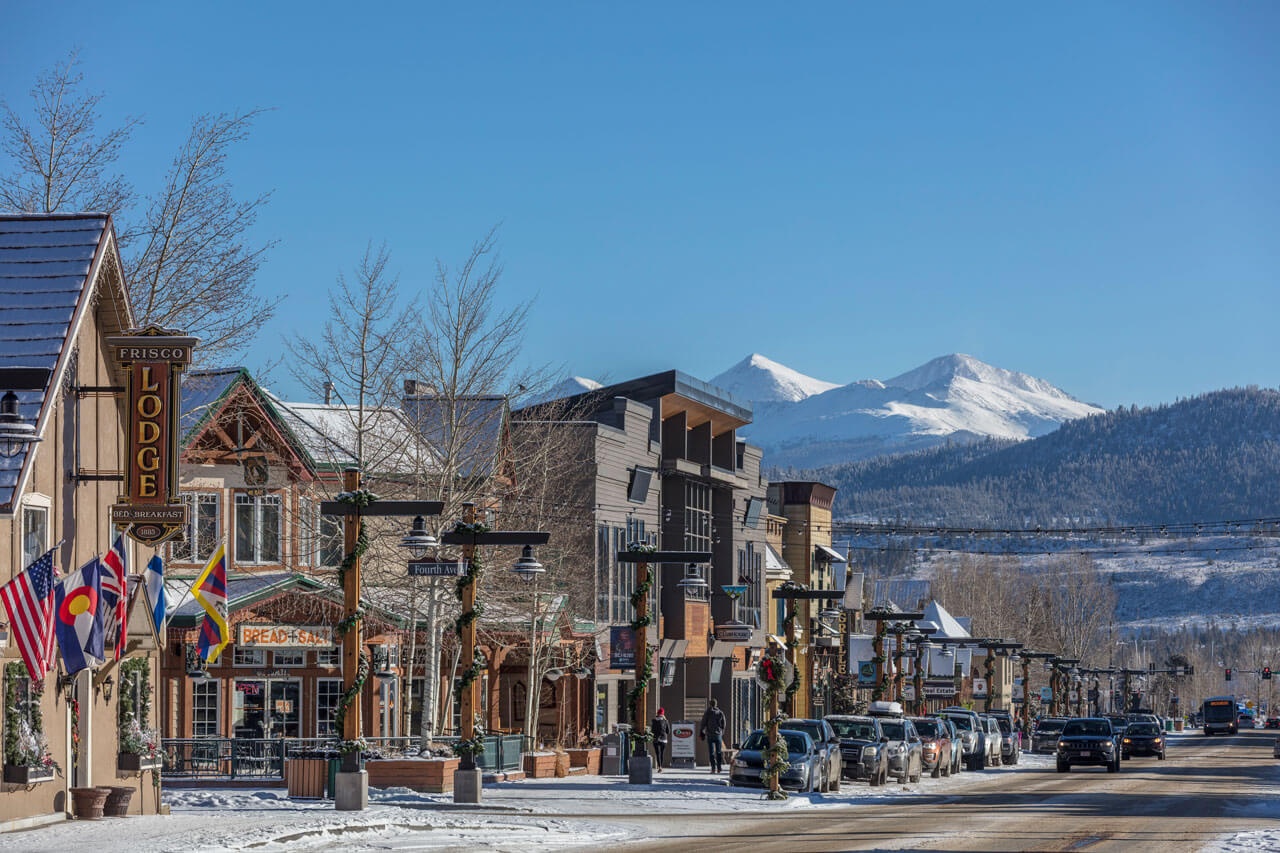
STR Regulations for Frisco, Colorado
Overview: Are Short-Term Rentals Allowed in Frisco, CO?
YES — Short-term rentals are permitted in Frisco, Colorado. However, they are strictly regulated to preserve community character and address neighborhood impacts. The Town of Frisco regulates both the quantity and manner of STR operations, with licenses limited to 25% of the residential housing stock (maximum 900 licenses out of 3,600 total residential units).
Important Market Note: As of February 2023, Frisco reached its STR license cap and implemented a waitlist system for new applicants. With approximately 500 traditional hotel/motel rooms and over 40 years of STR activity, short-term rentals remain an important part of Frisco's tourism economy, but expansion opportunities are limited by the quota system.
What do Airbnb hosts actually earn in Frisco?
Frisco hosts earn a median $39,266/year with $311 ADR and 53% occupancy.
Top performers pull in $57,278+ per year.
See the full Frisco market breakdownHow to Start a Short-Term Rental Business in Frisco
Initial Requirements Assessment
- Property Eligibility Check: Confirm your property falls within Frisco town boundaries (not unincorporated Summit County)
- Housing Stock Impact: Understand that Frisco limits STR licenses to 25% of residential housing stock
- Waitlist Status: Since February 2023, new applications are placed on a waitlist due to reaching the cap
Licensing Application Process
- Application Submission: Apply through the Town of Frisco's online portal
- Required Documentation: Submit all mandatory documents simultaneously with application
- Fee Payment: Pay annual license fee of $250 (no proration available)
- Review Process: Town staff reviews applications for completeness and compliance
- License Activation: Upon approval, license becomes active (expires April 30 annually)
Renewal Process
- Annual Window: February 20 through April 30
- Fee: $250 renewal fee
- License Expiration: All licenses expire April 30
- Consequences: Operating with expired license results in violations
Required Documents, Permits, Licenses, and Guidelines
Primary License Requirements
Short-Term Rental License
- Annual Fee: $250
- Validity: One year (expires April 30)
- No Proration: Fees are not prorated for partial-year applications
Mandatory Documentation
1. Parking Plan
- Photograph or illustration showing allowable parking spaces
- Must indicate each parking space location
- Prohibitions: No parking on landscaped areas, public streets, or public right-of-ways
- Guest restrictions: No overnight vehicle occupancy permitted
- Submission requirement: Submit to town and share with guests
2. Life Safety Affidavit
- Signed attestation of property compliance with Town building, technical, and safety codes
- Required installations and maintenance:
- Smoke detectors (properly installed and operable)
- Carbon monoxide detectors (properly installed and operable)
- Fire extinguishers (properly installed and operable)
- Annual chimney cleaning for all wood-burning fireplaces, stoves, and chimneys
3. Information Notice for Guests Must include highly visible placement and cover:
- Emergency contacts (911 for emergencies, 970-668-8600 for non-emergencies)
- Physical property address
- 24/7 emergency contact information
- STR license number
- Fire extinguisher locations and fire escape routes
- Parking locations (with photographs/narratives) and maximum vehicle count
- Alternative parking options for overflow vehicles
- Trash and recycling receptacle locations and disposal rules
- Snow removal instructions
- Noise policy compliance requirements
- Pet policies
- HOA policies (if applicable)
4. Emergency Contact Designation
- Must designate a responsible agent available 24 hours/day, 7 days/week
- Required to respond to and resolve guest-related complaints
- Contact information must be provided to guests
Specific Regulations: City, County, and State Level
Frisco Town Regulations (Municipal Code)
Licensing and Operations
- License Cap: Maximum 25% of residential housing stock (900 licenses maximum)
- Definition: STRs are rentals for less than 30 consecutive days
- Universal Application: Regulations apply regardless of marketing method (online platforms, management companies, newspapers, word-of-mouth)
Occupancy Limits
- Formula: Maximum 2 individuals per bedroom plus 4 additional occupants
- Example: 2-bedroom unit = maximum 8 occupants
- Enforcement: Guests may be held responsible for occupancy violations
Operational Prohibitions
- No outdoor overnight camping
- No overnight use of recreational vehicles or trailers
- No parking on landscaped areas, public streets, or public right-of-ways
- No overnight occupancy in parked vehicles
Safety and Maintenance Requirements
- Annual chimney cleaning mandatory for wood-burning fireplaces/stoves/chimneys
- Life safety equipment must be properly installed and maintained
- Smoke and carbon monoxide detectors required
Advertising Requirements
- All advertisements must include Town STR license number
- Must display approved maximum occupancy
- Failure to comply results in violation notices
Compliance Areas
- Trash/Recycling: Must comply with Municipal Code Section 127-17
- Noise: Must comply with Municipal Code Section 127-53
- Nuisance: Various nuisance provisions apply
Summit County Regulations (Unincorporated Areas)
Note: Summit County regulates STRs in unincorporated areas (outside town boundaries). If your property is in unincorporated Summit County:
- STRs are permitted but require county STR license
- Different application process and requirements
- Tax obligations also apply
- Contact Summit County Community Development for details
State of Colorado Regulations
Taxation Requirements
- STR operators must collect and remit lodging taxes
- Total tax rate in Frisco: 15.725% of booking value
- Monthly remittance required
- Separate from license fees and federal/state income taxes
Contact Information for Local STR Authorities
Primary Contacts - Town of Frisco
Short-Term Rental Support
- Phone: 970-668-2571
- Email: Contact through Frisco.gov website
Kyle Ottinger, Community Development Specialist
- Phone: 970-668-2571
- Email: Contact through Frisco.gov website
- Role: Primary contact for STR licensing questions
Town Hall Main Line
- Phone: 970-668-5276
- Address: PO Box 4100, 1 Main Street, Frisco, CO 80443
Complaint Reporting
24-Hour STR Complaint Hotline
- Phone: 970-668-8600 (non-emergency police line)
- Use for: Parking, noise, trash, occupancy violations, suspected unregistered properties
- Emergency: 911
Summit County Contacts (Unincorporated Areas)
General STR Help
- Email: str@summitcountyco.gov
- Phone: 970-668-4186
STR Sales Tax Questions
- Email: strsales@summitcountyco.gov
- Phone: 970-453-3439
STR Complaints (County)
- Method: Online reporting system available on county website
- Address: Planning Department, 0037 Peak One Drive, Frisco, CO 80443
- Hours: Monday-Friday, 8am-5pm
Links to Source Pages
Official Frisco Government Sources
- Main STR Page: www.friscogov.com/departments/community-development/short-term-rentals-in-frisco/
- STR Guide & FAQs: www.friscogov.com/departments/community-development/short-term-rentals-in-frisco/short-term-rental-guide-and-faqs/
- License Application Process: www.friscogov.com/departments/finance/sales-and-lodging-tax/short-term-rental-license-application-process/
- Tax Information: www.friscogov.com/departments/community-development/short-term-rentals-in-frisco/short-term-rental-taxes-and-payments/
- Complaint Filing: www.friscogov.com/departments/finance/sales-and-lodging-tax/short-term-rental-license-application-process/file-a-short-term-rental-complaint/
Summit County Sources (Unincorporated Areas)
- County STR Information: www.summitcountyco.gov/services/community_development/short_term_rentals/index.php
- STR Regulations (County): www.summitcountyco.gov/services/community_development/short_term_rentals/str_regulations.php
- License Applications (County): www.summitcountyco.gov/services/community_development/short_term_rentals/license_applications.php
- STR Tax Information (County): www.summitcountyco.gov/services/community_development/short_term_rentals/tax_information.php
- STR Mapping Tool: summitcountyco.maps.arcgis.com/apps/instant/sidebar/index.html?appid=9f5eb23df8b343ee8621c17f5fa634b9
Important Documents (PDFs)
- Frisco STR Guide: www.friscogov.com/wp-content/uploads/2025/06/What-You-Need-to-Know-About-STRs-11OCT2022.pdf
- Frisco STR FAQs: www.friscogov.com/wp-content/uploads/2025/06/STR-FAQ-1.pdf
- Good Neighbor Guidelines: www.friscogov.com/wp-content/uploads/2025/09/Good-Neighbor-Guidelines-September-2025.pdf
- Frisco STR Ordinance: www.friscogov.com/wp-content/uploads/2025/06/ORD-22-10.-110-39._13JAN23-2.pdf
Informational Resources
- Rent Responsibly Frisco Page: www.rentresponsibly.org/co/frisco/ (Note: This is for informational purposes only; always refer to official government sources)
Key Investment Considerations
Market Constraints: The 25% housing stock cap and waitlist system significantly limit new market entry opportunities in Frisco. Existing licenses represent valuable assets with transfer restrictions that should be thoroughly investigated.
Compliance Costs: Beyond the $250 annual license fee, budget for 15.725% tax collection/remittance, annual chimney cleaning, life safety equipment maintenance, and potential enforcement costs.
Operational Requirements: The 24/7 emergency contact requirement and comprehensive guest information mandates create ongoing operational obligations that must be planned for in your business model.
Enforcement Risk: Violations can result in license suspension (up to 150 days) or revocation (up to 1 year), with appeal rights limited to 5 working days following adverse actions.
Always verify current regulations directly with the Town of Frisco Community Development Department before making investment decisions, as municipal codes and enforcement practices may evolve.
Next step
Found a property in Frisco?
Paste any address and get estimated revenue, cash-on-cash return, and comparable STR performance in under 5 minutes. 3 free analyses per day.
Free brief
Get the free Frisco STR Investment Brief
Revenue data, top neighborhoods, seasonal trends, and the key regulations for Frisco, Colorado in one email.
Frisco
Market Saturation Score
Photos of Frisco
Overview of Frisco
Frisco is a small mountain town in Summit County, Colorado, set in the heart of the Rocky Mountains. With a population of approximately 2,800 to 3,000 residents, it functions as a compact alpine community whose economy and identity revolve around year-round outdoor recreation. The town sits along the western shore of Dillon Reservoir and serves as a popular gateway to several of Colorado's most prominent ski resorts, including Breckenridge, Copper Mountain, and Keystone. Frisco lies along Interstate 70, roughly 70 to 80 miles west of Denver, making it a relatively accessible high-country destination from the Front Range.
Dillon Reservoir, often referred to as Lake Dillon, is a large high-elevation reservoir that wraps around the northern and eastern edges of town. The lake supports a marina, paddleboard and kayak rentals, a paved recreational path, and a seasonal sailing program, and it hosts rowing regattas and other events that draw visitors throughout the warmer months. Because the shoreline is essentially at the town's edge, the Dillon Reservoir is a defining feature for any Frisco stay.
Just a few miles to the west along Interstate 70, Copper Mountain Resort offers skiing and snowboarding across varied terrain, plus a summer schedule of hiking, mountain biking, and an alpine slide accessed by chairlift. The resort village is roughly a ten-minute drive from Frisco's town center, and many guests choose to stay in Frisco while commuting to the slopes. More information is available through the Copper Mountain Wikipedia entry.
A short drive south, Breckenridge combines one of Colorado's largest ski areas with a preserved Victorian mining town. The resort's high-alpine terrain and the town's walkable Main Street, lined with restaurants, galleries, and independent shops, attract visitors year-round. Breckenridge is connected to Frisco by a roughly 15-minute drive or a paved recpath that cyclists and walkers use in the warmer months.
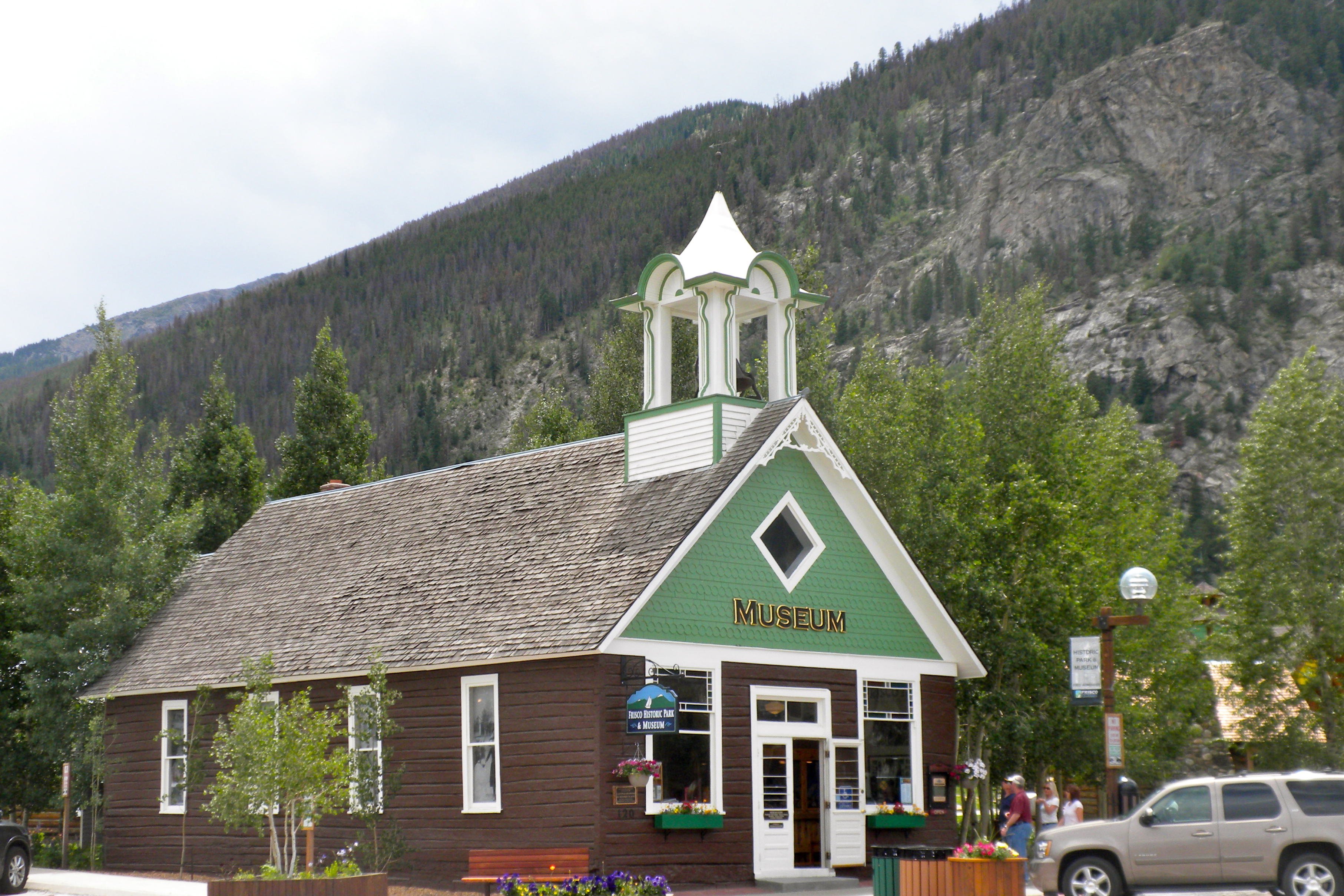
For a closer look at local history, the Frisco Historic Park preserves a collection of nineteenth-century log cabins, a one-room schoolhouse, and a former jailhouse on a single walkable site just off Main Street. Interpretive signs and a small museum recount the area's late-1800s mining and railroading roots. The park is within walking distance of most of Frisco's lodging and is a frequent stop for visitors interested in the town's heritage.
Frisco's combination of walkable small-town character, immediate lake access, and proximity to multiple ski areas makes it a natural base for short-term rental operators. Guests who book a stay here can spend mornings paddleboarding on Dillon Reservoir, afternoons wandering the historic streets of Breckenridge, and evenings dining along Frisco's own Main Street, all without changing accommodations. With reliable highway access, an established network of regional shuttles, and a steady flow of travelers seeking a quieter alternative to the busier resort villages, Frisco offers the kind of year-round demand that supports a well-located vacation rental.
Want to know if a property in Frisco is a good investment?
Enter an address to get instant revenue potential and comps.