
Fort Morgan, Colorado
Want to see how Fort Morgan compares to other top cities in Colorado? Explore all city regulations in Colorado. →
Fort Morgan, CO
Challenging To Investors
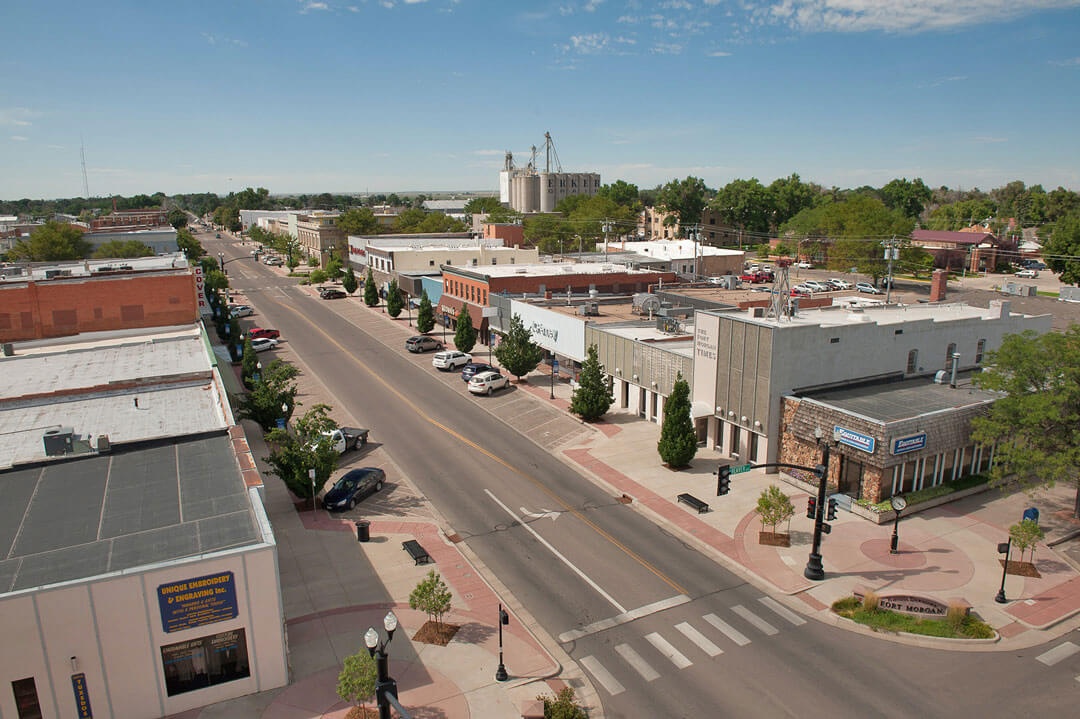
STR Regulations for Fort Morgan, Colorado
Overview: Are Short-Term Rentals Allowed in Fort Morgan?
Yes, short-term rentals are likely permissible as a lodging use in Fort Morgan. The City’s Zoning and Land Use Code does not specifically define or prohibit short‑term rentals; however, lodging‑type operations are explicitly permitted in multiple zoning districts. Specifically, hotels, motels, tourist courts, boarding and rooming houses are allowed uses in the B‑1 Business District and the R‑3 Residential District (and, in R‑3, subject to “boarding and rooming houses” being a permitted use). Business districts broadly permit “any use permitted in R‑1, R‑2, R‑3 or T,” meaning lodging‑type uses are likely allowed, provided other dimensional and parking standards are met. Additionally, B‑2 Industrial allows “any use permitted” in B‑1 and R‑3 without listing hotels/motels specifically, but it permits commercial operations that do not cause unusual nuisances and defers to R‑3 standards for lodging types.
The code treats hotels, motels, boarding houses and tourist courts as distinct from “dwellings.” Therefore, converting a single-family dwelling to nightly rental may require a change in use to a lodging classification and compliance with the corresponding district standards. On the residential side, boarding/rooming houses are permitted in R‑3 (multiple‑family residential), but “dwelling” definitions and single‑family zoning (R‑1, R‑2) do not expressly accommodate lodging operations. In practice, this points to two viable paths: (1) operate as a lodging use in business districts (B‑1 preferred; B‑2 or Industrial may be suitable if conditions can be met), or (2) use a property in a district that explicitly permits lodging (e.g., R‑3 for boarding/rooming house uses).
Given the absence of an explicit short‑term rental prohibition and the presence of lodging uses across districts, STRs are likely allowed; however, final determinations are made through zoning review and site plan approval when applicable. Investors should verify the exact district of their parcel and secure zoning interpretation or a use determination before proceeding.
What do Airbnb hosts actually earn in Fort Morgan?
Fort Morgan hosts earn a median $20,120/year with $98 ADR and 83% occupancy.
Top performers pull in $25,587+ per year.
See the full Fort Morgan market breakdownHow to Start a Short-Term Rental Business in Fort Morgan
-
Select a compliant property
- Confirm zoning with the Community Development Department. Lodging uses are commonly accommodated in B‑1 Business and R‑3 Residential (for boarding/rooming houses), and may be permissible in B‑2 Industrial under R‑3 limitations.
- Avoid starting in R‑1 and R‑2 unless special approval is obtainable; these are principally residential zones and do not list lodging uses.
-
Determine required approvals
- If operating as a lodging use in B‑1/B‑2 or R‑3, verify whether Site Plan Review applies. According to the City’s Site Plan Review Section 14A‑02, the following triggers review: all commercial buildings and uses; all non‑residential buildings in residential districts; building conversions from commercial to residential ground‑floor apartments; and all conditional uses.
- Conversion of a residential structure to lodging will likely require planning review and may require a zoning permit, a building permit for change‑of‑use, and potentially safety inspections.
-
Prepare and submit applications
- Zoning Permit/Use Determination: Contact the Community Development Department to confirm the applicable use category (e.g., hotel/motel, boarding/rooming house, or other lodging classification) and required zoning approvals.
- Site Plan (if required): Follow Section 14A submittal requirements, including a pre‑application conference, detailed site plan with utilities, parking, drainage, accessibility, signage, fencing/screening, lighting, and as‑built drawing obligations at completion. Public hearings may be required.
- Building Permits: Engage the Building Division for change‑of‑use or improvements (e.g., life safety retrofits, accessibility, fire and egress, and related code compliance). The City has adopted the 2003 International Building Codes and 2005 National Electric Code.
-
Meet parking and dimensional standards
- Off‑street parking: The City’s supplemental regulations require off‑street parking for hotels/motels/boarding houses at one space per unit (Section 14G). For multiple‑family dwellings, the requirement is two spaces per dwelling unit. Location and surface requirements vary by district (e.g., within 100 feet in Residential/Transitional, within 300 feet in Business/Industrial; materials must meet dust‑free standards).
- Dimensional and yard standards vary by district (e.g., front/side/rear setbacks in B‑1 typically include a 50‑foot front yard from the centerline, and reduced or no side yards except where adjacent to residential districts; R‑3 dimensional limits include 25‑foot front and rear yards, 5‑foot side yards, and minimum floor area per unit).
-
State‑level registration and safety checks
- Register with the Colorado Secretary of State for short‑term rentals (Statewide STR registration begins January 1, 2025; renewals due annually by January 31). Attach your registration number to your local applications and maintain proof of active status.
- Complete required safety inspections and certifications (smoke/CO detectors; posted egress and safety information; address identification; local contact requirements) as defined by the state program (C.R.S. 38‑13‑501 et seq.; SB24‑218).
-
Local tax obligations and business compliance
- Obtain a local sales/use tax account and lodging tax account through the City or County, depending on collection responsibilities. Apply for and display any required local business license.
- Ensure lodging taxes are collected and remitted as required by City/County rules.
-
Ongoing compliance
- Maintain state STR registration and safety check renewals.
- Keep records for building permits, site plan approvals, and as‑built drawings (Section 14A‑14).
- Monitor parking, lighting, signage, trash enclosure, and nuisance controls to comply with district standards.
Required Documents, Permits, Licenses, and Guidelines
- Zoning Use Determination and Zoning Permit (Community Development)
- Site Plan Approval (if required under Section 14A‑02)
- Building Permits and Inspections for change‑of‑use, life safety retrofits, and code compliance
- Proof of State STR Registration (Colorado Secretary of State) and safety certification completion
- Local Business License and tax accounts (sales/use; lodging tax)
- Parking plan, access/ circulation, and snow storage allocation (10% of parking area, as per Section 14A standards)
- As‑built utility drawings (water/sewer/storm) upon completion (Section 14A‑14)
- Guarantee/post‑performance security for site improvements (Section 14A‑17)
Guidelines to consult:
- Zoning and Land Use Code of the City of Fort Morgan (2006 Edition; Revised April 22, 2009)
- Section 14G Off‑Street Parking (requirements and surface standards)
- Section 14A Site Plan Review (purpose, triggers, submittals, public hearing, standards, fees, and enforcement)
Specific Regulations: City, County, and State
-
City zoning
- B‑1 Business District: Permits lodging uses and most commercial operations. Front yard: 50 feet from centerline of street. Side yard: generally none required except at corner lots or where adjacent to residential districts (minimum 5 feet at zone boundaries). Rear yard: 15 feet from alley centerline or 10 feet. Off‑street unloading is required; parking must meet Section 14G (one space per lodging unit).
- B‑2 Business District: Permits any use in R‑1, R‑2, R‑3, T, and B‑1; also permits commercial operations that do not create unusual nuisances. Dimensional and parking standards follow B‑1 and R‑3 references as applicable.
- R‑3 Residential District: Allows multiple‑family dwellings and boarding/rooming houses. Dimensional standards include 25‑foot front/rear yards, 5‑foot side yard, and minimum floor area (single‑family 600 sq. ft.; two‑family or multiple‑family 400 sq. ft. per unit). Off‑street parking is one space per unit for lodging uses; two spaces per unit for typical dwelling uses.
- R‑1 and R‑2 Residential Districts: Do not list lodging uses. To use as a nightly rental, expect a change‑of‑use application and likely denial absent special approvals.
- Industrial District: Permits “any use permitted” in B‑2 and R‑3 and generally allows most non‑nuisance commercial operations. Lodging types should meet R‑3 conditions and B‑1/B‑2 standards; confirm via zoning review.
- Site Plan Review: Required for commercial buildings and uses, non‑residential buildings in residential districts, conditional uses, and building conversions from commercial to residential. Includes pre‑application conferences, public notices, detailed technical submittals, standards for drainage/utilities/traffic/lighting/parking, and as‑built drawings at completion.
- Parking and Access: Parking spaces must be at least 9×18 feet, surfaced appropriately (brick pavers, concrete, asphalt, crushed asphalt or 3/4‑inch crushed rock), and located within 100 feet in Residential/Transitional zones (300 feet in Business/Industrial). Additional surfaced parking rules and snow storage requirements apply.
-
County
- Morgan County zoning was not provided in the materials. County‑level rules may apply outside City limits or for certain operations; consult the County for any additional requirements.
-
State (Colorado)
- Statewide STR Registration (effective January 1, 2025): Mandatory for operators; attach registration number to local applications. Registration renews annually by January 31.
- Safety Inspections/Certifications: Required initial and ongoing checks covering smoke/CO detection, egress/evacuation information, address identification, and local contact visibility per state statute.
- Taxes: Lodging taxes and sales/use tax compliance are required. Confirm collection/reporting requirements with City or County finance/tax administration.
Contact Information
-
City of Fort Morgan – Community Development Department
- Address: 1025 Railroad Ave., Fort Morgan, CO 80701
- Phone: (970) 542‑3900
- Website: www.cityoffortmorgan.com
-
City of Fort Morgan – Building Division/Inspections
- Phone: (970) 542‑3900 (general line)
- Note: Building permits and inspections are coordinated through Community Development/Building staff.
-
Planning Commission / Zoning Board of Appeals
- Contact via Community Development Department for Site Plan Review and variance procedures.
-
Colorado Secretary of State – Business Registry and STR Registration
- Phone: (303) 894‑2200
- Website: www.sos.state.co.us
Note: Direct email contacts for Fort Morgan Community Development were not provided; use the main phone line and the City website to reach the appropriate department and staff.
Source Pages and Direct Links
- Zoning and Land Use Code of the City of Fort Morgan (2006 Edition; Revised April 22, 2009): www.cityoffortmorgan.com/documentcenter/view/130
No additional City‑specific STR policy, licensing, or tax pages were provided. State rules referenced above come from Colorado statutes and statewide STR legislation; consult the Secretary of State website for the current registration system and safety program details.
Practical Notes for Investors
- Market reality: STRs are feasible as lodging uses in B‑1 and permitted contexts in R‑3 (boarding/rooming houses). R‑1/R‑2 are not friendly without special approvals; expect the need to convert use type or relocate.
- Safety and parking are critical: Ensure egress, CO/smoke compliance, and that parking meets the City’s surface, location, and snow‑storage standards. The 10% snow storage allocation and dust‑free surfacing are non‑negotiable.
- Site plan approval is the heaviest lift: If your property triggers review, plan for submittal completeness, public noticing, and as‑built drawings. Engage early with the Community Development Department to confirm triggers and scope.
- State registration must precede operations: Maintain an active Colorado STR registration and attach it to any local applications. Safety checks and renewals must be current to avoid enforcement actions.
Next step
Found a property in Fort Morgan?
Paste any address and get estimated revenue, cash-on-cash return, and comparable STR performance in under 5 minutes. 3 free analyses per day.
Free brief
Get the free Fort Morgan STR Investment Brief
Revenue data, top neighborhoods, seasonal trends, and the key regulations for Fort Morgan, Colorado in one email.
Fort Morgan
Market Saturation Score
Photos of Fort Morgan
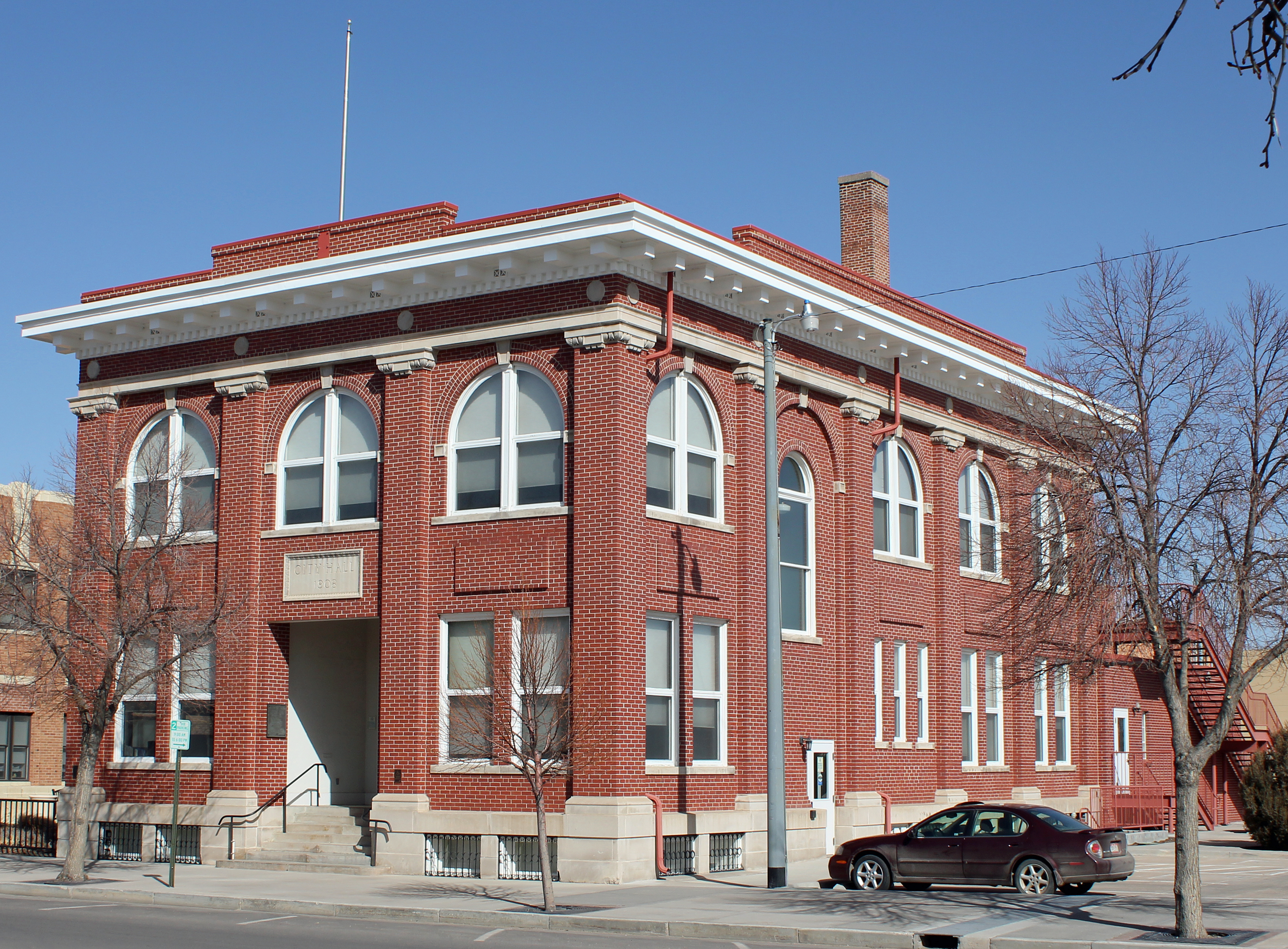
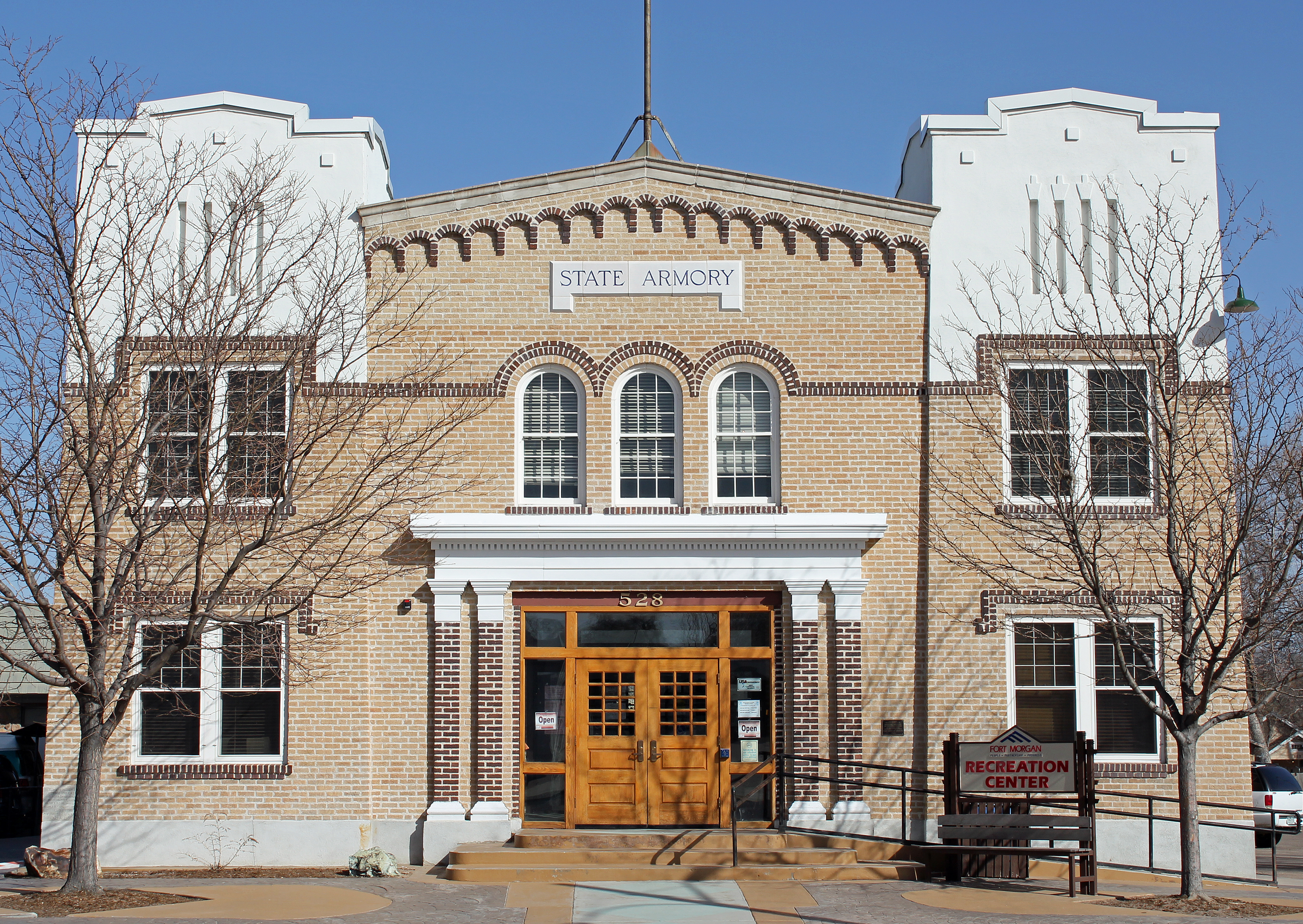

Overview of Fort Morgan
Fort Morgan is a small plains city in Morgan County, Colorado, with a population of roughly 11,500 residents. Situated along Interstate 76 on the high plains of northeastern Colorado, the community has a working-class, agricultural character shaped by its role as a regional hub for ranching, farming, and food processing. The city takes its name from a military fort established in the 1860s to protect overland travelers along the South Platte River, and that frontier heritage still colors the local identity. Fort Morgan sits about 80 miles northeast of Denver, making it a natural stopover point for travelers driving between the Front Range and the high plains or the Nebraska panhandle.
A visit to the Fort Morgan Museum offers a window into this layered past, with exhibits covering the original military post, early settlers, and the German-Russian immigrant families who shaped much of the surrounding agricultural community. The museum is right in town, within a few minutes' drive of nearly anywhere in the city, and serves as a quiet but well-curated complement to a drive through the area.
Roughly 20 miles northeast of Fort Morgan, Jackson Lake State Park is the area's most popular outdoor escape, featuring a large reservoir known for fishing, boating, and swimming, along with miles of shoreline for picnicking and wildlife watching. The park draws a steady stream of visitors through the warmer months and offers a welcome change of pace from the open plains surrounding the city, making it a frequent day-trip destination for both locals and passing travelers.
For those willing to drive a bit farther, the Pawnee National Grassland lies to the east and offers a striking contrast to the irrigated fields around Fort Morgan, with short-grass prairie habitat, birding hotspots, and wide-open views typical of the eastern Colorado steppe. Closer to town, the South Platte River itself winds through the area, and several local parks along its banks provide walking paths, fishing access, and a sense of the waterway that has defined this stretch of the plains since the era of the Oregon and Overland trails.
Fort Morgan's combination of small-town affordability, its position along a major interstate corridor, and its proximity to outdoor recreation make it a practical and appealing base for short-term rentals. Visitors passing through on longer road trips, workers tied to the region's agricultural and industrial operations, and families heading to Jackson Lake all create steady, varied demand, while the city's quiet pace and big-sky setting give it an honest, unpretentious charm that appeals to travelers looking for something more grounded than a typical tourist stop.
Want to know if a property in Fort Morgan is a good investment?
Enter an address to get instant revenue potential and comps.