
Weaverville, California
Want to see how Weaverville compares to other top cities in California? Explore all city regulations in California. →
Weaverville, CA
Generally Investor Friendly
STR Regulations for Weaverville, California
Overview and legality
- Are STRs allowed in Weaverville, CA? Yes—explicitly, short-term rentals are occurring and being marketed in Weaverville, and the available materials indicate STRs are an active, ongoing use in the community. No city- or county-specific STR prohibitions were identified in the provided content. That said, the market operates under baseline California state rules and applicable county zoning; local permits or business tax certificates may still be required and should be verified before launch. [Source: RedAwning Weaverville page] [Source: Trinity County Housing Element Update]
What to expect at the market level
- Occupancy and pricing are actively reported for Weaverville: one provider’s data shows an average nightly rate of roughly $158, a 52% occupancy rate, and average monthly revenue around $2,763 per property (based on their sample of Weaverville STRs). Expect seasonality and inventory diversity (e.g., some shared-room offerings alongside whole-home rentals). [Source: RedAwning Weaverville page]
How to start an STR business in Weaverville Because city- or county-specific STR permitting details were not provided, follow this step-by-step checklist using the available information and best practices:
- Confirm allowable use and district fit
- Verify zoning for your property with Trinity County planning staff (even if the property feels urban, Weaverville is in an unincorporated area of Trinity County and may be subject to county zoning). Determine whether your parcel allows transient rentals or requires a conditional use permit (CUP). [Source: Trinity County Housing Element Update]
- Assess physical constraints early
- Engage Trinity County Environmental Health to confirm water/sewer service and whether on-site wastewater (septic) capacity will support transient occupancy. Insurers and fire protection requirements can materially affect feasibility—factor in the county’s noted insurance and wildfire context. [Source: Trinity County Housing Element Update]
- Prepare key permits and documents (typical for California STRs; verify locally)
- Business License/Tax Certificate (City of Weaverville and/or Trinity County).
- Transient Occupancy Tax (TOT) registration if applicable.
- Zoning Clearance/CUP (as needed).
- Building/Health permits for any construction, alterations, or change of use.
- Fire life-safety approvals (as required by local fire district/California Fire Code).
- Plan for safety and code compliance
- At a minimum, align with California Health and Safety Code requirements for safety devices (e.g., smoke and carbon monoxide alarms), egress standards, and posting requirements (e.g., “STR Rules” posting in the unit if required by state law; verify local posting obligations).
- Set up taxes and reporting
- If TOT applies, register and set up remittance processes with the city or county. Maintain accurate guest records for tax filings.
- Insurance and wildfire risk
- Secure appropriate general liability and property coverage. Trinity County feedback highlights the high cost and difficulty of obtaining fire insurance; build this into your underwriting and pricing. [Source: Trinity County Housing Element Update]
- Design operations and guest experience
- Prepare professional listing content, house rules, cleaning protocols, and maintenance standards. Aim for review-driven growth and consistent operations to achieve the occupancy and ADR ranges observed in the local market. [Source: RedAwning Weaverville page]
- Align with community context
- The county has identified a severe shortage of rental housing; be sensitive to local concerns about long-term rental displacement and engage proactively with neighbors and local stakeholders. [Source: Trinity County Housing Element Update]
Documents, permits, licenses, and guidelines (what to prepare; verify locally)
- City of Weaverville business license or registration (and any city-imposed business tax).
- Trinity County zoning clearance or conditional use permit if required.
- Transient Occupancy Tax (TOT) registration with the collecting jurisdiction.
- Building permits for any alterations, additions, or conversions to transient use.
- Environmental Health clearances (septic capacity, water service) where applicable.
- Fire life-safety approvals (addressing access, alarms, and California Fire Code provisions).
- California Health and Safety Code–related safety devices and disclosure/poster requirements (check local additions).
- Insurance (liability and property), including wildfire considerations. Note: The provided sources do not enumerate a definitive local checklist; investors should confirm with Weaverville and Trinity County before applying. [Sources: RedAwning Weaverville page; Trinity County Housing Element Update]
Specific regulations and constraints to consider
- City-specific STR regulations: Not detailed in the provided sources. City-specific rules (if any) were not identified; verify directly with Weaverville. [Sources: RedAwning Weaverville page; Trinity County Housing Element Update]
- Trinity County regulations: While comprehensive STR rules are not provided, zoning and land use approvals govern STRs in the county. Where STRs are not expressly permitted by right, a CUP may be necessary. Developers and hosts should consult Trinity County planning and environmental health early due to water/sewer and infrastructure constraints. [Source: Trinity County Housing Element Update]
- State of California: STRs are generally permitted under state law but subject to local ordinances and state-level requirements such as safety device standards and certain posting/disclosure rules; TOT and applicable state taxes generally apply. Investors must confirm specific state duties and any city/county additions. [General context; no specific statute link provided in sources]
- Community and market context: Trinity County faces insurance affordability challenges, wildfire risk, and a critical shortage of rental housing—all of which affect the viability and social license for STRs. [Source: Trinity County Housing Element Update]
Local authority contacts (for confirmation and permitting)
- Zoning and planning: Trinity County Planning Department (verify current contact details locally; consult Trinity County General Plan/Housing Element materials for procedural guidance). [Source: Trinity County Housing Element Update]
- Environmental health and onsite systems: Trinity County Environmental Health Department (as listed in the Housing Element stakeholder table). [Source: Trinity County Housing Element Update]
- City of Weaverville business licensing/regulatory questions: Contact City Hall for business license/TOT processes and any municipal STR-related requirements (verify phone/email locally; not provided in sources).
- Fire life-safety approvals: Coordinate with the local fire district/agency (confirm current contacts locally).
Source pages used
- Weaverville STR market overview and performance metrics: RedAwning Weaverville page (marketing and data snapshots).
- Community context, land use, infrastructure constraints, and public engagement summary: Trinity County 2024–2029 Housing Element Update (Public Hearing Draft, May 2025).
Important caveats and next steps
- The provided content does not include a definitive list of Weaverville-specific STR permits or a local STR ordinance. Treat the steps above as a preparation checklist; verify all permitting, safety, and tax requirements with both the City of Weaverville and Trinity County prior to operation.
- Consider engaging local counsel or a permitting specialist to confirm zoning, CUPs, environmental health, and fire life-safety requirements specific to your parcel and intended use.
What do Airbnb hosts actually earn in Weaverville?
Weaverville hosts earn a median $21,633/year with $180 ADR and 51% occupancy.
Top performers pull in $30,033+ per year.
See the full Weaverville market breakdownNext step
Found a property in Weaverville?
Paste any address and get estimated revenue, cash-on-cash return, and comparable STR performance in under 5 minutes. 3 free analyses per day.
Free brief
Get the free Weaverville STR Investment Brief
Revenue data, top neighborhoods, seasonal trends, and the key regulations for Weaverville, California in one email.
Weaverville
Market Saturation Score
Photos of Weaverville


Overview of Weaverville
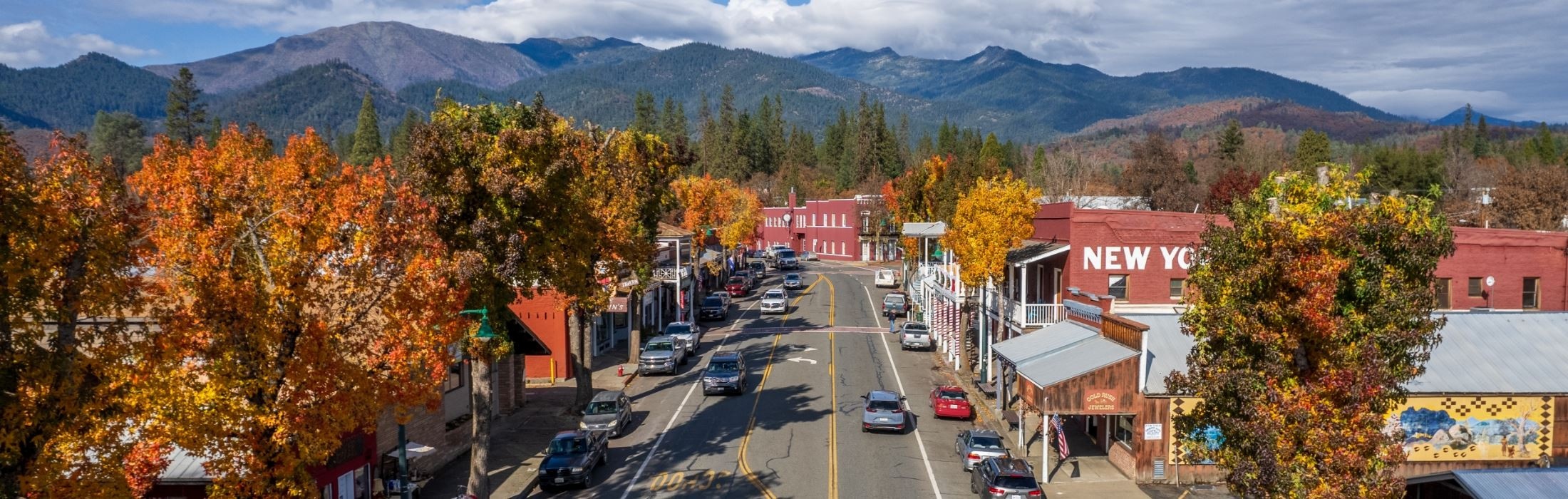
Weaverville is a small mountain town in Trinity County, Northern California, serving as the county seat with a population of roughly 3,500 residents. Tucked into the forested foothills of the Klamath Mountains along Highway 299, the town has a quietly historic character shaped by its 1850s Gold Rush origins, evident in its preserved 19th-century brick storefronts and walkable downtown streets. Today Weaverville functions primarily as a gateway to the surrounding wilderness, including the Trinity Alps and the lakes of the upper Trinity River basin. It sits about 50 miles west of Redding, the nearest major city, with the drive typically taking around an hour and a half over winding mountain roads.
The Weaverville Joss House State Historic Park is one of the town's most distinctive cultural landmarks, located right in the heart of Weaverville. Built in 1874 by the local Chinese mining community, it is one of the oldest continuously used Taoist temples in the American West and a designated California Historical Landmark. Visitors can step inside the small temple, view ceremonial artifacts, and learn about the often-overlooked role of Chinese immigrants in the California Gold Rush. The site is just a short walk from the downtown core, making it an easy stop for travelers arriving in town.
Just west of Weaverville lies the Trinity Alps Wilderness, a sprawling 525,000-acre expanse of granite peaks, alpine lakes, and dense conifer forest that draws hikers, backpackers, and anglers throughout the summer months. The wilderness, managed by the Six Rivers and Shasta-Trinity National Forests, offers everything from easy lakeside strolls to multi-day backcountry routes, with trailheads accessible within roughly 30 to 60 minutes of town. Its relative remoteness compared to better-known Sierra destinations keeps it pleasantly uncrowded for much of the season.
A short drive north and east of Weaverville, Trinity Lake and Lewiston Lake provide a different flavor of outdoor recreation, with over 100 miles of shoreline combined for boating, swimming, and trout fishing. Trinity Lake, the larger of the two, is about 12 miles north of town and is well known for its kokanee salmon and smallmouth bass fisheries, while Lewiston Lake, closer in, is favored for kayaking and quiet shoreline camping. Together, the two reservoirs make Weaverville an appealing base for visitors who want to combine lake days with mountain hikes during a single trip.
With its walkable historic core, easy access to the Trinity Alps, and proximity to both lakes, Weaverville offers a genuinely compelling base for short-term rentals. The town draws a steady stream of outdoor travelers, Gold Rush history enthusiasts, and road-trippers passing through on Highway 299, while its small size and quiet rhythm make it a refreshing alternative to busier mountain destinations. For owners, that mix of built-in attractions and year-round appeal supports a rental market anchored as much in scenic atmosphere as in any single marquee sight.
Want to know if a property in Weaverville is a good investment?
Enter an address to get instant revenue potential and comps.