
Tulare, California
Want to see how Tulare compares to other top cities in California? Explore all city regulations in California. →
Tulare, CA
Very Investor Friendly
STR Regulations for Tulare, California
Overview: Are STRs allowed in Tulare, CA?
Short‑term rentals are allowed in Tulare County. As of this date, there is no enacted, county‑wide short‑term rental ordinance in Tulare County. A draft STR ordinance was considered by the Board of Supervisors in 2024 and was rejected; therefore, the county has no operating STR‑specific licensing or operational requirements beyond those that apply broadly to lodging businesses and real property.
The legal framework that does apply is Tulare County’s Transient Occupancy Tax (TOT) law, which explicitly includes “short‑term residential rentals” and makes them subject to the same tax, registration, and reporting obligations as hotels. Operators must register with the County Tax Collector, collect the 10% TOT from guests, and remit quarterly, with penalties and interest for late payment. This is the primary, binding requirement for STRs operating in unincorporated Tulare County.
Investors should also be aware that state‑level laws (notably AB 3182 and local tax/TOT obligations) can apply to STR operations across California, and individual cities within the county may have adopted their own rules. The unincorporated county remains the focus of this guide.
Key status references:
- No county STR ordinance is currently in effect after the Board rejected the draft in 2024.
- Tulare County’s TOT code expressly covers “short‑term residential rentals” and defines “occupancy” for any length of time (including hourly/partial‑day stays).
- The County issued a notice that the draft STR ordinance page was “draft” and likely no longer operative; the Board rejected it at a public meeting.
Sources: Tulare County Board of Supervisors draft ordinance page (record of draft); recorderonline.com article on the Board’s rejection of the draft ordinance; Tulare County Ordinance Code Chapter 5, Article 11 (Transient Occupancy Tax).
What do Airbnb hosts actually earn in Tulare?
Tulare hosts earn a median $27,203/year with $161 ADR and 64% occupancy.
Top performers pull in $40,398+ per year.
See the full Tulare market breakdownHow to start a short‑term rental business in this market
Starting an STR in unincorporated Tulare County is straightforward but must follow the County’s tax rules and related state requirements. Below is a practical, step‑by‑step approach tailored for investors.
- Confirm property jurisdiction and zoning
- Verify your property is in unincorporated Tulare County, not within city limits (e.g., Visalia, Tulare, Porterville). Use the County’s parcel/Zoning search if needed.
- Confirm your zoning allows the intended residential use. If the property is in a Special Purpose, Resource, or Safety overlay area (e.g., State Responsibility Area for fire protection), expect heightened requirements for fire safety and emergency access.
- Register and collect County Transient Occupancy Tax (TOT)
- Register as an operator with the Tulare County Tax Collector. You will receive a nontransferable Certificate of Authority to collect TOT and a duplicate for each additional STR location.
- Display the Certificate prominently inside the rental property.
- Charge guests the County TOT at 10% of rent, provide a separate tax receipt, and remit the tax quarterly (or as otherwise prescribed) to the Tax Collector.
- Comply with state and local tax and safety requirements
- If you list the STR on platforms (Airbnb, VRBO, etc.), you are the responsible operator for TOT; ensure any platform agreements do not undermine your obligation to remit the full amount of tax due to the County.
- If renting on an hourly/partial‑day basis or event‑related stays, the County code treats these as taxable occupancy.
- Follow state‑level STR rules (e.g., AB 3182, Health & Safety requirements). If a rental could be considered a “hosted home‑share,” AB 3182’s hosting‑platform reporting provisions may apply. If the property is outside a city (unincorporated county), certain city‑level bans/limits do not apply, but the County’s TOT obligations remain.
- Confirm compliance with fire and building codes (e.g., smoke/CO detectors, egress, addressposting) as appropriate to your rental. If in a fire‑related responsibility area (State Responsibility Area), expect stricter standards.
- Align rental operations with local expectations
- Prioritize neighbor‑friendly operations: reasonable quiet hours, on‑site parking, and solid waste management.
- Expect that enforcement will proceed under existing County ordinances (nuisance, noise, zoning) even without a separate STR ordinance.
- Consider voluntary measures (guest rules, emergency contact postings, occupancy limits) to minimize complaints and align with the spirit of the rejected ordinance’s standards.
- Operational workflow
- Collect rent and the 10% TOT at the time rent is paid; separately state the tax on guest receipts.
- File quarterly TOT returns and remit the full amount collected by the due date. The Tax Collector may require shorter reporting periods if necessary.
- Maintain records for at least the period specified by the Tax Collector (typically three to four years).
- If you engage secondary operators (property managers, platforms, co‑hosts), ensure tax remittance is coordinated to satisfy the County’s “operator” duties.
Required documents, permits, licenses, and guidelines
Core county tax and registration
- Tulare County Transient Occupancy Tax registration (Operator Certificate of Authority)
- Obtain from the Tulare County Tax Collector (Auditor‑Controller/Treasurer‑Tax Collector) office or website.
- Certificate must be displayed inside the STR; nontransferable and surrendered upon business cessation/transfer.
- TOT registration form content typically includes:
- Operator name and business name
- STR address and number of units
- Contact information and signature (owner, partner, or authorized corporate officer)
- TOT Certificate language emphasizes:
- The certificate authorizes collection and remittance of TOT; it does not waive any other laws.
- It is not a general business license and does not allow unlawful operations.
Optional or supplemental county items
- Tulare County business license (general, if conducting other business activities; not STR‑specific)
- Land use/Building permits (for structural changes, conversions, Accessory Dwelling Units (ADUs), or safety upgrades)
- Check with County Planning/Building if significant alterations or new structures are planned.
- Addressposting and emergency information (best practice, though not codified for STRs)
State‑level items relevant to STRs
- AB 3182 compliance (if applicable to your STR arrangement)
- Health & Safety Code requirements (e.g., smoke/CO alarms, egress)
- Local transient occupancy tax obligations and possible platform reporting requirements
Specific regulations for short‑term rentals (city, county, state)
County (unincorporated Tulare County)
- There is currently no enacted, county‑wide STR ordinance. The Board of Supervisors rejected the draft ordinance at a public meeting, so STR‑specific operational limits (e.g., occupancy caps, parking rules) are not codified at the county level.
- TOT obligations apply to hotels and “short‑term residential rentals”:
- Tax rate: 10% of rent, collected from guests.
- “Transient” defined as occupancy of 30 consecutive calendar days or less.
- “Occupancy” explicitly includes hourly, partial‑day, and full‑day stays.
- Operators must register, collect tax, and remit quarterly; noncompliance triggers penalties and interest.
- Secondary operators (including online platforms) are deemed operators and share responsibility for tax collection/remittance.
- Refunds if occupancy exceeds 30 consecutive days; tax is not due on stays longer than 30 consecutive days.
- Enforcement and compliance:
- The County can pursue tax collection, penalties, and interest under the TOT code.
- Other county ordinances (noise, nuisance, zoning, safety) continue to apply.
State (California)
- AB 3182 (2020) restricts cities and counties from outright banning “hosted home‑shares” and limits certain STR restrictions. It also established reporting requirements for hosting platforms in specified jurisdictions.
- The County’s TOT law is consistent with statewide authority for transient occupancy taxation.
- Health & Safety requirements for residential rentals apply (detectors, egress, habitability).
City level (if your STR is within city limits)
- City rules can vary (e.g., business license, STR permits, caps, parking). This guide focuses on county unincorporated areas. If your property is within a city, consult the applicable municipal code and contact the city planning/finance departments.
Contact information (local authority in charge of STRs)
Primary county authority for STR taxation
- Tulare County Tax Collector (Auditor‑Controller/Treasurer‑Tax Collector)
- Responsible for TOT registration, certificates, returns, and collections
- TOT registration and payment portal: Pay/Register for Transient Occupancy Tax (TOT)
- Certificate issuance, quarterly filings, penalties/interest, and operator inquiries
County legislative and policy context
- Tulare County Board of Supervisors
- Board meetings: Tuesdays at 9:00 a.m. (check County calendar)
- Public comment and meeting information available via the Board’s page
Code compliance and reporting
- County Code Compliance
- Complaint intake for nuisance/noise and other code issues
Links to source pages
- Tulare County Board of Supervisors – Draft Short‑Term Rental Ordinance (historical draft page): tularecounty.ca.gov/board/information/draft-short-term-rental-ordinance
- Recorder Online – County board shoots down short‑term rental ordinance (Board vote and context): www.recorderonline.com/news/county-board-shoots-down-short-term-rental-ordinance/article_b3223a62-3ed6-11ef-95af-af168da64bbe.html
- Tulare County Ordinance Code – Chapter 5, Article 11 (Transient Occupancy Tax): www.codepublishing.com/CA/TulareCounty/html/TulareCounty01/TulareCounty0105.html
- Tulare County – Pay/Register for Transient Occupancy Tax (TOT): tularecounty.ca.gov/treasurertaxcollector/forms/transient-occupancy-taxtot/
- Tulare County – Board of Supervisors meetings and related information: tularecounty.ca.gov/board/board-of-supervisors-meetings
- Tulare County – Code Compliance (complaints and enforcement): www.tularecounty.ca.gov/rma/code-compliance
- Tulare County – Business Licenses (general): tularecounty.ca.gov/treasurertaxcollector/forms/business-licenses/
- Tulare County – Planning & Building/Zoning information (for zoning verification): tularecounty.ca.gov/rma/planning-building/planning-and-land-use-applications-and-forms
Action checklist for investors
- Jurisdiction and zoning
- Confirm property is unincorporated; verify zoning and any overlay areas.
- Tax and registration
- Complete TOT registration and display the Certificate of Authority.
- Set up 10% TOT collection at checkout and add tax line‑items on receipts.
- Legal and safety
- Review state STR rules (AB 3182, Health & Safety).
- Ensure fire/life safety compliance appropriate to the property type and area.
- Operations
- Establish quiet hours, parking, and trash protocols; keep contact info visible.
- Prepare quarterly TOT filings and maintain records; coordinate with any managers/platforms.
- Monitoring
- Track Board of Supervisors agenda for any future STR proposals.
- Address complaints promptly to avoid code enforcement actions.
This guide reflects the current, verifiable legal framework: STRs are allowed in unincorporated Tulare County, the County’s TOT regime applies, and there is no operative STR ordinance at the county level as of this date. Investors should proceed with County TOT compliance and state‑level STR requirements while remaining attentive to future legislative or policy changes.
Next step
Found a property in Tulare?
Paste any address and get estimated revenue, cash-on-cash return, and comparable STR performance in under 5 minutes. 3 free analyses per day.
Free brief
Get the free Tulare STR Investment Brief
Revenue data, top neighborhoods, seasonal trends, and the key regulations for Tulare, California in one email.
Tulare
Market Saturation Score
Photos of Tulare



Overview of Tulare
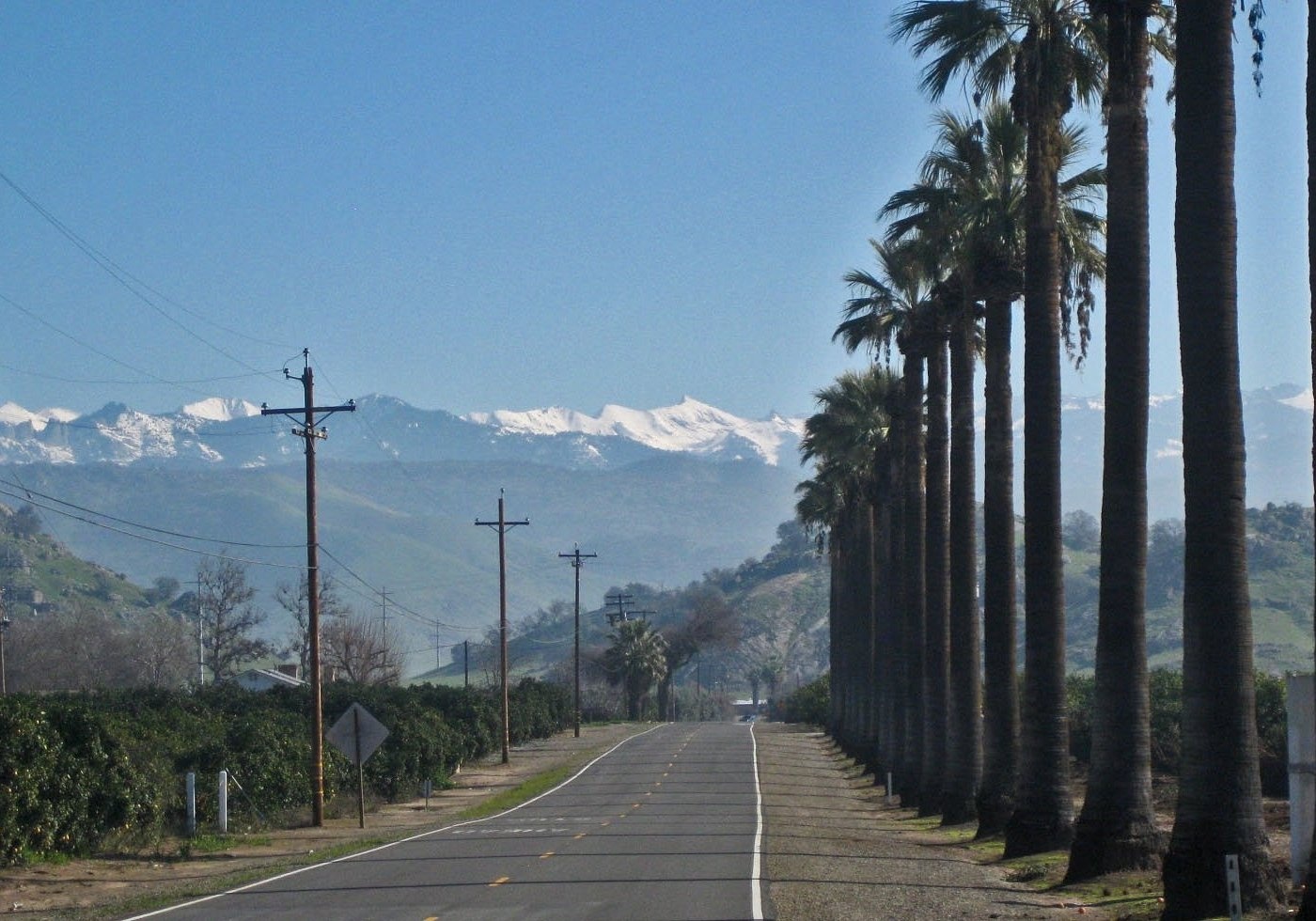
Tulare sits in the heart of California's San Joaquin Valley, in Tulare County, with a population of roughly sixty-five thousand residents. The city has the relaxed, working-character feel typical of Central Valley farming towns, surrounded by orchards, dairies, and irrigated fields rather than freeways and high-rises. It lies about forty-five miles south of Fresno, the nearest large metro area, and is best known as a convenient southern gateway to Sequoia National Park. Travelers driving south from Yosemite or north from Los Angeles often pass through on their way into the high country, and the city's agricultural roots give it a distinctly homegrown identity that sets it apart from the resort towns to the east.
The marquee attraction associated with Tulare is Sequoia National Park, whose southern entrance is reachable in roughly an hour to an hour and a half by car depending on the route. The park is home to the largest trees on earth, including the General Sherman Tree in the Giant Forest, and its high-country trails, alpine lakes, and deep canyons draw hikers, families, and road-trippers year-round. Because the park is vast and the nearest in-park lodging is limited, many visitors base themselves in gateway communities like Tulare and day-trip into the sequoia groves, the Moro Rock area, or the Tunnel Log.
For outdoor recreation closer to town, Lake Kaweah sits about twenty miles east along Highway 198 and offers boating, fishing, and picnicking on the shores of a reservoir tucked into the foothills below the park. It serves as a popular spring and summer escape for locals and visitors who want a quick dose of water and mountain views without committing to a full park day.
Downtown Tulare itself has a small historic core centered around a classic town square, and the area hosts the International Agri-Center just south of the city, which is best known as the site of the annual World Ag Expo, one of the largest agricultural trade shows in the United States. The event draws tens of thousands of visitors each February and gives the city a brief, lively burst of activity. Local museums and the nearby Tulare County Museum in Mooney Grove Park, just north of Visalia, add a quieter layer of regional history for guests interested in the valley's pioneer and ranching past.
Tulare makes a compelling base for short-term rentals largely because of where it sits rather than what it offers in the city center. Its central-valley location places guests within a comfortable drive of Sequoia and Kings Canyon national parks, the lakes and foothills of the Sierra, and the dining and culture of nearby Visalia, while keeping them in an affordable, low-key setting. For travelers who plan to spend their days exploring the high country and their evenings resting in a quieter, distinctly Californian town, Tulare offers a practical and authentic home base.
Want to know if a property in Tulare is a good investment?
Enter an address to get instant revenue potential and comps.