
Tujunga, California
Want to see how Tujunga compares to other top cities in California? Explore all city regulations in California. →
Tujunga, CA
Challenging To Investors

STR Regulations for Tujunga, California
Overview and Rule of Thumb: Are STRs Allowed in Tujunga?
- Short-term rentals (STRs; rentals under 30 days) are not a permitted use by default in most residential zones of Los Angeles, including the Tujunga neighborhood. However, the city has created a specific pathway—Home-Sharing—under which residents can legally operate an STR in their own primary residence.
- Home-Sharing is the city’s framework to regulate STRs, distinct from older mechanisms like Transient Occupancy Residential Structures (TORS) or Bed & Breakfasts, which typically require a Conditional Use Permit (CUP) and apply to different property types or zones.
- You may operate as an STR legally in Tujunga only if:
- The unit is your primary residence (you reside there at least six months per year), and
- You obtain the required registrations and comply with the city’s Home-Sharing rules (including the 120‑day annual cap, and the option to seek extended home‑sharing up to 240 days).
How to Start a STR Business in Tujunga
- Confirm You Are Eligible
- Your listing must be your primary residence (you must live there for more than six months of the year).
- You cannot list units subject to the Los Angeles Rent Stabilization Ordinance (RSO) or dedicated affordable housing.
- If you rent (not own), you must have written landlord approval.
- The property must be legally habitable; no rentals of garages, storage sheds, tents, trailers, or non-habitable structures.
- You may register only one STR property in Los Angeles.
- Complete Your Tax Registrations
- Register for the Transient Occupancy Tax (TOT). Obtain a Transient Occupancy Registration Certificate from the Los Angeles Office of Finance before you list, or ensure your hosting platform has a collection agreement with the city and will collect/remit TOT for you. The TOT (occupancy tax) applies to STR nights.
- Business Taxes: Many hosts also obtain a Business Tax Registration Certificate (BTRC) from the Office of Finance; this is typical for business activity and supports compliance operations (contact Office of Finance for current requirements).
- Register for Home-Sharing
- Submit a Home‑Sharing registration application (online), valid for one year, with annual renewal.
- Provide a sworn affidavit to comply with all Home-Sharing rules.
- Prove primary residency with two documents (e.g., driver’s license and utility bills).
- If seeking to exceed the 120‑day cap, apply for Extended Home‑Sharing:
- Administrative clearance (if you have no verified nuisance violations in the last three years and meet certain conditions).
- Discretionary extended home‑sharing permit (if you do not qualify administratively).
- Operate Within the Rules
- Standard cap: up to 120 nights per calendar year; Extended Home-Sharing can raise this to 240 nights.
- Maximum 2 persons per habitable room (not including children).
- Quiet hours: no amplified music after 10 pm.
- No commercial events or large gatherings (e.g., weddings, evening outdoor congregations) beyond the occupancy limit.
- Provide a guest Code of Conduct with relevant ordinance rules.
- Keep safety equipment: fire extinguisher, smoke detectors, CO detectors; post emergency exit routes and emergency contacts.
- Post no-smoking notices on patios/decks for properties in Very High Fire Hazard Severity Zones (VHFHSZ).
- If renting, provide landlord’s written approval and honor any landlord opt‑out.
- Marketing and Platform Requirements
- Always include your city registration number in listings and advertisements.
- Only advertise on platforms that either:
- Have a platform agreement with the city; or
- Ensure your listing is compliant (including registration and TOT collection).
- No more than one set of guests at a time; you may not split your home into simultaneous bookings (e.g., multiple rooms at the same time).
- Renewal and Reporting
- Renew annually; demonstrate compliance (if not on a participating platform, submit rental records documenting nights booked).
- Keep records for at least three years.
Required Documents, Permits, Licenses, and Guidelines
- Transient Occupancy Registration Certificate (from Los Angeles Office of Finance; or rely on a platform with a TOT collection agreement).
- Home‑Sharing Registration (annual; includes affidavit).
- Proof of primary residency (two documents such as state ID, utility bills, tax returns, bank statements, car registration, voter registration).
- Landlord written approval (if renting).
- Property safety documentation:
- Fire extinguisher; smoke and CO detectors.
- Emergency exit routes and emergency contact information posted for guests.
- Code of Conduct provided to guests (summary of rules).
- No-smoking postings for VHFHSZ properties (where applicable).
- Optional: Extended Home‑Sharing application (administrative or discretionary).
- Property compliance records (for inspections/verification).
- Optional: Business Tax Registration Certificate (BTRC) for business tax purposes.
Regulations: City, County, and State Rules You Must Follow
City of Los Angeles – Home‑Sharing Ordinance (HSO)
- STRs are allowed only as Home‑Sharing (your primary residence).
- Annual limit: 120 days per calendar year (unless approved for Extended Home‑Sharing up to 240 days).
- Housing stock protection:
- Prohibited in RSO units and dedicated affordable housing.
- One listing per host in Los Angeles.
- Conversion of existing residential buildings to TORS is prohibited; new TORS requires a CUP.
- Extended Home‑Sharing:
- Administrative clearance available if no verified nuisance violations in the last three years, with notice to neighbors and proof of prior operation/registration.
- Discretionary review by the Director of Planning for those who do not qualify administratively; appeals to the Area Planning Commission.
- Guest rules and limits:
- Max two persons per habitable room (not including children).
- No amplified music after 10 pm.
- No weddings or large evening gatherings; limited simultaneous guests (one booking at a time).
- Safety and notices:
- Required fire extinguisher, smoke and CO detectors.
- Post emergency routes and contact information.
- VHFHSZ properties must post no‑smoking notices on patios/decks.
- Taxes:
- TOT is collected by hosts or their platforms.
- Platform agreement allows platforms to collect/remit TOT and share data to streamline host obligations.
- Enforcement:
- “Two‑strike” rule for verified citations; two citations within a registration period result in revocation and a one‑year ban from Home‑Sharing.
- Verified citations include those from City agencies (e.g., Police, Building and Safety, Fire, Housing and Community Investment).
- First citation leads to immediate loss of extended home‑sharing privileges for the remainder of the registration period.
- 30‑day suspension if cited under the “loud and unruly gathering” ordinance; subsequent violations under party house rules may trigger further penalties.
- Platforms must not book unregistered listings; monthly reporting to the city and daily fines ($1,000/day) for non‑compliance.
- Administrative Nuisance Abatement (LAMC 12.27.1) can result in conditions, modification, suspension, or revocation.
- Advertising prohibition:
- No advertising without a valid Home‑Sharing registration number; one property per host.
- Fees:
- Annual host registration fee proposed at $89.
- Per‑night fee proposed at $5; supports administration and enforcement.
- Extended Home‑Sharing: administrative clearance filing ~$1,149; discretionary ~$5,660 (plus notice costs).
- Additional city agency fees may apply for nuisance abatement processes.
Los Angeles County (and State of California)
- While Los Angeles city governs Home‑Sharing directly, County/State tax rules may apply if a listing falls outside the Home‑Sharing framework (e.g., commercial STRs or non‑primary residences). State-level TOT rules differ and can be more complex. The Home‑Sharing ordinance is the preferred and compliant pathway for STR activity in Tujunga.
Enforcement and Penalties
- Registration suspension or revocation if citations exist during registration.
- Two verified citations result in immediate revocation and a one‑year ban.
- Extended Home‑Sharing can be revoked for a single verified citation; host reverts to standard 120‑day limit for the remainder of the period.
- 30‑day suspension for “loud and unruly gatherings” (per party house ordinance).
- Platforms face fines for illegal bookings, failure to provide required monthly documents, or refusal to provide addresses of unregistered listings ($1,000/day).
- Violations related to non-habitable space rentals or failure to meet safety requirements can trigger administrative nuisance abatement actions (conditions, revocation).
Contact Information and Getting Help
- City of Los Angeles – Department of City Planning (Home‑Sharing Program)
- Planning.lacity.gov
- Phone: 213-978-1316
- Email: hsinformation@lacity.org
- Los Angeles Office of Finance (TOT and Business Taxes)
- Finance.lacity.org
- Phone: 213-978-2040
- Los Angeles Fire Department (Life Safety Guidance)
- LAFD.lacity.org
- Phone: 213-978-3800
- Los Angeles Police Department (Noise/Nuisance/Party House Enforcement)
- LAPDonline.org
- Non‑emergency: 877-ASK-LAPD (275-5273)
Links to Source Pages
- City of Los Angeles Home‑Sharing Ordinance Staff Report and Draft (CPC-2016-1243-CA)
- Home‑Sharing Ordinance – Proposed Draft Text
Key Takeaways for Investors in Tujunga
- You can operate an STR in Tujunga legally, but only through the city’s Home‑Sharing framework for your primary residence.
- Compliance is not optional: follow the 120‑day cap (or the extended 240‑day process), occupancy rules, safety equipment, and noise/event restrictions.
- Tax compliance (TOT) and data-sharing with platforms are central to enforcement; ensure your platform either collects TOT for you or that you register and pay TOT directly.
- Expect renewal, audits, and potential nuisance abatement; maintain clean records and a strong neighbor‑friendly operating plan.
- If your unit is under RSO or you’re a non‑resident owner, the STR pathway does not apply; consider long‑term leasing strategies.
This summary reflects Los Angeles city requirements applicable to Tujunga, based on the Home‑Sharing Ordinance. Always verify current program details and fees with the Department of City Planning before listing.
What do Airbnb hosts actually earn in Tujunga?
Tujunga hosts earn a median $33,497/year with $237 ADR and 79% occupancy.
Top performers pull in $48,549+ per year.
See the full Tujunga market breakdownNext step
Found a property in Tujunga?
Paste any address and get estimated revenue, cash-on-cash return, and comparable STR performance in under 5 minutes. 3 free analyses per day.
Free brief
Get the free Tujunga STR Investment Brief
Revenue data, top neighborhoods, seasonal trends, and the key regulations for Tujunga, California in one email.
Tujunga
Market Saturation Score
Photos of Tujunga


Overview of Tujunga
Tujunga is a foothill community in the northeastern San Fernando Valley, within Los Angeles County, California, with a population of roughly 28,000 residents. Often grouped with neighboring Sunland, it carries a quiet, semi-rural character that feels distinct from the denser neighborhoods closer to the heart of Los Angeles, which lies approximately 15 to 20 miles to the south and southeast. Tujunga is best known as a gateway to the San Gabriel Mountains and the vast wildlands of the Angeles National Forest, with its residential streets giving way quickly to canyons, chaparral-covered slopes, and a skyline dominated by mountain ridges. Visitors and residents alike appreciate the easy escape from urban Los Angeles that the community offers while still remaining well within reach of the city's major cultural and commercial centers.
The most prominent natural feature shaping Tujunga is the Angeles National Forest, which begins almost immediately north of the community. Stretching across much of the San Gabriel Mountains, the forest provides access to countless hiking trails, picnic areas, and scenic drives, with several popular trailheads reachable in roughly 15 to 30 minutes by car from the center of Tujunga. The forest's proximity makes the neighborhood especially appealing for travelers interested in outdoor recreation, offering options ranging from easy family walks to strenuous mountain climbs.
A short drive up the Angeles Crest Highway from Tujunga leads to Mount Wilson Observatory, a historic astronomical facility perched high in the San Gabriel Mountains. Founded in the early twentieth century, the observatory remains an important center for public science education and stargazing, and the winding road to it is itself a popular scenic drive for visitors staying in the foothills. From the summit area, hikers can also access additional trail networks and experience panoramic views over the Los Angeles basin on clear days.
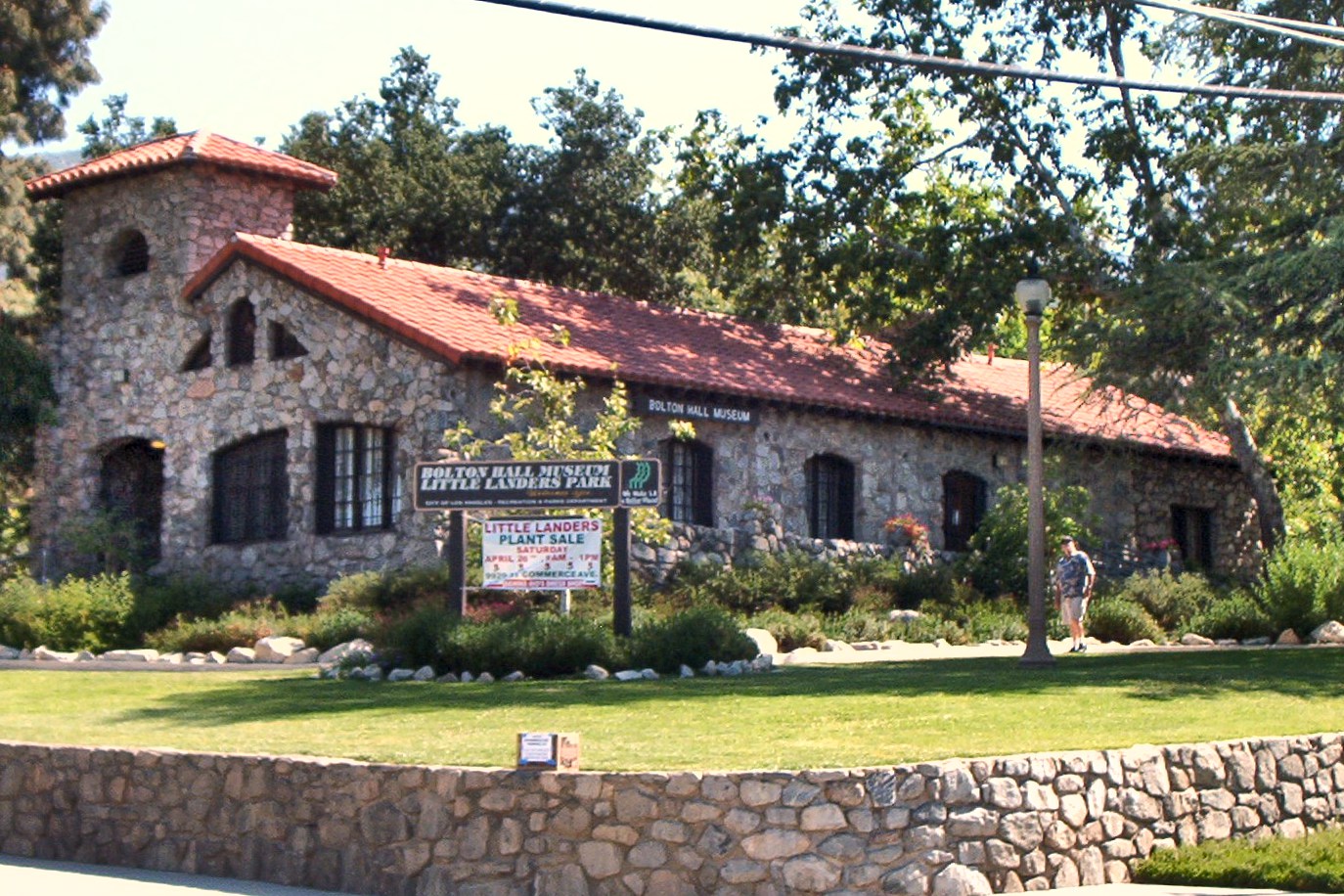
Within the community itself, Bolton Hall stands as a modest but historically significant landmark, a 1913 Craftsman-style building that once served as the headquarters for the Little Landers movement, an early twentieth-century social experiment in small-scale, self-sufficient living. Together with a small downtown strip of locally owned shops and cafes, it reflects the community's longstanding independent identity.
For short-term rental owners, Tujunga offers a compelling balance of accessibility and contrast. Guests are minutes from major Los Angeles attractions yet can return each day to a quieter, tree-lined foothill setting that feels worlds apart. The combination of forest access, mountain scenery, and a convenient drive into downtown Los Angeles makes the community well suited to travelers who want both outdoor adventure and urban exploration in a single stay.
Want to know if a property in Tujunga is a good investment?
Enter an address to get instant revenue potential and comps.