
Sunol, California
Want to see how Sunol compares to other top cities in California? Explore all city regulations in California. →
Sunol, CA
Generally Investor Friendly

STR Regulations for Sunol, California
Executive overview: Sunol, CA does not appear to have city-level regulations or permitting dedicated to short‑term rentals (STRs). Because Sunol is located within unincorporated Alameda County, the rules that govern STR activity primarily stem from California state law and from county processes. Critically, under state law applicable in Alameda County, Accessory Dwelling Units (ADUs) and Junior Accessory Dwelling Units (JADUs) may not be used for STRs; they must be rented for longer than 30 consecutive days. Conventional residential units may be allowed for STR activity at the county level subject to registration, taxation, and safety requirements, but specific county registration and contact details were not included in the provided content. Investors should contact Alameda County directly to determine county-specific registration/licensing and Transient Occupancy Tax (TOT) obligations.
1) Is a short‑term rental business allowed in Sunol?
- City-specific STR rules: None identified in the provided sources for Sunol. There is no evidence that Sunol maintains its own STR program, forms, fees, or registration portal. In other words, Sunol does not issue STR licenses and does not impose city-level restrictions beyond what California and Alameda County require.
- State/county framework:
- ADUs and JADUs cannot be used as STRs. California law requires ADUs and JADUs to be rented for more than 30 consecutive days. This prohibition applies in Alameda County and, therefore, in Sunol. If your property contains an ADU or a JADU, those units are ineligible for STR operation.
- Conventional residential units may be usable for STRs subject to county/state rules. Alameda County likely requires STR registration, TOT collection and remittance, and compliance with health and safety standards (as in other California jurisdictions). Because the provided sources do not include county STR guidance or contact information, investors should verify county requirements directly.
- San Ramon comparison only (for context, not Sunol):
- San Ramon (a nearby city) allows STRs in any residential district subject to Zoning Ordinance section D4‑27 and requires annual registration and a business license. It also explicitly excludes properties with ADUs/JADUs from STR eligibility. These details illustrate typical municipal STR frameworks but do not control Sunol.
Bottom line for Sunol: ADUs/JADUs cannot be used for STRs under California law; conventional residential units may be viable STR assets subject to Alameda County requirements (registration, TOT, safety). Treat this as county-regulated, not city-regulated, STR activity.
What do Airbnb hosts actually earn in Sunol?
Sunol hosts earn a median $40,911/year with $197 ADR and 69% occupancy.
Top performers pull in $108,363+ per year.
See the full Sunol market breakdown2) How to start a short‑term rental business in Sunol
Because Sunol has no city-level STR program, the process runs through Alameda County and state law:
- Confirm your zoning and structure type.
- Use Alameda County resources to verify parcel zoning (e.g., through the County Planning or Assessor tools referenced in the ADU guidebook). Confirm the property does not include an ADU or JADU if you intend to pursue an STR.
- Verify county STR registration and TOT obligations.
- Contact Alameda County’s appropriate planning/finance office to confirm:
- Whether an STR registration or permit is required.
- The Transient Occupancy Tax (TOT) registration process, rates, and remittance cadence.
- Any county-specific operational standards (e.g., safety, reporting).
- Assess state-level constraints.
- ADUs/JADUs must be rented for more than 30 days. If you plan to include an ADU/JADU on the property, it cannot be used as an STR. Manage it as a separate long‑term tenancy only.
- Confirm taxation and licensing.
- In addition to TOT, confirm if a county business license or other local taxes/fees apply. This is often part of the county registration workflow.
- Implement compliance systems.
- Establish guest screening and house rules to maintain neighborhood compatibility.
- Set up TOT collection and remittance procedures.
- Maintain records, host contact information, and any county-required logs or safety documentation.
Note: The specific county application portal, forms, and fees were not present in the provided content and should be obtained from Alameda County.
3) Required documents, permits, licenses, and guidelines
City-level (Sunol):
- No city-specific STR forms, permits, or licenses were identified in the provided sources. If Sunol develops its own program, investors will need to check that city’s site for forms and fees.
County-level (Alameda County):
- Likely required:
- STR registration and/or permit (details not provided in sources).
- Transient Occupancy Tax registration, collection, and remittance (details not provided).
- Compliance with county health and safety requirements (details not provided).
State-level (California):
- Zoning conformance: STRs must be in a residential district that allows such use (county-level confirmation required).
- ADU/JADU prohibition: ADUs and JADUs may not be used as STRs; they must be rented for more than 30 consecutive days. This is a statewide constraint reflected in Alameda County ADU guidance.
San Ramon (context only; not Sunol):
- Zoning Ordinance section D4‑27 (Bed and Breakfast Inns and Short-Term Rentals).
- STR registration form and business license application.
- Annual city registration approval process.
4) Specific regulations by jurisdiction
- City of Sunol: No city-level STR regulations were identified in the provided sources.
- County of Alameda: STR activity is likely subject to county registration, TOT, and health and safety standards. Because county STR guidance was not included in the provided content, confirm specifics directly with the county. The Alameda County ADU guidebook confirms ADU/JADU rental duration restrictions (must be >30 days) and references county mapping and staff resources (e.g., the County Assessor’s Parcel Viewer, wildfire mapping, and the “Can I Build an ADU” tool), which can help determine property characteristics.
- State of California: ADUs and JADUs must be rented for more than 30 days and cannot be used as STRs. This restriction governs STR eligibility even if county rules allow STRs for conventional residential units.
- San Ramon (context only): Permits STRs in any residential district subject to Zoning Ordinance section D4‑27, annual registration, and business license. Explicitly excludes properties with ADUs/JADUs from STR eligibility.
5) Contact information for local authority in charge of STRs
- Sunol/County Authority: No county contact details were provided in the sources for STR oversight. Investors should reach out directly to Alameda County for:
- Planning/Zoning: confirm STR eligibility and zoning standards.
- Finance/Taxation: confirm TOT registration, rates, and remittance.
- Code Enforcement: confirm health and safety requirements.
Given the absence of county-specific contacts in the provided content, treat this as a verification task before listing or operating an STR.
6) Links to source pages (if available)
- Short‑Term Rentals – City of San Ramon (context only; not Sunol): www.sanramon.ca.gov/our_city/departments_and_divisions/community_development/planning_services/short-_term_rentals
- Alameda County ADU Guidebook (state-level rules; includes ADU/JADU >30‑day rental constraint; property tools and process guidance): www.acgov.org/board/bos_calendar/documents/DocsAgendaReg_9_25_23/HEALTH%20CARE%20SERVICES/Regular%20Calendar/Item_4_ADU_%20AC_guidebook_Health.pdf
Practical guidance for STR investors in Sunol
- Proceed as a county‑regulated STR, not a city‑regulated one.
- Confirm whether an STR registration/permit and TOT registration are required in Alameda County; no county-specific details were present in the provided content.
- Do not plan to use any ADU or JADU on the property for STRs; state law requires those units to be rented for more than 30 days.
- Maintain compliance with county requirements for safety, hosting, and tax remittance, and document everything for audit readiness.
Next step
Found a property in Sunol?
Paste any address and get estimated revenue, cash-on-cash return, and comparable STR performance in under 5 minutes. 3 free analyses per day.
Free brief
Get the free Sunol STR Investment Brief
Revenue data, top neighborhoods, seasonal trends, and the key regulations for Sunol, California in one email.
Sunol
Market Saturation Score
Photos of Sunol


Overview of Sunol
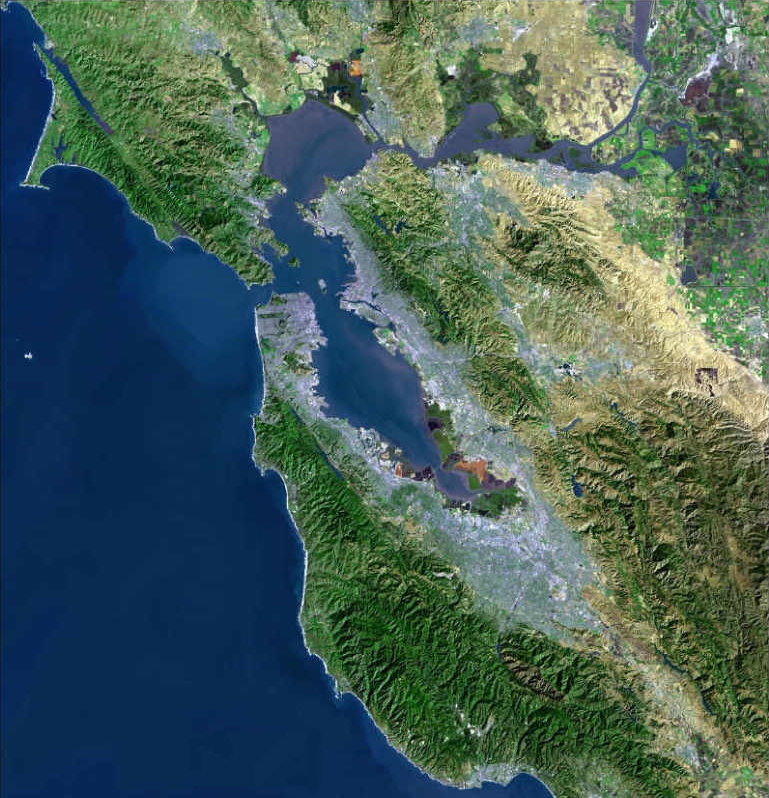
Sunol is a small unincorporated community in Alameda County, California, with a population of approximately 900 residents. It sits in the Sunol Valley, a rural pocket of open ranchland and rolling hills tucked between the more developed cities of Fremont and Pleasanton. The community has a quiet, old-fashioned feel, with a compact historic downtown, a working farm, and surrounding rangelands that have long defined its character. Sunol is roughly 30 miles southeast of San Francisco and serves as a gateway to the East Bay's regional open space, including the popular Sunol Regional Wilderness. Its location makes it a convenient rural retreat for visitors exploring the inland and southern reaches of the Bay Area.
Sunol Regional Wilderness is one of the most popular destinations in the East Bay Regional Park system and lies just a few minutes from the community. The park encompasses roughly 6,800 acres of rugged terrain, including grassy ridges, oak woodlands, and a dramatic canyon carved by Alameda Creek. Visitors come for the network of hiking trails, including the steep climb up to the high water bridge, and for the chance to see wildlife such as golden eagles, deer, and occasionally reintroduced California condors. The wilderness also contains the historic Sunol Water Temple, a Grecian-style structure built in 1910 to mark the source of the San Francisco water supply.
Mission San José, one of the most beautifully restored of California's Spanish missions, lies about 15 minutes northwest of Sunol in nearby Fremont. Founded in 1797 and once the largest of the California missions, it retains its original adobe church, a mission museum, and the surrounding historic grounds. The site is a National Historic Landmark and draws visitors interested in the state's colonial era and the history of the Ohlone people who lived in the valley long before Spanish contact. The restored mission church is widely considered the finest example of mission architecture still standing in California.
A short distance to the north, the Niles Canyon Railway offers heritage train rides through scenic Niles Canyon between Sunol and the Niles district of Fremont. Operated by the Pacific Southwest Railway Museum, the line runs along a route once used by the western approach of the transcontinental railroad and has become a favorite of rail enthusiasts and families. The main Niles depot is roughly 15 minutes from Sunol, with weekend excursions and seasonal special-event trains running throughout the year.
For travelers who want a taste of small-town California with easy access to a major metro area, Sunol offers a rare blend of pastoral quiet and Bay Area convenience. The community's handful of restaurants, inns, and tasting rooms draw weekend visitors from San Jose, San Francisco, and the surrounding East Bay suburbs, while the nearby regional parks, historic missions, and heritage railway give guests plenty of reasons to extend their stay. With its modest scale, scenic surroundings, and proximity to both open space and urban amenities, Sunol fits naturally as a base for travelers who want a slower, more rural experience without straying far from the Bay Area's biggest draws.
Want to know if a property in Sunol is a good investment?
Enter an address to get instant revenue potential and comps.