
Sonora, California
Want to see how Sonora compares to other top cities in California? Explore all city regulations in California. →
Sonora, CA
Generally Investor Friendly
STR Regulations for Sonora, California
Purpose-built for investors evaluating or launching short-term rentals in the City of Sonora, this guide consolidates the city’s current rules, the county’s rules for unincorporated areas, and the state-level framework that still applies. It focuses on what you can and cannot do, exactly how to comply, and where to find the authoritative sources.
Overview: Are Short-Term Rentals Allowed in Sonora, CA?
-
City of Sonora: Yes—allowed, but tightly regulated. A separate Transient Use Permit is required for each parcel. Permits are issued only for the operator’s primary residence within the City; accessory dwelling units (ADUs) are prohibited. The City requires compliance with neighborhood compatibility standards, a local 24/7 contact who can be on-site within 30 minutes, and an annual Business License. Operators must collect and remit the City’s 12% Transient Occupancy Tax (TOT) and pass fire/life-safety inspections prior to issuance and every three years thereafter, with re-inspections as needed.
-
Unincorporated Tuolumne County: Yes—allowed with a passing Fire and Life Safety Inspection (renewed every two years) and a TOT certificate. A local contact must be available 24/7 and able to be on-site within 60 minutes. The County requires interior posting of contact and evacuation information, and defensible space standards must be met.
California (state level): No state prohibition on STRs; compliance is primarily local. State requirements that continue to apply include health and safety device standards (smoke/CO alarms), fire extinguisher placement and maintenance, visible address identification, and defensible space under PRC 4291. California’s hospedaje/hospedaje turístico rules do not create a permitting regime for Sonora.
Bottom line: Sonora explicitly permits STRs (as of June 2024) for primary residences only. Unincorporated Tuolumne County permits STRs with fire inspections and TOT. Investors must confirm whether a target property is inside the City limits or in the unincorporated county, because the permit path and operational standards differ materially.
What do Airbnb hosts actually earn in Sonora?
Sonora hosts earn a median $23,904/year with $159 ADR and 54% occupancy.
Top performers pull in $36,861+ per year.
See the full Sonora market breakdownHow to Start an STR Business in Sonora
- Confirm eligibility and location
- City of Sonora STRs must be the operator’s primary residence. Non-primary residences, second homes, and ADUs are ineligible.
- Verify City limits with the City’s Community Development Department or using the City’s zoning information.
- Apply for a Transient Use Permit (City of Sonora)
- Submit the City’s application to the Community Development Department.
- This permit is required before operating. It is non-transferable and expires upon sale/transfer or if use ceases for more than six months.
- Obtain and maintain a business license
- Apply through the City’s business license process and keep it active annually.
- Register for Transient Occupancy Tax (TOT)
- Collect and remit City TOT at 12% of rent. Register with the City.
- Pass required inspections
- Initial Fire and Life Safety inspection by the Sonora Fire Department prior to permit issuance.
- Follow-up inspections upon request by the City, and recurring inspections every three years.
- Designate a local contact and operationalize compliance
- Ensure a 24/7 local contact who can be on-site within 30 minutes.
- Implement parking, waste, noise, safety-device, and posting standards before hosting.
- Set up tax remittance, recordkeeping, and monitoring
- Collect TOT with each booking, remit per City schedule, and maintain records.
- Track inspection schedules and renewal due dates.
Key Sonora documents and workflow:
- Transient Use Permit application (City): see Transient Use Permit Application link in References.
- Business License information: see City business license page in References.
- TOT and City forms/contacts: City Hall and Administrative Services references below.
How to Start an STR Business in Unincorporated Tuolumne County
- Confirm location is outside City limits
- If the property is not within Sonora’s boundaries, you are under County STR Ordinance 8.70.
- Obtain a TOT Certificate
- Required before operating; no renewal needed unless information changes. Contact the Tax Collector’s office if you have questions.
- Pass the Fire and Life Safety Inspection
- Beginning January 19, 2024, all County STRs must have a paid and passing inspection, renewed every two years.
- Schedule with the Tuolumne County Fire Department—Prevention Division after you submit your application.
- Designate a local contact
- 24/7 phone availability and on-site within 60 minutes; an agent or management company can fulfill this role.
- Complete application and pay fees
- Application fee is $300; payment options include credit card or check.
Key County links and steps:
- STR inspection application portal (County): see County online application link in References.
- Fire and Life Safety Inspection Requirements and Guidelines: see County document in References.
- Ordinance 8.70 and press release guidance: see County links in References.
Required Documents, Permits, Licenses, and Guidelines
City of Sonora
- Transient Use Permit (separate permit per parcel; primary residence only).
- Annual Business License.
- Transient Occupancy Tax registration; collect and remit 12% TOT.
- Fire and Life Safety inspection prior to issuance and every three years thereafter; re-inspections upon request.
- Required postings/affidavits acknowledging the STR standards and tenant disclosures.
Unincorporated Tuolumne County
- TOT Certificate (no renewal required unless info changes).
- STR Fire and Life Safety Inspection with renewal every two years.
- Application fee of $300; interior posting of local contact and emergency evacuation information.
State of California (applies in both jurisdictions unless superseded locally)
- Smoke alarms in each bedroom and on every level; carbon monoxide alarms where fuel-fired appliances or fireplaces are present; maintained in good working order.
- Fire extinguisher (5 lb, 2A:10BC) near the kitchen; additional extinguisher per level; annual professional inspection.
- Visible address identification conforming to minimum size requirements (numbers 4 inches tall with ½-inch stroke thickness where applicable).
- Defensible space compliance per PRC 4291 and local hazardous vegetation ordinances.
Specific Regulations by Jurisdiction
City of Sonora (Chapter 17.64; Ordinance 898, July 2024)
- Eligibility: Only primary residences may obtain a Transient Use Permit. ADUs are prohibited.
- Neighborhood compatibility: STR use must be consistent with the surrounding neighborhood; no external signs advertising STR availability.
- Occupancy: Maximum 2 adults (18+) per bedroom plus one additional person per unit.
- Local contact: 24/7 availability; on-site within 30 minutes; immediate escalation for threats to public health/safety; duty to abate violations.
- Parking: Provide on-site parking where possible; if none, guests may park a maximum of two vehicles on the street subject to availability and regulations. No street or unpaved-area parking for guest vehicles. No RV/boat trailer parking on the street; operator may park on street.
- Waste: Solid waste and recyclable collection through City’s franchisee; no exterior accumulation of trash/debris.
- Fire and life safety: Initial and triennial inspections; must allow City inspections upon request. Must maintain devices per code and meet defensible space requirements. Grills/barbecues must be at least 10 feet from structures and flammables; no outdoor burning pits, bonfires, or campfires; permitted devices must be attended and have extinguishing equipment ready.
- Noise and quiet hours: Quiet hours are 10:00 p.m.–7:00 a.m. on weekdays and 10:00 p.m.–8:00 a.m. on weekends. Unreasonable noise during quiet hours is a public nuisance. A Good Neighbor Policy requires operators to inform guests and address disturbances.
- Prohibitions: No subletting; no weddings, corporate events, or commercial functions.
- Permits and taxes: TOT at 12%; Business License required; annual permit renewal.
- Transfer/expiration: Permit expires upon sale or transfer; expires if STR use ceases for >6 months.
- Enforcement: Violations are misdemeanors/public nuisances. Penalties are administrative: up to $500/day on first citation and up to $1,000/day on subsequent citations within one year. Permits may be denied, suspended, or revoked for incomplete or false applications; code violations; three citations within 12 months; delinquent taxes/fees; threats to public health/safety; failed/refused inspections; lack of permit; or unpaid fees. Appeals are available through a hearing officer and then the City Administrator.
Unincorporated Tuolumne County (Ordinance 8.70; Press Release Jan 2024)
- Fire/Life Safety inspection mandatory; renewal every two years.
- Interior posting: local contact and emergency evacuation information.
- Devices: smoke alarms (each bedroom and each level), carbon monoxide alarms where required, 5 lb 2A:10BC fire extinguisher near kitchen (additional per level if multi-story); annual professional extinguisher inspection.
- Address: visible address per County code (e.g., contrasting numbers).
- Defensible space: comply with PRC 4291 and County hazardous vegetation ordinance; see Cal Fire’s “Ready for Wildfire” guidance.
- Local contact: available 24/7 by phone; able to be on-site within 60 minutes.
- TOT Certificate: required to operate; certificate does not require renewal (update if information changes).
- Operations: continue to remit TOT; follow posting and device standards.
California (state-level standards that persist)
- Health and safety devices and visible address standards as summarized above; defensible space requirements per PRC 4291.
- Local ordinances may be more restrictive; City and County rules control where applicable.
Contact Information
City of Sonora
- City Hall (general inquiries): (209) 532-4541
- Mailing address: City of Sonora, 94 Washington Street, Sonora, CA 95370
- Complaint hotline (24/7): (209) 299-4442 (noise, trash, parking, unlicensed rentals, property damage)
- Online complaint portal: see Reference link for City of Sonora complaint form
- Community Development Department (permitting): contact City Hall and ask for Community Development
- Sonora Fire Department (inspections): contact via City Hall or Fire Department page
- Administrative Services (Business Licenses/TOT): contact City Hall for the appropriate counter
Tuolumne County
- Tuolumne County Fire Department (fire prevention/inspection scheduling): (209) 533-5118; email: fire@co.tuolumne.ca.us
- Fire Prevention Division direct line: (209) 533-5502; email: fireprevention@co.tuolumne.ca.us
- TOT (Tax Collector’s Office): (209) 533-5544
- Mailing address: Tuolumne County Fire Department, 48 Yaney Avenue, Sonora, CA 95370
- Fire station locator and related resources: see County links in References
Source Links
City of Sonora
- Short-Term Rentals page: sonoraca.com/shorttermrental/
- Ordinance No. 898 (July 2024) — City STR amendments: sonoraca.com/wp-content/uploads/2024/07/STR_ordinance_898_Final_7.2024.pdf
- Transient Use Permit Application (City): sonoraca.com/shorttermrental/attachment/transient-use-permit-application_final_ts/
- Business License Information: sonoraca.com/business-services/business-license/
- Sonora Municipal Code (Municode): library.municode.com/ca/sonora/codes/municipal_code
- Sonora Municipal Code Online (Ordinances): sonora.municipalcodeonline.com/book?type=ordinances#name=Title_1_General_Provisions
- City complaint hotline page and online complaint form: sonoraca.com/shorttermrental/ (hotline) and secure.hostcompliance.com/sonora-ca/complaints/type
- City zoning map: sonoraca.com/business-services/citys-zoning-map/
- City general business links (fair housing, forms, etc.): sonoraca.com/business-services/ and sonoraca.com/forms/
- Sonora Fire Department: sonoraca.com/government/departments/fire-department/
- Community Development Department: sonoraca.com/city-services/departments/community-development/
Tuolumne County
- STR Ordinance Information page (overview): www.tuolumnecounty.ca.gov/1859/Short-Term-Rental-STR-Ordinance-Informat
- STR application portal: tuolumnecountyca.portal.opengov.com/categories/1076/record-types/6673
- Fire and Life Safety Inspection Requirements and Guidelines: www.tuolumnecounty.ca.gov/DocumentCenter/View/28275
- Ordinance 8.70 (Chapter 8.70): www.tuolumnecounty.ca.gov/DocumentCenter/View/26375/Chapter-870-Inspection-of-Short-Term-Rentals?bidId=
- STR Fire and Life Safety Inspection Press Release (Jan 24, 2024): www.tuolumnecounty.ca.gov/DocumentCenter/View/26718/Short-Term-Rental-Fire-and-Life-Safety-Inspection---Press-Release-
- TOT (Transient Occupancy Tax) page: www.tuolumnecounty.ca.gov/916/Transient-Occupancy-Tax
- Cal Fire Ready for Wildfire (defensible space): readyforwildfire.org/prepare-for-wildfire/defensible-space/
- Tuolumne County Ordinance Code (hazardous vegetation, addresses): www.tuolumnecounty.ca.gov/165/Tuolumne-County-Ordinance-Code
- Tuolumne County Burn Permits: burnpermit.fire.ca.gov/
- Find your fire station: www.tuolumnecounty.ca.gov/832/Find-Your-Fire-Station
Media Context (Sonora policy shift, June 2024)
- “Sonora Ends Prohibition On New Short-Term Rentals” (myMotherLode): www.mymotherlode.com/news/local/3378648/sonora-ends-prohibition-on-new-short-term-rentals.html
Practical Compliance Checklist for Investors
- Location and eligibility: Confirm City limits and primary-residence eligibility (City) or unincorporated status (County).
- Permits and certificates: Secure Transient Use Permit (City) or schedule Fire and Life Safety Inspection (County). Obtain/activate TOT certificate.
- Business license (City): Apply, maintain, and renew annually.
- Safety devices and posting: Install smoke/CO alarms, fire extinguishers (with annual inspections), and post local contact and evacuation information (County). Ensure visible address per code.
- Operational standards: Enforce quiet hours, cap occupancy, arrange on-site parking, and set up City franchisee waste service (City). Ensure defensible space compliance.
- Taxes and recordkeeping: Collect and remit TOT. Maintain booking, guest, and tax records.
- Inspections and renewals: Track City triennial inspections and County biennial inspections; remedy any violations promptly.
- Local contact: Provide 24/7 coverage with documented response times (30 minutes for City; 60 minutes for County).
- Enforcement posture: Monitor complaints; implement a proactive guest education and response protocol to avoid citations and potential permit revocation.
This guide reflects the City of Sonora’s Ordinance 898 and the Tuolumne County STR regime as of 2024. Always verify the latest postings with the City and County before initiating or renewing operations.
Next step
Found a property in Sonora?
Paste any address and get estimated revenue, cash-on-cash return, and comparable STR performance in under 5 minutes. 3 free analyses per day.
Free brief
Get the free Sonora STR Investment Brief
Revenue data, top neighborhoods, seasonal trends, and the key regulations for Sonora, California in one email.
Sonora
Market Saturation Score
Photos of Sonora



Overview of Sonora
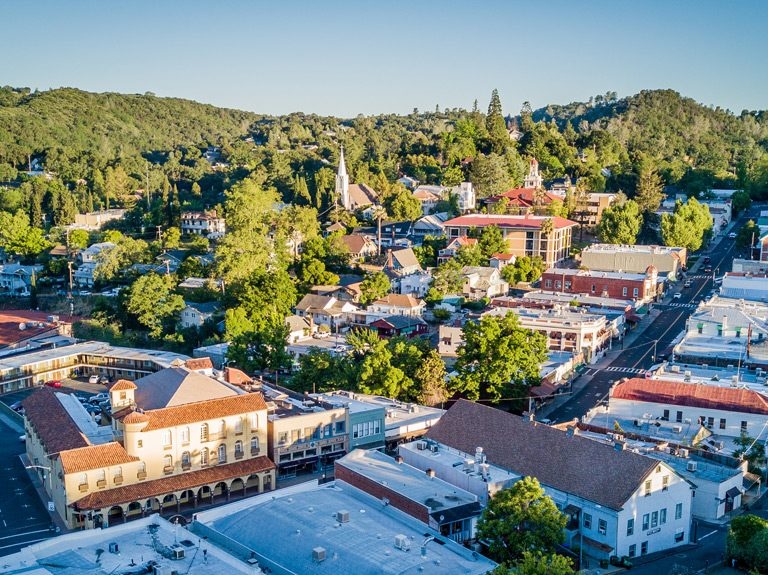
Sonora is a small historic city in Tuolumne County, California, with a population of roughly 4,800 residents. Tucked into the western foothills of the Sierra Nevada in the heart of California's Gold Country, the city has retained much of its 19th-century character, with a compact downtown of preserved brick storefronts, Victorian-era buildings, and a pace that feels far removed from the urban centers to the west. It serves as the county seat of Tuolumne County and is best known as a gateway to Yosemite National Park, particularly via the less-crowded Highway 108 corridor, as well as a base for exploring the surrounding Gold Rush–era towns. Sonora sits about 140 miles east of San Francisco and roughly 100 miles southeast of Sacramento, making it a reachable weekend escape for travelers from across central and northern California.
Yosemite National Park is the marquee draw of the region, and Sonora's position along Highway 108 places visitors within roughly an hour and a half of the park's Big Oak Flat entrance. The route climbs from foothill oak and pine country up through the Sierra, offering one of the most scenic approaches to the park. From this corridor, travelers can reach the high country, Hetch Hetchy, and the western side of the valley with notably less traffic than the busier southern and western approaches.
Just minutes north of Sonora, Columbia State Historic Park preserves a genuine Gold Rush town that has been restored to look much as it did in the 1850s. Visitors can pan for gold, ride a stagecoach, explore working blacksmith and candle-dipping shops, and walk the same Main Street that once bustled with miners on their way to the diggings.
Nearby in Jamestown, Railtown 1897 State Historic Park is home to one of the oldest operating railroad roundhouses in North America and is known as the "Movie Railroad" for its appearances in hundreds of films and television shows. Visitors can ride behind vintage steam and diesel locomotives, tour the roundhouse, and explore railroad exhibits, making it a family-friendly stop just a short drive from Sonora.
For those drawn to the outdoors, Pinecrest Lake sits at about 5,600 feet in the Stanislaus National Forest roughly 45 minutes east of the city. The lake offers swimming, fishing, hiking, and lakeside camping, and it pairs naturally with a visit to nearby Dodge Ridge, a family-friendly ski area that transforms the surrounding forest into a winter playground.
Sonora's appeal for short-term rental investors lies in its rare combination of small-town charm and year-round demand drivers. Gold Rush history draws heritage and weekend travelers, the Yosemite gateway brings a steady stream of park-bound visitors seeking a more affordable and quieter base, and the surrounding national forest, lake, and ski resort create distinct summer and winter seasons. Its relative accessibility from the Bay Area and Sacramento, paired with a downtown that still feels authentically rooted in its 19th-century origins, gives the city a strong case as a versatile, four-season rental market.
Want to know if a property in Sonora is a good investment?
Enter an address to get instant revenue potential and comps.