
Salinas, California
Want to see how Salinas compares to other top cities in California? Explore all city regulations in California. →
Salinas, CA
Generally Investor Friendly
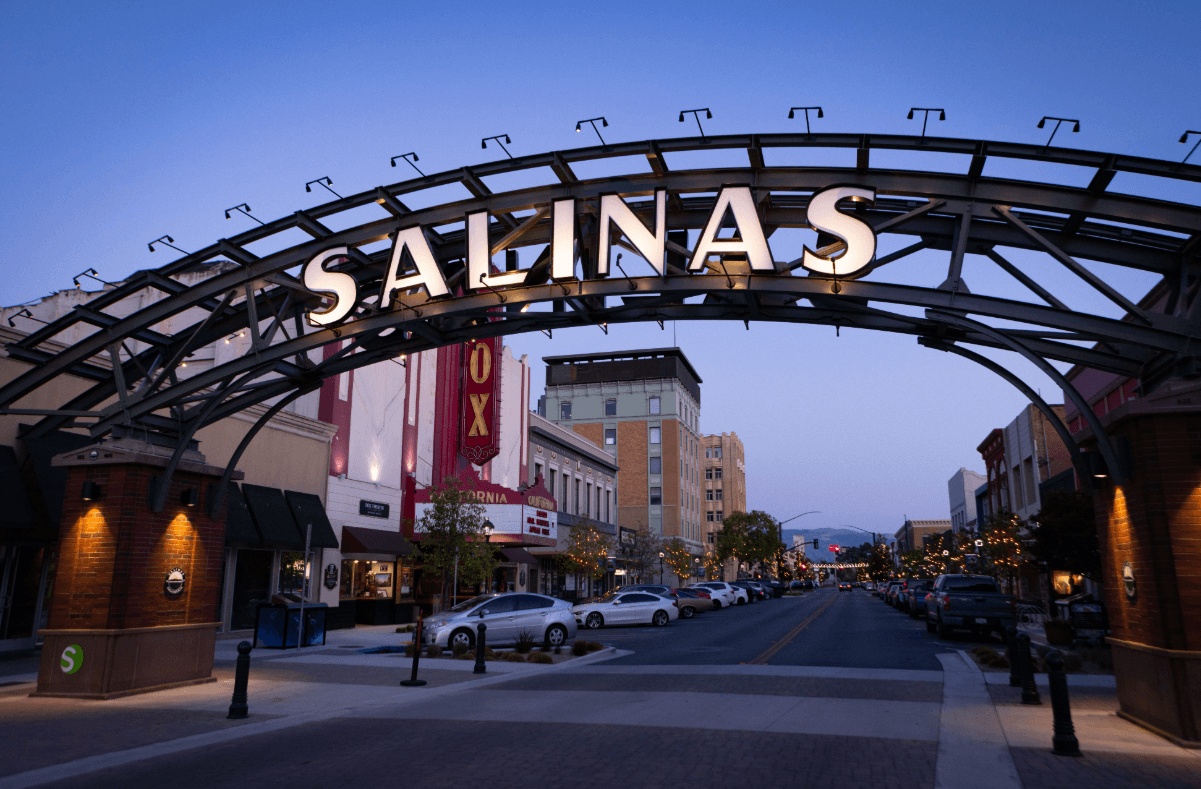
STR Regulations for Salinas, California
Overview: Are short-term rentals allowed in Salinas, CA?
- Short-term rentals are permitted in Salinas, CA, subject to federal, state, and local rules. As of the latest information available here, Salinas does not publish city-specific short‑term rental rules. Therefore, operators must follow California state‑level rules and should look to Monterey County’s short‑term rental framework only if the property is located in the unincorporated coastal zone of Monterey County. Properties inside the City of Salinas are governed by state rules unless Salinas adopts a local ordinance in the future.
- Key takeaway for investors: Salinas does not appear to impose a separate STR licensing or permitting regime at this time. You should assume standard California residential landlord‑tenant laws and state STR rules apply, and confirm the property’s jurisdiction to ensure you are not inadvertently in the unincorporated coastal zone where Monterey County’s stricter rules could apply.
How to start a short‑term rental business in this market
- Step 1: Confirm jurisdiction and zoning.
- Verify your parcel is inside the City of Salinas and not in the unincorporated coastal zone of Monterey County. Monterey County’s STR requirements are limited to unincorporated coastal areas; they do not govern properties within incorporated cities.
- Confirm that short‑term lodging is an allowed use under the property’s zoning (residential zones generally permit transient occupancy; if your property is in a special overlay or commercial zone, verify use restrictions).
- Step 2: Structure the business and insurance.
- Form an appropriate business entity (e.g., LLC) for liability protection.
- Obtain short‑term rental insurance that covers premises liability, property damage, and loss of income. Confirm coverage is adequate for transient occupancy.
- Step 3: Compliance with state rules.
- California’s statewide “short‑term rental” rules (AB 3182 and related statutes) apply to many aspects of STR operations, including:
- Hosting platforms must collect and remit transient occupancy taxes and are prohibited from listing noncompliant units.
- Local governments may enforce local ordinances and caps, but absent a city ordinance, statewide rules govern.
- Operators must comply with all state advertising and registration requirements that apply to STRs.
- California’s statewide “short‑term rental” rules (AB 3182 and related statutes) apply to many aspects of STR operations, including:
- Step 4: Tax compliance.
- Transient Occupancy Tax (TOT) is typically collected by hosting platforms; ensure registration and reporting obligations are met for any direct or platform‑based bookings.
- Track gross receipts and remit TOT where applicable under state law and local practice for transient lodging.
- Step 5: Safety, habitability, and consumer protection.
- Ensure working smoke detectors and carbon monoxide alarms as required for lodging.
- Maintain safe conditions, posting emergency contact information and house rules.
- Provide a functioning primary entrance lock and safety information consistent with state requirements.
- Step 6: Guest screening and operations.
- Adopt a screening process aligned with fair housing standards for any mid‑term or longer stays that could be treated as tenancies.
- For stays that clearly qualify as transient lodging, align policies with platform rules and state consumer protection standards.
- Step 7: Documentation and policies.
- Draft house rules and cancellation policies.
- Maintain guest records and booking logs.
- Prepare disclosures where applicable (e.g., occupancy limits, quiet hours if relevant).
Required documents, permits, licenses, and guidelines
- State and general requirements (apply to Salinas absent city‑specific rules):
- Business registration appropriate to your entity type (e.g., Articles of Organization for an LLC; fictitious business name if operating under a “doing business as” name).
- STR registration or compliance steps as required by California state law for short‑term rentals and hosting platforms.
- Transient Occupancy Tax registration and remittance procedures for lodging operators.
- Insurance documentation evidencing coverage for transient lodging operations.
- Property hazard disclosures and safety documentation (smoke/CO alarms, emergency contacts, egress safety).
- If your property is in unincorporated Monterey County coastal zone (verify first):
- Monterey County short‑term rental permit or registration (if applicable to your property’s location).
- Application fee (source indicates a $965 application fee; confirm with the County for current amounts and applicability).
- Compliance with any County limits and operational standards (e.g., hosted vs. unhosted distinctions, frequency limits, safety requirements).
- Best practices (advisory):
- House rules, occupancy policies, and guest handbook.
- Clean‑turn standards and inspection checklists.
- Guest communication templates and incident reporting procedures.
- Financial records sufficient for tax filings and TOT remittance.
Specific regulations for short‑term rentals in this city, county, and state
- City of Salinas (no city‑specific STR ordinance identified in the provided sources):
- Absent a local STR ordinance, operators follow California state rules and general residential landlord‑tenant laws for any arrangement that constitutes a tenancy (e.g., longer‑term stays).
- Maintain transient lodging standards for short‑term stays and ensure TOT compliance through hosting platforms or direct collection.
- Monterey County (only applies to the unincorporated coastal zone):
- The County’s short‑term rental rules are focused on unincorporated coastal areas and include distinctions between hosted and unhosted rentals.
- Source summary indicates:
- 4% cap on unhosted STR permits in the coastal zone (applies only to the unincorporated coastal zone; not applicable to Salinas or other incorporated cities).
- “Limited Vacation Rental” classification allowing up to three rentals per year for unhosted properties without a commercial permit.
- Commercial Vacation Rental category with constrained permits subject to the cap.
- Application fee referenced at $965 (confirm fee and applicability directly with Monterey County).
- Important: Do not assume these County provisions apply inside the City of Salinas. The County cannot impose zoning or permit requirements within incorporated cities.
- State of California (applies statewide unless preempted by local ordinance):
- AB 3182 establishes statewide standards for short‑term rentals and hosting platforms, including:
- Prohibiting local governments from imposing blanket caps on total nights rented or occupancy limits that conflict with state law.
- Requiring hosting platforms to collect and remit transient occupancy taxes and to remove noncompliant listings.
- Establishing advertising and registration requirements for STR operators.
- Operators must also comply with general health and safety obligations applicable to lodging.
- AB 3182 establishes statewide standards for short‑term rentals and hosting platforms, including:
Contact information for the local authority in charge of STRs
- City of Salinas:
- No city‑specific short‑term rental contact is provided in the sources. For zoning/use questions or if Salinas adopts an STR ordinance in the future, contact the City of Salinas Planning Division.
- Monterey County (for properties in the unincorporated coastal zone):
- Monterey County Housing and Community Development – Permit Center
- Short‑Term Rentals page (official): www.countyofmonterey.gov/government/departments-a-h/housing-community-development/permit-center/short-term-rentals
- Vacation Rentals – Ordinances/Plans Under Development (reference): www.countyofmonterey.gov/government/departments-a-h/housing-community-development/planning-services/advance-planning/ordinances-plans-under-development/vacation-rentals
Links to source pages (and how to interpret them)
- Monterey County – Short‑Term Rentals (Permit Center): www.countyofmonterey.gov/government/departments-a-h/housing-community-development/permit-center/short-term-rentals
- Authority: This is Monterey County’s official STR page. It governs unincorporated areas within the County, not incorporated cities like Salinas. Use it to confirm permit requirements, application procedures, and whether your property falls under County jurisdiction (e.g., unincorporated coastal zone).
- Monterey County – Vacation Rentals (Ordinances/Plans Under Development): www.countyofmonterey.gov/government/departments-a-h/housing-community-development/planning-services/advance-planning/ordinances-plans-under-development/vacation-rentals
- Authority: Official County planning page for evolving ordinances. It provides context on rulemaking; verify current rules and applicability before relying on any single provision.
- From Weekend Rentals to Full‑Time Tenants: Navigating Monterey’s STR Crackdown (industry commentary): coastandvalleypm.com/from-weekend-rentals-to-full-time-tenants-navigating-montereys-str-crackdown/
- Authority: Industry blog. It highlights the County’s restrictions in unincorporated coastal areas, including the 4% cap, three‑rental limit for unhosted properties, and $965 application fee. Treat this as a non‑official summary and confirm details with Monterey County before acting.
- Coastal Commission report on Monterey County STRs (referenced in industry commentary; non‑official summary): documents.coastal.ca.gov/reports/2025/8/w15a/w15a-8-2025-report.pdf
- Authority: California Coastal Commission report. Useful for understanding policy context on coastal short‑term rentals. It does not replace County or City codes.
Practical guidance for investors in Salinas
- Treat Salinas as a state‑regulated STR market absent local ordinances. Build compliance around California’s AB 3182 requirements and standard lodging best practices.
- Verify jurisdiction: If your parcel is outside City limits or within the unincorporated coastal zone, Monterey County rules may apply. This affects permits, caps, and frequency limits.
- Prepare for TOT and platform compliance: Ensure you understand transient occupancy tax obligations and platform listing rules.
- Anchor your operations in safety and documentation: Smoke/CO compliance, clear house rules, robust guest communications, and meticulous records will reduce risk and support tax compliance.
- Monitor for local changes: City‑specific STR rules could emerge. Subscribe to City and County updates and periodically revisit official sources to maintain compliance.
What do Airbnb hosts actually earn in Salinas?
Salinas hosts earn a median $40,712/year with $272 ADR and 60% occupancy.
Top performers pull in $62,712+ per year.
See the full Salinas market breakdownNext step
Found a property in Salinas?
Paste any address and get estimated revenue, cash-on-cash return, and comparable STR performance in under 5 minutes. 3 free analyses per day.
Free brief
Get the free Salinas STR Investment Brief
Revenue data, top neighborhoods, seasonal trends, and the key regulations for Salinas, California in one email.
Salinas
Market Saturation Score
Photos of Salinas


Overview of Salinas
Salinas sits in the heart of California's Monterey County as the county seat and the largest city in the Salinas Valley, with a population of approximately 160,000 residents. The city carries a strong agricultural identity, often called the "Salad Bowl of the World" for the vast fields of lettuce, strawberries, and other produce that surround it, and it holds an enduring literary legacy as the hometown of Nobel Prize-winning author John Steinbeck. Located roughly 100 miles south of San Francisco and about 20 miles inland from the Pacific coast, Salinas functions as a working agricultural hub that doubles as a gateway to the Monterey Bay region's beaches, golf courses, and coastal tourist destinations.
The National Steinbeck Center in downtown Salinas anchors the city's cultural identity, with exhibits drawn from the life and work of its most famous native son, including artifacts tied to East of Eden, The Grapes of Wrath, and Of Mice and Men. Visitors can explore galleries dedicated to his novels and his deep connection to the surrounding valley, then stroll the surrounding blocks of Oldtown Salinas. The museum is within easy reach of most vacation rentals in the city and offers a meaningful stop for literary travelers passing through the region. National Steinbeck Center
About 30 to 40 minutes east of Salinas, Pinnacles National Park rises dramatically from the Gabilan Range, offering hikers a chance to wander among towering volcanic rock formations, scramble through talus caves, and spot the reintroduced California condor soaring overhead. The park's two main areas—the east side off Highway 25 and the west side off Highway 146—make it accessible as either a day trip or a longer overnight excursion, and it provides a rugged counterpoint to the coast's gentler landscapes.
West of Salinas, the Monterey Bay shoreline waits roughly 20 to 30 minutes away via Highway 68. The coastal city of Monterey is home to the renowned Monterey Bay Aquarium, Cannery Row's preserved waterfront, and the start of the famous 17-Mile Drive. Further south along Highway 1, the cliffs and redwood groves of Big Sur unfold over a scenic drive of about 90 minutes, drawing photographers, hikers, and weekend road-trippers from across the country.
With its central position between the fertile valley, the dramatic coast, and a relatively young national park, Salinas offers short-term rental guests an unusually rich mix of experiences within a single stay. Travelers can spend mornings touring farm stands, afternoons walking the trails at Pinnacles, and evenings dining in Oldtown before returning to a comfortable base that feels authentically Californian—far removed from the more crowded coastal hotels but close enough to enjoy them whenever the mood strikes.
Want to know if a property in Salinas is a good investment?
Enter an address to get instant revenue potential and comps.