
Running Springs, California
Want to see how Running Springs compares to other top cities in California? Explore all city regulations in California. →
Running Springs, CA
Generally Investor Friendly
STR Regulations for Running Springs, California
Overview: Are Short-Term Rentals Allowed in Running Springs, CA?
YES, short-term rentals are explicitly allowed in Running Springs, California. As an unincorporated community located in the San Bernardino County mountain region, Running Springs properties are subject to San Bernardino County's Short-Term Rental ordinance. The county permits short-term rentals for dwellings located in mountain and desert areas when rented for periods of thirty days or less, subject to obtaining the required permit and complying with all applicable regulations.
Running Springs, situated in the San Bernardino Mountains, benefits from the county's STR program specifically designed for mountain and desert communities. This presents significant investment opportunities given the area's proximity to ski resorts and hiking trails, creating strong seasonal demand for vacation rentals.
What do Airbnb hosts actually earn in Running Springs?
Running Springs hosts earn a median $24,278/year with $223 ADR and 40% occupancy.
Top performers pull in $36,727+ per year.
See the full Running Springs market breakdownHow to Start a Short-Term Rental Business in Running Springs
Step 1: Verify Property Eligibility
Confirm your property is located within San Bernardino County's mountain region boundaries and meets all zoning requirements. The property must be a residential dwelling unit legally permitted for habitation.
Step 2: Understand the Application Timeline
The application process involves multiple mandatory waiting periods:
- Project Notice: 20 calendar days for surrounding property owners to submit comments
- Permit Issuance Notice: 30-day appeal period before permit issuance
- Total Processing Time: Typically 7+ weeks from application submission to permit issuance
Step 3: Complete the Application Process
- Register and log in to the EZ Online Permitting (EZOP) system
- Create and submit an application with all required documentation
- Pay applicable fees after staff review and fee assignment
- Complete exterior inspection with County Code Enforcement
- Address any compliance issues within the specified timeframe
- Receive permit and operational documentation
Step 4: Post-Permit Requirements
- Post permit and Good Neighbor brochure in visible location within the STR unit
- Obtain Transient Occupancy Tax (TOT) registration certificate
- Maintain compliance with all operational standards
- Renew permit annually
Required Documents, Permits, Licenses, and Guidelines
Primary Permits and Licenses
1. Short-Term Rental Permit
- New Application Fee: $1,144 (as of July 1, 2025)
- Application Fee: $600
- Permit Fee: $285
- Surrounding Property Owner Notification Fee: $259
- Renewal Options:
- No changes: $550
- Physical changes only: $885
- Property management/occupancy changes: $859
- Both changes: $1,144
2. Transient Occupancy Tax (TOT) Registration Certificate
- Tax Rate: 7% of rental fee
- Application: Required through County Tax Collector
- Collection: Remitted monthly to County
Required Documentation
Application Attachments:
- Owner Acknowledgement and Safety Requirements
- Plot Plan Example
- Property Manager Change Request (if applicable)
- Interior Checklist & Owner Acknowledgement (self-certification)
- Renewal Acknowledgement Form (for renewals)
Forms Available:
- STR Appeal Form for Applicants
- STR Appeal for Non-Applicants (Surrounding Property Owners)
- Administrative Citation Appeal Documents
Operational Guidelines
Owner Responsibilities:
- Provide 24-hour phone number for complaint resolution
- Maintain compliance with Fire, Building, Zoning, and Health and Safety Codes
- Limit occupants to approved maximum
- Prevent nuisance behavior and maintain neighborhood peace
- Properly dispose of trash and secure receptacles
- Maintain compliance records for County inspection
Good Neighbor Compliance:
- Post permit and Good Neighbor brochure visibly within unit
- Provide guests with complete rental rules and regulations
- Obtain guest acknowledgment of rules and regulations
- Enforce quiet hours (10 PM - 7 AM)
- Ensure no commercial use (filming, corporate retreats, conferences, weddings)
Specific Regulations for Short-Term Rentals
County-Level Regulations (San Bernardino County)
Short-Term Rental Ordinance § 84.28:
- Defines STR as residential dwelling rented for 30 days or less
- Requires permits for properties in mountain and desert areas
- Mandates exterior inspections for new applications
- Requires renewal annually with re-inspection
- Imposes $1,000/day fine for operating without permit
Noise Ordinance § 83.01.080:
- Prohibits noise violations
- Requires quiet hours enforcement (10 PM - 7 AM)
- Subjects violators to citations and penalties up to $1,000
Operational Standards:
- Maximum occupancy limits (typically 2 persons per bedroom plus 2 additional)
- Off-street parking requirements
- 24/7 local contact requirement
- Good Neighbor Policy enforcement
- Trash management requirements
- Prohibition of commercial events and parties
State-Level Regulations (California)
Business Registration:
- Required for all STR operators
- No state-level STR permits required
- Must register for tax purposes
Health and Safety Requirements:
- Fire extinguishers, smoke detectors, carbon monoxide detectors
- Compliance with California Fire Code
- Maximum occupancy enforcement
- Safety inspection requirements
Tax Obligations:
- Transient Occupancy Tax (TOT): 7% (county rate)
- Federal and state income tax on rental income
- Possible Tourism Business Investment District (TBID) assessment
Enforcement Process
Violations and Penalties:
- $1,000/day for operating without permit
- Up to $1,000 for noise violations
- Additional penalties for health, safety, and zoning violations
- Potential permit suspension or revocation for repeated violations
Complaint Process:
- 24/7 complaint hotline: 1-833-SBC-STR1 (1-833-722-7871)
- Online complaint filing available
- County Code Enforcement investigation
Contact Information for Local Authority
San Bernardino County Code Enforcement
Address: 268 W. Hospitality Lane, Suite 300 San Bernardino, CA 92415
STR Program Email: shorttermrental@lus.sbcounty.gov
24/7 Complaint Hotline: 1-833-SBC-STR1 (1-833-722-7871)
Online Applications: EZ Online Permitting (EZOP): wp.sbcounty.gov/ezop/
STR Program Website: str.sbcounty.gov/
Tax Collector Contact: www.mytaxcollector.com/cuContactUs.aspx
Support Services
- Application Status Updates: Email shorttermrental@lus.sbcounty.gov
- Inspection Scheduling: Through EZOP system
- Appeal Process: Contact Code Enforcement for forms
- Permit Renewals: EZOP online system
Source Pages and Reference Links
Primary County Resources
- STR Program Home: str.sbcounty.gov/
- Getting Started Guide: str.sbcounty.gov/getting-started-2/
- Permitted STR Map: str.sbcounty.gov/permitted-str-properties/
- Contact Information: str.sbcounty.gov/contact-us/
Legal Documents
- STR Ordinance § 84.28: codelibrary.amlegal.com/codes/sanbernardino/latest/sanberncty_ca/0-0-0-172387
- Noise Ordinance § 83.01.080: codelibrary.amlegal.com/codes/sanbernardino/latest/sanberncty_ca/0-0-0-169172
- Violations and Enforcement: codelibrary.amlegal.com/codes/sanbernardino/latest/sanberncty_ca/0-0-0-146924
Application and Forms
- EZ Online Permitting: wp.sbcounty.gov/ezop/
- Owner Acknowledgement Form: str.sbcounty.gov/wp-content/uploads/sites/58/2022/11/Owner-Acknowledgement-Final-06_2025-1.pdf
- Good Neighbor Brochure: str.sbcounty.gov/wp-content/uploads/sites/58/2024/05/GoodNeighborBrochure-updated.pdf
- STR Appeal Forms: lus.sbcounty.gov/code-enforcement-home/forms/
Educational Resources
- Operational Standards Guide: str.sbcounty.gov/wp-content/uploads/sites/58/2024/07/STR-Operational-Standard-Guide-2024.pdf
- Owner/Operator Guide: str.sbcounty.gov/wp-content/uploads/sites/58/2024/05/Guide-for-Short-Term-Rental-Owners-and-Operators-updated.pdf
- Noise Monitoring Program: str.sbcounty.gov/outdoor-noise-monitoring-system/
Tax and Financial
- TOT Information: sanbernardino-ca.county-taxes.com/tourist
- TOT Application: www.mytaxcollector.com/_content/TR/TOTApplication.pdf
External Resources
- Airbnb Local Law Guide: www.airbnb.com/help/article/2469
- County Maps: sbcounty.maps.arcgis.com/apps/MapSeries/index.html?appid=f5a50c44766b4c36a3ae014497aa430d
Important Considerations for STR Investors
Market Dynamics
Running Springs experiences significant seasonality with peak demand during winter (late November through March) for ski activities and summer months for hiking and outdoor recreation. Properties with amenities catering to outdoor enthusiasts (ski storage, hot tubs, fire pits) typically achieve higher occupancy rates and revenue.
Compliance Strategy
Maintain meticulous records of all compliance activities, guest communications, and operational standards. Regular self-audits ensure continued permit eligibility and minimize enforcement risk.
Financial Planning
Budget for initial permit costs (~$1,144), annual renewal fees ($550-1,144), TOT obligations (7% of gross receipts), and potential noise monitoring equipment credits ($150).
Professional Management
Consider engaging experienced STR property managers familiar with San Bernardino County regulations to ensure compliance and maximize operational efficiency.
Next step
Found a property in Running Springs?
Paste any address and get estimated revenue, cash-on-cash return, and comparable STR performance in under 5 minutes. 3 free analyses per day.
Free brief
Get the free Running Springs STR Investment Brief
Revenue data, top neighborhoods, seasonal trends, and the key regulations for Running Springs, California in one email.
Running Springs
Market Saturation Score
Photos of Running Springs


Overview of Running Springs
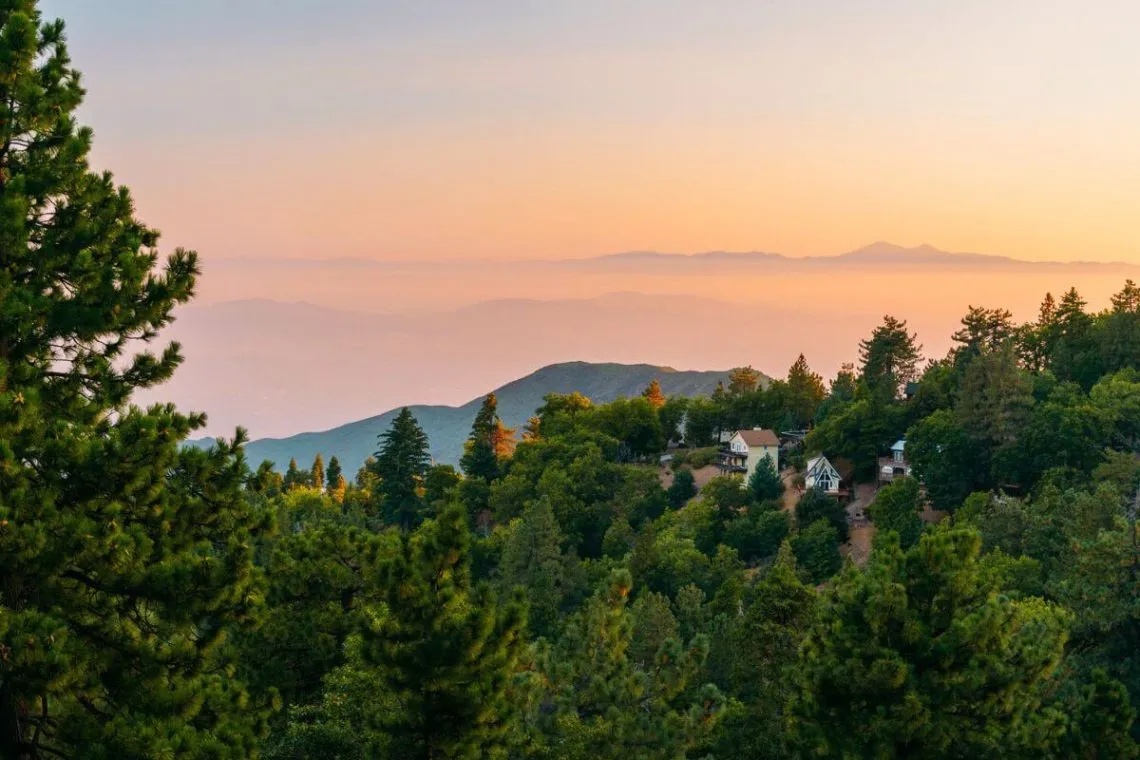
Running Springs is a small unincorporated mountain community in San Bernardino County, California, nestled in the San Bernardino Mountains at roughly 6,000 feet of elevation. With a population of approximately 4,800 residents, it has the feel of a quiet alpine village that swells with visitors during peak ski and summer seasons. The town is best known as a gateway to Big Bear Lake and the surrounding San Bernardino National Forest, and it sits about 80 miles east of Los Angeles, reached via State Route 330 and the Rim of the World Highway.
The community sits within the San Bernardino National Forest, a vast expanse of pine, cedar, and fir woodland that offers hiking, mountain biking, fishing, and camping throughout the warmer months. Trailheads are accessible within minutes of town, and the forest's network of scenic drives makes it easy for visitors to wander toward higher elevations or into adjacent communities. Wildlife watching, picnicking at scenic overlooks, and quiet walks among old-growth conifers are all part of the everyday appeal.
Snow Valley Mountain Resort is just a few miles east of Running Springs, near the neighboring community of Arrowbear. As one of the oldest continuously operating ski areas in Southern California, it offers downhill and cross-country skiing, snowboarding, and snow play areas in winter, plus mountain biking, disc golf, and scenic chairlift rides in summer. Its close proximity makes it a popular draw for short-term visitors who want mountain recreation without committing to the longer, higher-elevation drive into Big Bear.
Big Bear Lake lies approximately 20 miles east of Running Springs along Highway 18, drawing year-round visitors for boating, kayaking, fishing, and swimming in summer and skiing at Bear Mountain and Snow Summit in winter. The surrounding village offers a walkable downtown with restaurants, shops, and the Big Bear Alpine Zoo, a wildlife rehabilitation facility focused on the region's injured and orphaned native species. Drive time from Running Springs typically runs between 35 and 50 minutes, depending on weather and traffic.
Lake Arrowhead, often described as the "Alps of Southern California," is roughly 10 miles west of Running Springs and offers a private lake experience with a charming village, lakeside dining, and a full-service marina. Nearby, the SkyPark at Santa's Village combines outdoor adventure with the nostalgic atmosphere of the original 1955 theme park, featuring mountain biking, archery, and zip lines. The drive from Running Springs usually takes about 15 to 20 minutes.
For short-term rental investors, Running Springs offers a compelling combination of small-town character and proximity to some of Southern California's most popular four-season mountain destinations. Its mid-elevation location brings snowy winters that support ski-season demand while keeping conditions milder and more accessible than the higher Big Bear basin in shoulder seasons. With Los Angeles, Orange County, and the Inland Empire all within a two-hour drive, the community is well positioned to capture weekend and holiday visitors seeking a forested escape from the city.
Want to know if a property in Running Springs is a good investment?
Enter an address to get instant revenue potential and comps.