
Rosamond, California
Want to see how Rosamond compares to other top cities in California? Explore all city regulations in California. →
Rosamond, CA
Generally Investor Friendly
STR Regulations for Rosamond, California
Note: This guide is derived exclusively from the provided regulatory documents for Kern County. For any topic not covered by these documents (e.g., municipal STR licensing or local ordinances that do not exist in the County), investors should verify directly with Kern County and state agencies. Rosamond is an unincorporated area in Kern County; unless stated otherwise below, the referenced Kern County codes apply.
Are Short-Term Rentals Allowed in Rosamond, CA?
Yes—short-term rentals are allowed in Rosamond, CA (Kern County). Under the California Building Standards Code and the Kern County Code of Building Regulations, Kern County allows the rental of dwelling units for transient occupancy when the property is zoned for residential use and conforms to all adopted codes. Properties operating as short-term rentals must comply with:
- Zoning and use requirements of Kern County.
- Building, residential, fire, electrical, mechanical, and plumbing codes as adopted by Kern County.
- Life-safety measures for the applicable occupancy classification (see Occupancy Classification below).
- Certificates, inspections, and permit requirements.
There is no municipal STR licensing scheme in Rosamond. When in doubt, confirm use and zoning with Kern County Planning and Natural Resources. Occupancy must not exceed code limits or local conditions.
What do Airbnb hosts actually earn in Rosamond?
Rosamond hosts earn a median $16,660/year with $142 ADR and 48% occupancy.
Top performers pull in $19,463+ per year.
See the full Rosamond market breakdownHow to Start a Short-Term Rental Business in This Market
- Due diligence and site selection
- Verify the property is within an area of Kern County where transient rental is a permitted use.
- Confirm access and egress standards (approved access road to a public highway; fire apparatus access must be provided).
- Evaluate fire protection needs (e.g., sprinklers, alarms) and any Wildland–Urban Interface (WUI) fire hazards for the site.
- Obtain permits
- Apply for the appropriate Building Permit(s) to establish or adapt the structure for transient occupancy and life-safety systems.
- Coordinate with the Fire Department for any required operational or construction permits tied to fire protection systems.
- Schedule inspections and obtain Certificate of Use and Occupancy for the applicable use.
- Complete life-safety systems
- Install required fire protection systems per occupancy classification:
- Fire sprinklers when required by code (e.g., large assembly areas, certain Group R occupancies, multistory conditions, attic sprinklers, existing buildings exceeding threshold sizes).
- Manual/automatic alarm systems for Group R-1 and Group R-2 occupancies.
- Provide required fire hydrants and water supplies as applicable.
- Legal operations
- Use the property in strict compliance with all permit conditions and code requirements.
- Maintain documentation (permit records, inspection cards, approvals).
- Keep the Building Inspection record card and approved plans on-site until final approval is granted.
Note on Home-Sharing/Transient Rentals: The County documents reference an operational permit regime for hazardous operations (Fire Code Section 105.6/105.7). They do not define a specific “home-sharing” permit. If this type of permit or registration is adopted locally later, County authorities may require two working days’ notice for inspections and direct proprietors to facilitate inspections (per Fire Code amendments).
Required Documents, Permits, Licenses, and Guidelines
- Building Permit(s) to construct, alter, or change occupancy to transient lodging.
- Fire Department permits or plan reviews for fire protection systems, hydrants, standpipes, fire alarm control rooms, and operational permits.
- Plans stamped “approved” by the Building Official.
- Inspection record card available at the jobsite during inspections.
- Certificate of Use and Occupancy (CO) issued by Kern County for the transient lodging occupancy before operation.
Compliance standards
- All applicable Kern County amendments to the California Building Standards Code (Title 24), including:
- California Residential Code (e.g., R-1, R-2, sprinklers, alarms).
- California Building Code (e.g., sprinklers, alarms, fire hydrants, access roads).
- California Fire Code (operational permits, hydrants, WUI requirements).
- Wildland–Urban Interface Code (hazard areas, Fire Protection Plan requirements).
Specific Regulations for Short-Term Rentals in This City, County, and State
City (Rosamond) Regulations:
- Rosamond has no separate municipal code. STRs are governed by Kern County and California state regulations. No city-specific STR licensing, registration, or limits are identified in the provided documents.
County (Kern) Regulations—Building and Life Safety:
Key building and fire safety amendments applicable to transient lodging:
Occupancy Classification and Life Safety:
- Group R-1 and R-2 occupancies require manual/automatic fire alarm systems (Kern County amendments).
- Fire sprinklers are required in many circumstances:
- Assembly buildings with >50 occupants (with exceptions), and for specific square footage and occupancy thresholds.
- Certain Group R-2 (and R-1) occupancies must have alarms.
- Residential attic sprinklers are required in buildings over two stories.
- Multi-tenant structures with sprinklers must have a fire sprinkler control room and riser space.
- Existing buildings must be equipped with sprinklers if area exceeds 10,000 square feet or as otherwise required by code.
- Standpipes using a 1-inch hose are prohibited.
- Type X gypsum (5/8 inch) separation between the garage and dwelling in non-sprinklered buildings is required.
Fire Department Operations:
- The Fire Chief is designated the Fire Code official. The Fire Department requires two working days’ notice for inspection requests; proprietors must facilitate inspections (Kern County amendments).
- Operational permits are required for hazardous operations as set forth in the Fire Code.
Access and Fire Hydrants:
- Approved access roads to a public highway are required. Widths and turn radii are specified, including dead-end and fire lane identification (signs and red curbs may be used).
- Hydrant spacing and installation standards must be met.
Wildland–Urban Interface (WUI):
- Fire Protection Plans are required for new development in designated WUI areas.
Certificates and Inspections:
- Certificate of Use and Occupancy is required for all buildings but not for nonbuilding structures.
- Inspection record card must be maintained on site and updated throughout the inspection process.
- Plans will be stamped “approved” by the Building Official upon issuance of the permit.
Floor Live Loads:
- For residential sleeping areas, floor live loads are amended to 40 pounds per square foot (psf).
Miscellaneous Structural and Site Controls:
- Floodplain construction is regulated by Chapter 17.48 of the Kern County Ordinance Code (referenced throughout).
- Wood foundation systems are generally prohibited, with limited exceptions.
- Additional structural/geotechnical requirements apply due to local climatic, topographic, and seismic conditions (e.g., wind speeds, soils reports, reinforcement requirements).
State (California) Regulations (as adopted by Kern County):
- The California Building Standards Code (Title 24) is adopted by reference, including the California Building Code (CBC), California Residential Code (CRC), California Fire Code (CFC), and related parts (mechanical, electrical, plumbing, energy, existing building). STRs must comply with state-adopted codes as amended locally.
Contact Information (Local Authority for STRs)
-
Kern County Building Inspection Division (Public Works Department)
- Role: Building permits, plan approvals, inspections, certificate of occupancy.
- Authority: Building Official and Fire Chief (as Fire Code official) administer code compliance.
-
Kern County Fire Department (Fire Prevention Office)
- Role: Fire protection system plan review, operational permits, WUI fire protection plans, inspections.
- Authority: Fire Chief is designated the Fire Code official.
Notes from the code:
- Inspections require two working days’ notice to the Fire Department.
- Operational permitting scope has been enlarged to better regulate hazardous operations.
- The Fire Department may inspect and enforce compliance; penalties for violations are available under County code.
Given the absence of contact details in the provided documents, investors should contact Kern County’s public information lines for the Public Works Department (Building Inspection) and Fire Department to obtain current phone numbers, emails, and online portals.
Links to Source Pages
- Kern County Code of Building Regulations (Complete PDF)
Important Compliance Summary for STRs Operating in Rosamond (Kern County):
- Confirm the rental use is permitted under Kern County zoning.
- Design to Group R-1 or R-2 requirements, as applicable, and install manual/automatic alarm systems for these occupancies.
- Install sprinklers where required by the adopted Kern County amendments (e.g., large assemblies, multistory residential attics, existing buildings exceeding thresholds).
- Provide approved access roads and fire hydrants as applicable.
- Obtain the Certificate of Use and Occupancy before operating.
- Maintain all inspection records and approved plans on-site.
- Coordinate with the Fire Chief’s office for operational permits and inspection scheduling.
Next step
Found a property in Rosamond?
Paste any address and get estimated revenue, cash-on-cash return, and comparable STR performance in under 5 minutes. 3 free analyses per day.
Free brief
Get the free Rosamond STR Investment Brief
Revenue data, top neighborhoods, seasonal trends, and the key regulations for Rosamond, California in one email.
Rosamond
Market Saturation Score
Photos of Rosamond

Overview of Rosamond
Rosamond is a high-desert community in eastern Kern County, California, set in the western Mojave Desert about 15 miles north of Lancaster and roughly 70 miles north of downtown Los Angeles. With a population of approximately 18,000, it has the feel of a small, spread-out desert town with open skies, big horizons, and a strong aerospace and aviation flavor. Rosamond serves as a convenient base for travelers visiting Edwards Air Force Base, the surrounding Antelope Valley wildflower country, and the many outdoor and racing draws of the region, and it offers a quieter, more affordable alternative to staying in Lancaster or Palmdale.
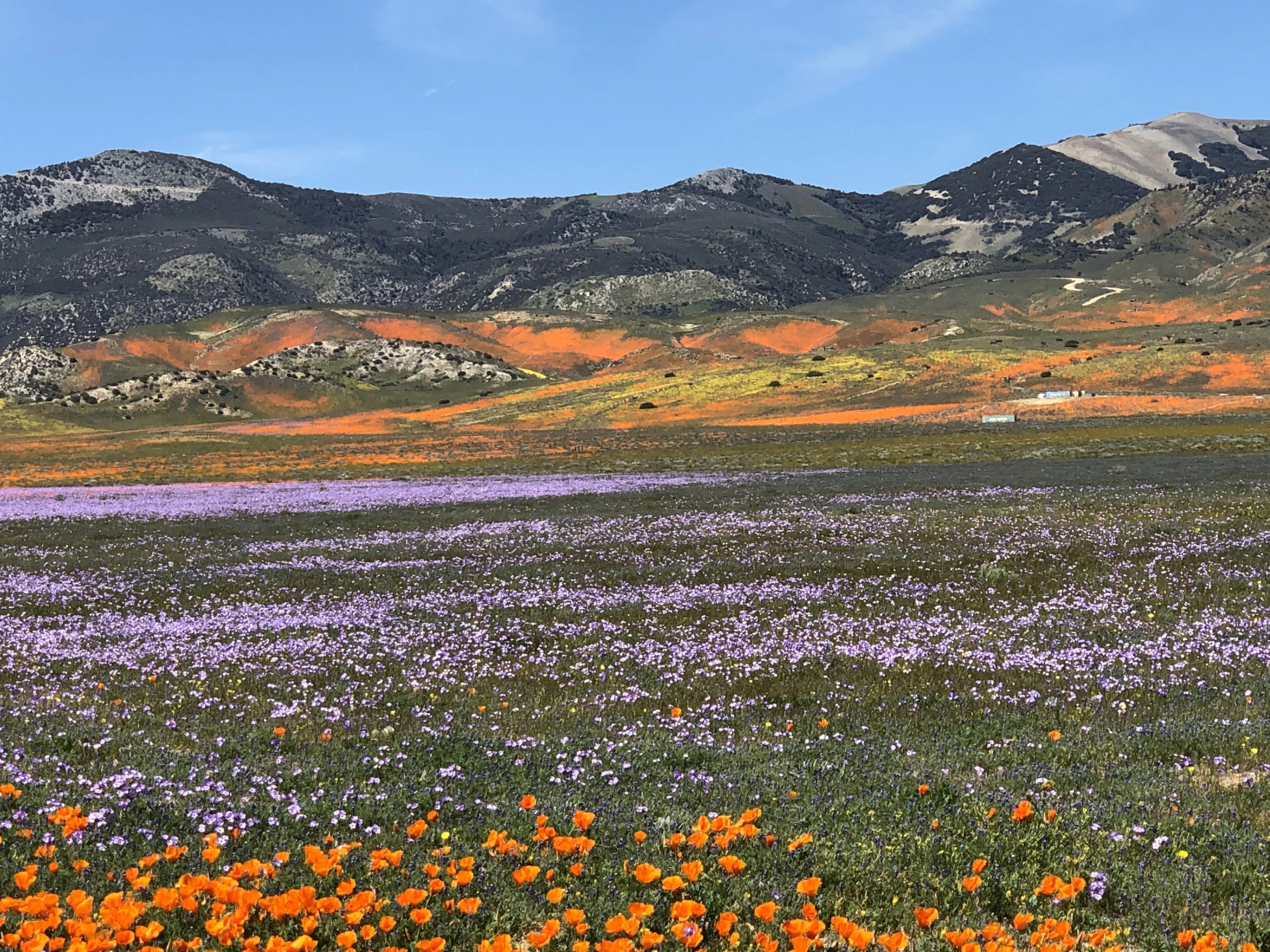
Just west of Rosamond, the Antelope Valley California Poppy Reserve is the area's most famous natural attraction. This state preserve protects rolling hills that, in a good spring, erupt into sweeping orange carpets of California poppies alongside other wildflowers. The reserve sits roughly 25 to 30 minutes from Rosamond, and it draws photographers, hikers, and casual sightseers from across Southern California during the brief bloom season, generally from mid-March through April.
To the east of town, the Edwards Air Force Base area is one of the most storied locations in aviation history. The base, which is the home of the Air Force Test Center and the U.S. Air Force Test Pilot School, sits on the western edge of Rogers Dry Lake, the vast salt flat where Chuck Yeager first broke the sound barrier in 1947. The base itself is largely restricted, but the on-base Air Force Flight Test Museum is open to the public on select days and is about a 20-minute drive from Rosamond, offering aircraft displays and a deep look at decades of flight testing.
Within Rosamond itself, Willow Springs International Raceway is a long-running motorsports complex with a road course, drag strip, and karting facilities. It hosts car clubs, racing schools, and regular event weekends that bring visitors and crews into the area year-round. Combined with the surrounding desert, the Antelope Valley's spring bloom, and easy access to the wider Mojave, Rosamond offers short-term rental owners a flexible base for travelers drawn to aviation heritage, outdoor exploration, and a slower-paced desert stay.
Want to know if a property in Rosamond is a good investment?
Enter an address to get instant revenue potential and comps.