
Milpitas, California
Want to see how Milpitas compares to other top cities in California? Explore all city regulations in California. →
Milpitas, CA
Challenging To Investors
STR Regulations for Milpitas, California
Important note on sources and scope
- This guide is based solely on the provided Milpitas Housing Element document: milpitashousingelement.com/wp-content/uploads/2023/03/Milpitas_HE_HCD_Draft_2023_03_clean.pdf
- The document does not provide the full, up‑to‑date Milpitas Short‑Term Rental (STR) ordinance text or a definitive city‑level policy position on whether STRs are permitted in all zones.
- Where city‑specific rules are not present in the source, this guide provides the statewide California framework that applies to STRs and points you to the correct city channels to verify local requirements and comply.
- This is not legal advice. Always consult the Milpitas Municipal Code and City staff before committing capital.
1) Allowed or Not? (Overview)
- California generally allows short‑term rentals of one’s primary residence subject to state laws (e.g., host registration and safety requirements) and local ordinances.
- The Milpitas Housing Element states the City will “proactively monitor and enforce the City’s Short‑Term Rental ordinance” (Program HE 4.14). This indicates Milpitas has adopted an STR ordinance, but the document does not publish the full rules (zones, caps, permit steps, etc.).
- Bottom line for investors: Assume STRs are legal in Milpitas only if you (a) confirm your property’s zoning allows STRs, (b) complete any local registration/permits, and (c) meet state safety and TOT requirements. Verify details with City staff (see Section 7) before acquisition or listing.
What do Airbnb hosts actually earn in Milpitas?
Milpitas hosts earn a median $34,077/year with $185 ADR and 77% occupancy.
Top performers pull in $53,444+ per year.
See the full Milpitas market breakdown2) How to Start an STR Business in Milpitas
Pre‑acquisition steps
- Confirm zoning and land‑use constraints:
- The General Plan identifies areas for higher density and mixed‑use near transit (e.g., Milpitas Metro and Gateway‑Main Street Specific Plan areas). Housing production in these areas is emphasized.
- Many parts of Milpitas remain single‑family predominant (about 70% of the housing stock), which can be zoned for residential uses that may limit non‑residential activity. Zoning and specific plan overlays govern STRs; verify directly with the City.
- Assess site‑specific constraints:
- Fire: Milpitas is not a “Very High” Fire Hazard Severity Zone by CalFire, but hillside areas to the east of I‑680 have “high”/“very high” fire risk. Insurance availability and wildfire smoke exposure may influence operations and guest policies.
- Flooding: Roughly half of Milpitas lies within the 100‑year floodplain, especially lands west of the Southern Pacific Railroad. Flood risk management and insurance requirements can affect property management and guest communications.
- Seismic hazards: The Hayward Fault crosses the city; ensure structural and insurance decisions account for seismic risk.
- Review the General Plan and Specific Plans:
- The 2021 General Plan update, plus the Metro and Gateway‑Main Street Specific Plans (update in 2023), guide density, design, and mobility in STR‑relevant neighborhoods. Confirm alignment with STR operations.
Business setup essentials
- Entity formation and banking (outside City scope): Maintain accurate books and records for TOT remittance and compliance.
- STR registration/permitting (City):
- Confirm the local registration/permit process and fee schedule with the City of Milpitas (Business License Division; see Section 7).
- If Milpitas requires a short‑term rental certificate or license, obtain it before listing.
- State compliance (AB 1568):
- Register with the State platform (hostregistration.ca.gov) to receive your STR Permit ID.
- Post the Permit ID on all listings and comply with state safety standards (emergency exits, carbon monoxide alarms, posted emergency info, etc.).
- Transient Occupancy Tax (TOT):
- Collect TOT from guests and remit to Milpitas (city TOT commonly applies; the document does not specify the local rate). If your payment processor does not collect/remit automatically, set up monthly/quarterly remittance with the City Finance/Tax team.
- Platform connections:
- Add your listing on Airbnb, Vrbo, etc., and attach your local registration/permit number and any city‑required notices.
- Insurance and safety:
- Maintain liability coverage appropriate for transient rentals.
- Implement and document state‑mandated safety protocols and local fire/flood guidelines.
Operational best practices informed by the document
- Noise, behavior, and trash: Milpitas values neighborhood character and infrastructure capacity. Establish house rules, consider quiet hours, and use technology (noise monitors) to manage risk and community impacts.
- Parking and transit: Many higher‑density areas are transit‑rich (VTA, BART). Provide clear guest parking and transit information to reduce friction with neighbors.
- Emergency preparedness: Prepare guests for earthquakes and localized wildfire smoke; include contact protocols and evacuation guidance.
3) Required Documents, Permits, Licenses, and Guidelines
State (California) requirements
- AB 1568 statewide STR registration:
- Platform: hostregistration.ca.gov
- Outputs: STR Permit ID; must be displayed on all listings.
- Safety: Maintain safe egress routes; install/test carbon monoxide alarms; post emergency contact and evacuation info; comply with local fire codes and flood disclosures.
- TOT collection:
- Collect TOT from guests and remit to the City/Tax Administrator. Keep detailed records and remittance schedules.
Local (City of Milpitas)
- Milpitas Business License/STR Registration:
- Contact the Business License Division for the current STR registration/certificate or transient occupancy permit, fees, posting requirements, and compliance inspections.
- The document references proactive enforcement of the City’s STR ordinance, so assume audits are possible.
- Zoning confirmation:
- Prior to purchase, obtain a zoning clearance or written confirmation from the Planning Division that STR use is permitted at the subject property and within any specific plan overlay.
- Fire, flood, seismic compliance:
- Incorporate City fire, flood, and building code requirements into operating SOPs. Document compliance.
Records and documentation (recommended)
- Local permits, state permit ID, TOT remittances, guest logs, safety inspections, insurance policies, and guest communications.
Note on compliance gaps
- The Housing Element does not provide the full STR ordinance text, fee schedule, inspection checklist, or zoning allowances by zone. Treat this list as a starting point and verify all steps with Milpitas.
4) Specific Regulations (City, County, and State)
State of California (applies regardless of city)
- AB 1568:
- Statewide registration; permit ID posting on all listings.
- Safety requirements (emergency exits, alarms, posted emergency info).
- State enforcement against noncompliant listings and platforms.
- TOT:
- Hosts and platforms are responsible for TOT collection and remittance to the applicable jurisdiction. Many jurisdictions have adopted TRT/STR registration and reporting.
Santa Clara County
- The document references countywide coordination (Santa Clara County Planning Collaborative), Measure A housing funding, and other county programs, but no county‑wide STR prohibition or special STR tax is cited. The county collects TOT in unincorporated areas; Milpitas is incorporated, so City TOT applies.
City of Milpitas
- Housing Element Program HE 4.14: The City will “proactively monitor and enforce the City’s Short‑Term Rental ordinance.” This indicates a formal STR regulatory framework is in place.
- Inclusionary housing: Milpitas has an Affordable Housing Ordinance (15% inclusionary for projects of 10+ units) and related programs. While not directly regulating STRs, this context indicates the City actively manages housing policy and compliance.
- Zoning and density: The General Plan and specific plans emphasize transit‑oriented, mixed‑use, and higher‑density development in certain areas. Whether those areas allow STRs depends on zoning; confirm before acquisition.
- Constraints: The document highlights that processing timelines, fees, and parking standards may be comparatively higher outside the Metro Specific Plan area and that the City is updating zoning and parking standards. Check the current Zoning Ordinance for any STR‑related parking or density rules.
5) Contact Information (Milpitas)
- City of Milpitas – Business License / STR Registration:
- Phone: (408) 586‑3000
- Address: 455 E. Calaveras Blvd., Milpitas, CA 95035
- Recommended email: Contact the City via main line for routing to the Business License Division and STR program staff.
Practical tips when you call
- Ask for the current STR registration/permit process, fees, renewal cadence, inspection requirements, and any posting or safety documentation.
- Confirm TOT rate, reporting schedule, and remittance method.
- Request written zoning confirmation (email acceptable) that STRs are a permitted use at the subject property.
- Request the link/portal for local STR registration (if separate from the state system).
6) Key Links and Source Pages
- Milpitas Housing Element 2023–2031 (HCD Draft): milpitashousingelement.com/wp-content/uploads/2023/03/Milpitas_HE_HCD_Draft_2023_03_clean.pdf
- AB 1568 statewide STR registration portal (for state permit): hostregistration.ca.gov
Next steps to complete your due diligence
- Obtain the full text of Milpitas Municipal Code Chapter(s) governing short‑term rentals and TOT (via the City Clerk or City website).
- Request the City’s current STR fee schedule, inspection checklist, and any local operational standards (noise, occupancy, parking, trash).
- Secure written zoning confirmation prior to closing or listing.
This approach keeps you aligned with what is clearly stated in the provided source while pointing you to the authoritative local channels to resolve the details the Housing Element does not publish.
Next step
Found a property in Milpitas?
Paste any address and get estimated revenue, cash-on-cash return, and comparable STR performance in under 5 minutes. 3 free analyses per day.
Free brief
Get the free Milpitas STR Investment Brief
Revenue data, top neighborhoods, seasonal trends, and the key regulations for Milpitas, California in one email.
Milpitas
Market Saturation Score
Photos of Milpitas


Overview of Milpitas
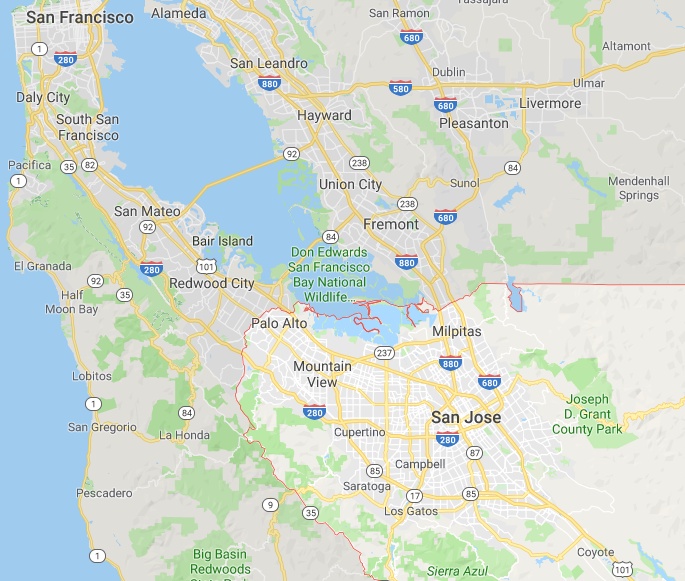
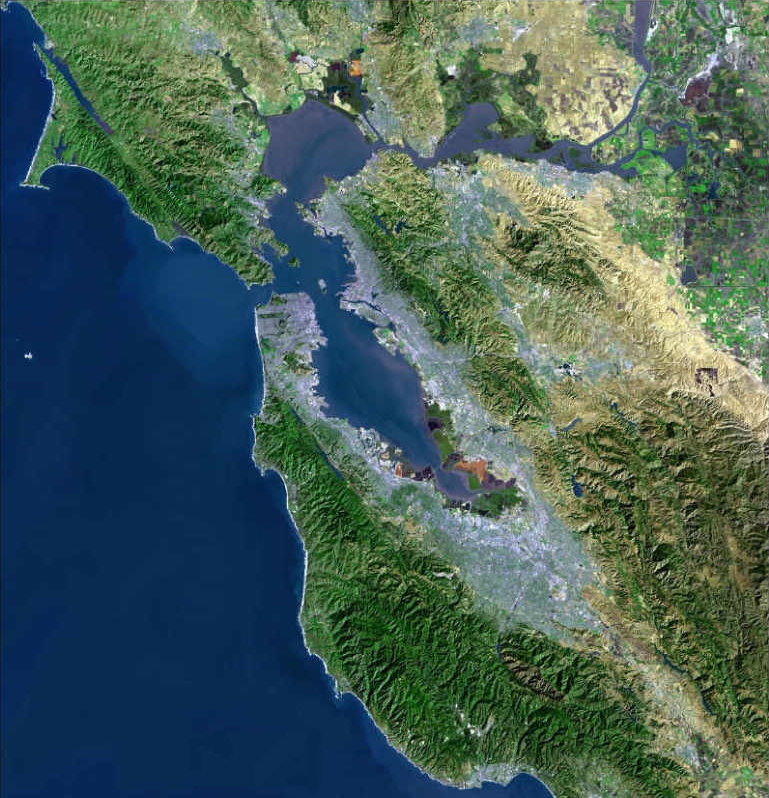
Milpitas sits in Santa Clara County, in the southern reaches of California's San Francisco Bay Area, with a population of roughly 80,000 residents. Often described as a hub of Silicon Valley's industrial and manufacturing backbone, the city carries a hardworking, suburban-meets-tech-campus feel, defined by wide arterial streets, mid-rise office buildings, and a culturally diverse population drawn from across the Bay Area and the Pacific Rim. It serves as a gateway to both the high-tech corridor that runs north toward the rest of the South Bay and the rolling East Bay hills that stretch east toward Fremont and the Tri-Valley. Milpitas lies approximately ten miles north of downtown San Jose and about forty miles southeast of San Francisco, placing it in the heart of one of the most economically dynamic regions in the country.
Just off the interchange of Interstates 680 and 880, the Great Mall of the Bay Area offers a sprawling collection of outlet stores, an indoor ice rink, a cinema, and a vintage carousel, drawing shoppers from across the southern Bay. The complex sits within Milpitas city limits and is typically only a few minutes' drive from anywhere in town, making it a convenient anchor for guests looking to combine sightseeing with retail.
For outdoor recreation, Ed R. Levin County Park spreads across the hills on the city's northern edge, providing miles of multi-use trails for hiking and horseback riding, a disc golf course, a dog park, and panoramic views over the bay. The park is roughly a ten- to fifteen-minute drive from central Milpitas and offers a quick escape into the chaparral-covered slopes that border the urban core.
A short drive east into neighboring Fremont brings visitors to Mission Peak Regional Preserve, a dramatic ridgeline that has become one of the Bay Area's most iconic hiking destinations. The roughly six-mile round-trip climb rewards trekkers with sweeping views of the South Bay, the Diablo Range, and on the clearest days, the distant Sierra Nevada. From Milpitas, the Stanford Avenue trailhead is typically reachable in about twenty to twenty-five minutes.
Milpitas offers a compelling base for short-term rentals thanks to its central position within Silicon Valley, its proximity to major employment campuses, and its quick access to both urban amenities and natural escapes. Visitors can spend a morning shopping at the Great Mall, an afternoon hiking the East Bay hills, and an evening dining in nearby San Jose or Fremont, all without lengthy drives. For travelers pairing business in the tech corridor with leisure across the Bay Area, the city delivers convenience, cultural variety, and a steady stream of year-round demand.
Want to know if a property in Milpitas is a good investment?
Enter an address to get instant revenue potential and comps.