
Menlo Park, California
Want to see how Menlo Park compares to other top cities in California? Explore all city regulations in California. →
Menlo Park, CA
Generally Investor Friendly
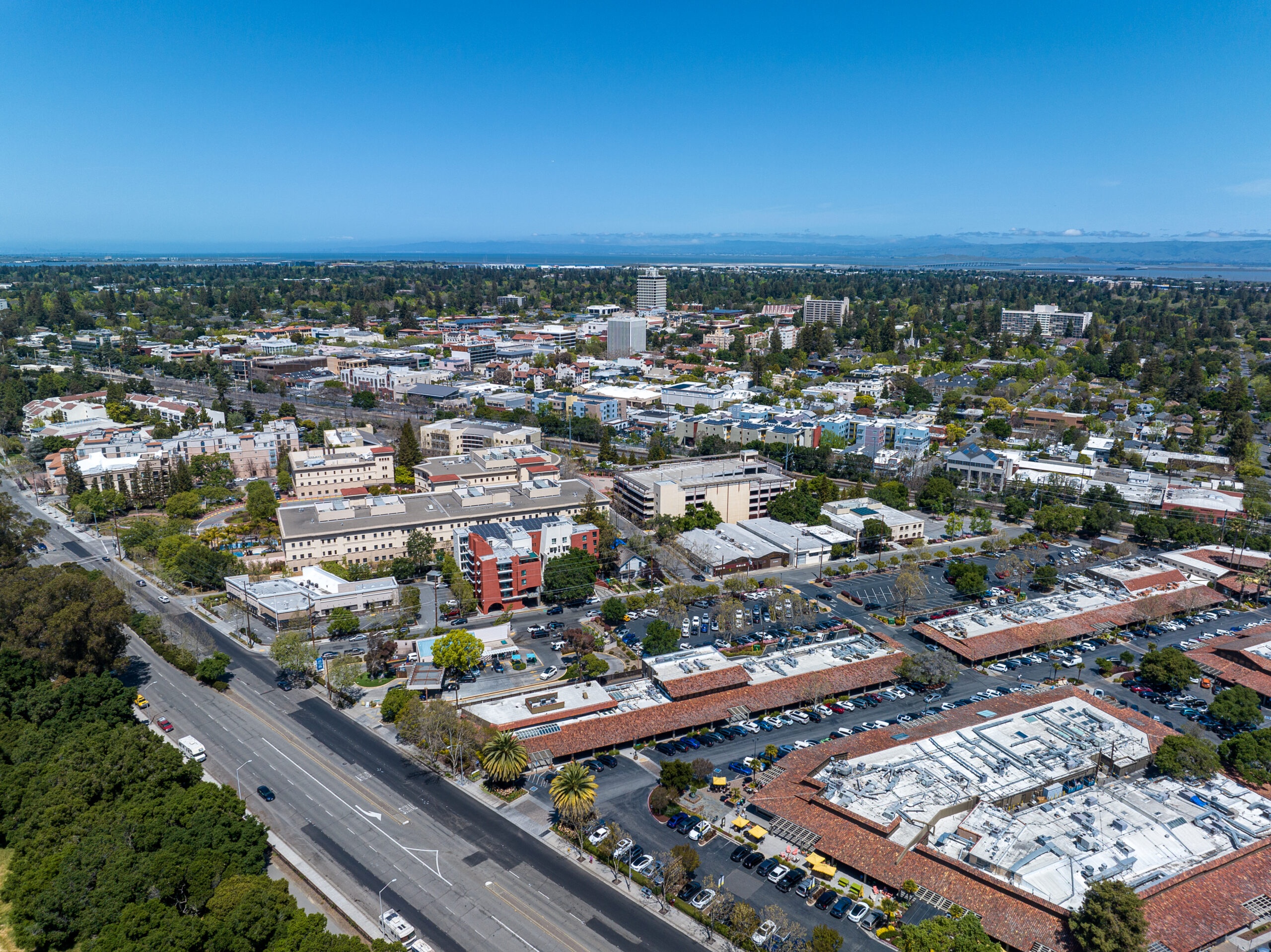
STR Regulations for Menlo Park, California
Executive Summary: Are Short-Term Rentals Allowed?
Short-term rentals are explicitly allowed in Menlo Park, CA, but with significant regulatory requirements and tax obligations. The city has established a framework for STR operations through its Transient Occupancy Tax (TOT) system, with an active registration and enforcement program targeting both hotels and short-term rental operators.
Key Takeaway for Investors: Menlo Park permits STR operations subject to compliance with TOT collection, registration requirements, and state-level restrictions under SB 9 for newly developed units.
What do Airbnb hosts actually earn in Menlo Park?
Menlo Park hosts earn a median $57,318/year with $289 ADR and 83% occupancy.
Top performers pull in $82,987+ per year.
See the full Menlo Park market breakdownHow to Start a Short-Term Rental Business in Menlo Park
Phase 1: Pre-Registration Assessment
Before commencing operations, investors must:
-
Verify Property Eligibility
- Confirm zoning compliance for residential STR use
- For SB 9 units: Verify that units were not created through SB 9 urban lot splits (these have minimum 30-day rental requirements)
- Review any HOA restrictions or lease provisions that may limit STR operations
-
Tax Registration Preparation
- Obtain business identification numbers
- Prepare for monthly TOT collection and remittance obligations
- Set up accounting systems for tax tracking
Phase 2: Official Registration and Setup
-
Register for Transient Occupancy Tax Account
- All STR operators must register through the city's official portal
- Obtain transient occupancy registration certificate
- Registration is mandatory before accepting guests
-
Compliance System Implementation
- Establish monthly TOT filing procedures
- Implement guest billing systems that include TOT collection
- Create documentation systems for tax remittance records
Phase 3: Operational Launch
-
Marketing and Guest Acquisition
- Note: No platform agreements exist between Menlo Park and major STR platforms (Airbnb, Vrbo)
- Hosts must self-collect and remit taxes - platforms will not automatically handle this
- Prepare for manual tax collection and remittance
-
Ongoing Compliance Maintenance
- Monthly TOT returns and payments
- Maintain accurate guest and rental records
- Monitor for regulatory changes
Required Documents, Permits, Licenses, and Guidelines
City of Menlo Park Requirements
Essential Documents:
- Transient Occupancy Registration Certificate (required before operations)
- Monthly TOT returns (due each month)
- TOT remittance payments (14% of gross rental revenue)
- Business identification for tax purposes
Registration Portal:
- Official registration through: menlopark.hdlgov.com
- All operators must create accounts and obtain certificates
Filing Obligations:
- Monthly TOT returns with payment
- Complete details contained in Municipal Code Chapter 3.16
State-Level Requirements (California)
SB 9 Compliance:
- Units created through SB 9 urban lot splits cannot be used as short-term rentals
- Minimum rental term of 30 days applies to SB 9 units
- Owner-occupancy requirements for SB 9 projects (3-year minimum)
Specific Regulations by Jurisdiction
City of Menlo Park Regulations
Transient Occupancy Tax (TOT):
- Current Rate: 14% of gross rental revenue (effective January 2025)
- Future Increases: 15.5% effective January 2026
- Collection Requirement: Must be collected from guests by all transient lodging providers
- Registration Requirement: Mandatory for all hotels and STR operators
- Filing Frequency: Monthly returns and payments required
Historical Context:
- Ordinance enforcement began January 2021
- Prior to 2021, enforcement focused only on hotels
- Estimated 396-524 STR units operating as of 2020, with low registration compliance
County Regulations
No specific San Mateo County STR regulations identified in provided sources. City-level regulations apply.
State of California Regulations
SB 9 (Senate Bill 9) - Urban Lot Split Projects:
- Minimum Rental Period: 30 days for units created through SB 9 urban lot splits
- Short-Term Rental Prohibition: SB 9 units explicitly prohibited from STR use (Airbnb, etc.)
- Owner Occupancy Requirement: 3-year owner-occupancy affidavit required
- Applicability: Applies to R-E-S, R-E, R-1-S, R-1-S (FG), R-1-U, and R-1-U (LM) zoning districts
Municipal Code References:
- Chapter 15.31 (Urban Lot Splits)
- Chapter 16.77 (Two-Unit Developments)
- Chapter 3.16 (Transient Occupancy Tax)
Local Authority Contact Information
Primary Tax Administration Contacts
Administrative Services Director
- Brittany Mello
- Email: bkmello@menlopark.gov
- Phone: 650-330-6675
Interim Finance and Budget Manager
- Rani Singh
- Email: RMSingh@menlopark.gov
- Phone: 650-330-2513
General City Contact Information
City of Menlo Park
- Address: 701 Laurel St., Menlo Park, CA 94025
- Main Phone: 650-330-6600
- SMS: 650-679-7022
- Website: www.menlopark.gov
Planning and Community Development
Senior Planner (SB 9 Projects)
- Chris Turner
- Email: CRTurner@menlopark.gov
- Phone: 650-330-6724
Source Links and References
Official City Resources
-
Transient Occupancy Tax Information
-
Municipal Code Chapter 3.16
-
Online TOT Registration Portal
-
SB 9 Projects and Regulations
-
Municipal Code (Full)
Third-Party Resources
-
STR Tax Enforcement Article (Avalara)
-
STR Ordinance Project Documentation
Critical Compliance Notes for Investors
Tax Collection Responsibility: Unlike many California cities with platform agreements, Menlo Park STR hosts must personally collect and remit TOT - major platforms do not automatically handle this.
Registration Gap: Historical data indicates low compliance rates among STR operators, making proper registration and tax collection a competitive advantage for compliant operators.
State-Level Restrictions: New development under SB 9 creates units that cannot be used for STR, requiring investors to verify any unit's development history before purchase.
Regulatory Evolution: The city actively enforces STR regulations and has increased TOT rates, indicating ongoing regulatory attention to this market segment.
Due Diligence Requirements: Given the complexity of local and state regulations, investors should conduct thorough property and regulatory due diligence before acquiring STR properties in Menlo Park.
Next step
Found a property in Menlo Park?
Paste any address and get estimated revenue, cash-on-cash return, and comparable STR performance in under 5 minutes. 3 free analyses per day.
Free brief
Get the free Menlo Park STR Investment Brief
Revenue data, top neighborhoods, seasonal trends, and the key regulations for Menlo Park, California in one email.
Menlo Park
Market Saturation Score
Photos of Menlo Park



Overview of Menlo Park
Menlo Park is a mid-sized city of roughly 33,000 residents located in San Mateo County on the San Francisco Peninsula in Northern California. It has the polished, low-key feel of an established Bay Area suburb, with tree-lined residential streets, a walkable downtown along Santa Cruz Avenue, and a strong identity tied to science, technology, and education. The city is widely recognized as home to the headquarters of Meta (formerly Facebook) and as the longtime base for SRI International and other major research institutions. It sits between two major metropolitan anchors — roughly 30 miles south of San Francisco and about 15 miles northwest of San Jose — making it a convenient base for travelers who want to explore the Peninsula without the noise or cost of staying directly in either big city.
Just a few minutes south of central Menlo Park, Stanford University sprawls across more than 8,000 acres in adjacent Palo Alto, offering visitors a striking mix of mission-style architecture, public sculpture, the Cantor Arts Center, and the free Rodin Sculpture Garden. The university campus also abuts the Stanford Shopping Center, an open-air retail district that has long drawn Bay Area visitors, and lies within easy reach of downtown Palo Alto's University Avenue, a popular strip of restaurants and bookstores.
In Menlo Park itself, the Allied Arts Guild is a beloved historic complex of red-tile-roofed, Mediterranean-style buildings set among oak trees and rose gardens. Built in the 1920s, it houses a collection of independent boutiques, artisan studios, a nursery, and a café, and it is a regular stop for visitors who enjoy architecture, gardens, and locally made craft goods. It sits off El Camino Real in the western part of the city, a short drive from most Menlo Park neighborhoods.
For outdoor recreation, Bedwell Bayfront Park occupies a large swath of restored salt marsh and upland habitat on the bayside edge of town, with walking and biking trails, picnic areas, and views across San Francisco Bay toward the Dumbarton Bridge. From there, cyclists and hikers can connect onto the broader Bay Trail network, while a short drive east leads to the Don Edwards National Wildlife Refuge, which preserves additional bayland habitat along the South Bay shoreline.
Menlo Park is a compelling base for short-term rentals because it offers the rare combination of a quiet, attractive residential setting and immediate proximity to some of the Bay Area's strongest demand drivers. Visitors can stay in a leafy, suburban neighborhood, walk to local cafés and shops, and still reach San Francisco, San Jose, the Pacific coast, the redwoods of the Santa Cruz Mountains, and the wineries of the Peninsula within an easy drive. For business travelers, academics, families visiting Stanford, and tourists using the city as a hub, that balance of calm, convenience, and access to iconic Bay Area destinations is hard to beat.
Want to know if a property in Menlo Park is a good investment?
Enter an address to get instant revenue potential and comps.