
Lone Pine, California
Want to see how Lone Pine compares to other top cities in California? Explore all city regulations in California. →
Lone Pine, CA
Challenging To Investors
STR Regulations for Lone Pine, California
Overview: Are Short-Term Rentals Allowed in Lone Pine?
Yes, short-term rentals are allowed in Lone Pine, California, but with strict limitations. As of February 11, 2020, Inyo County permits only hosted short-term rentals on residentially zoned properties. This means the property owner or a designated representative must be present and available to address any issues during guest stays. Non-hosted rentals (where no owner is present) are prohibited under current regulations.
What do Airbnb hosts actually earn in Lone Pine?
Lone Pine hosts earn a median $34,121/year with $207 ADR and 58% occupancy.
Top performers pull in $53,134+ per year.
See the full Lone Pine market breakdownHow to Start a Short-Term Rental Business in Lone Pine
Step 1: Property Eligibility Assessment
Before pursuing any permits, verify your property meets the following criteria:
- Zoning Requirements: Your property must be zoned as Open Space (OS), Rural Residential (RR), or specific residential zones (R-1, R-2)
- Hosting Requirement: You must commit to being present or having a representative available during all guest stays
- Location Verification: Contact the Planning Department to confirm permit availability in your specific area (permit caps vary by location)
Step 2: Permit Application Process
Submit applications to the Inyo County Planning Department using their standard permit application form. The process requires coordination with multiple departments and includes annual renewals.
Step 3: Tax Registration and Compliance
Register with the Inyo County Treasurer Tax Collector to collect and remit Transient Occupancy Tax (TOT), which is mandatory for all short-term rental operations.
Required Documents, Permits, Licenses, and Guidelines
Planning Department Requirements
- Planning Department Permit Application: Complete application form (available on county website)
- Hosted Short-Term Rental Authorization: Required for all new permits as of February 2020
- Annual Renewal: Permits must be renewed yearly with the Planning Department
- Compliance Verification: Property must meet all zoning and safety requirements
Treasurer-Tax Collector Requirements
- TOT Operator Registration Form: Mandatory registration to collect transient occupancy taxes
- Monthly Tax Remittance: Regular filing and payment of collected TOT
- Business Registration: May require additional business licensing through county channels
Safety and Operational Requirements
- Insurance Coverage: Liability insurance specifically covering short-term rental activities
- Building Compliance: Property must meet all applicable building and safety codes
- Safety Equipment: Standard safety requirements as mandated by county regulations
Specific Regulations for Short-Term Rentals in Lone Pine
Permitted Zoning Areas
Short-term rentals are allowed in:
- Open Space (OS) zones
- Rural Residential (RR) zones
- Residential R-1 zones
- Residential R-2 zones
Note: R-2 zone restrictions are more stringent - hosted STRs permitted only in dwelling units concurrently occupied as primary residence
Operational Limitations
Occupancy and Parking:
- Maximum of two guests per room
- One vehicle per room allowed on-site
- Off-street parking must be provided on the property
Hosting Requirements:
- Owner or designated representative must be present and available during all guest stays
- Contact information must be provided to guests and posted prominently
- Ability to respond to issues within reasonable timeframes
Property Restrictions:
- Maximum of two hosted rentals per parcel
- In R-2 zones, only one hosted rental permitted
- Owners can maintain permits for rentals on only one parcel
Quiet Hours and Conduct:
- Quiet hours: 9:00 PM to 7:00 AM
- Outdoor amplified sound prohibited during all hours
- Outdoor fires prohibited (except gas fire stoves and barbecues with on/off switches)
Permit Caps and Availability
The total number of permits issued is capped at varying percentages of available dwelling units in each designated area. Permit availability varies significantly by location:
- Minimum: Some areas (like Starlite) allow as few as 2 permits
- Maximum: Other areas (like South/Southeast County) allow up to 29 permits
Important: Even if an area has permits available under the ordinance cap, actual permit availability may be limited. Always contact the Planning Department to confirm current availability before applying.
Permit Duration and Renewal
- Initial Permit: Valid for 3 years from issuance
- Renewal Process: Must reapply every 3 years to establish new permit period
- Revocation Provisions: Unused permits may be revoked; non-compliance can result in permit suspension
Grandfathering Provisions
Non-hosted permits and hosted permits applied for prior to February 11, 2020, are grandfathered in and not subject to the current limitations and restrictions.
Contact Information
Primary Contacts
Inyo County Planning Department
- Phone: (760) 878-0263
- Email: inyoplanning@inyocounty.us
- Address: 168 N. Edwards St, Independence CA 93526
- Website: www.inyocounty.us/services/planning-department
Inyo County Treasurer-Tax Collector
- Phone: (760) 878-0312
- Website: www.inyocounty.us/services/treasurer-tax-collector
- TOT Information: www.inyocounty.us/services/treasurer-tax-collector/tot
Code Enforcement
For zoning violation complaints or compliance issues:
- Contact: Planning Department (primary contact above)
- Process: Written complaint form required for enforcement action
- Note: Remedying violations can be a lengthy process
Important Source Links
Official Government Documents
- Inyo County Short-Term Rental Regulation Page: www.inyocounty.us/services/planning-department/long-range-projects-plans-and-studies/short-term-rental-regulation
- February 11, 2020 Updated Ordinance: www.inyocounty.us/sites/default/files/2020-06/Ordinance%201251.pdf
- Planning Department Permit Application: www.inyocounty.us/sites/default/files/2019-06/2018PlanningDepartmentPermitApplicationPacket-FillableForm_0.pdf
- TOT Operator Registration Form: www.inyocounty.us/sites/default/files/2021-07/Transient_Occupancy_Operator_Registration_Form-FillableForm.pdf
Supporting Documentation
- Short-term Rental Ordinance - Adopted February 2018: www.inyocounty.us/sites/default/files/2019-09/Ordinance1224.pdf
- May 28, 2019 Board Update Presentation: www.inyocounty.us/sites/default/files/2019-09/20190528Planning-ShortTermRentalUpdate_0.pdf
- April 3, 2019 Status Report: www.inyocounty.us/sites/default/files/2019-09/2019-04-03StatusofShortTermRentalsinInyoCountywithAttachments-Final.pdf
County Government Resources
- Inyo County General Website: www.inyocounty.us
- Planning Department Main Page: www.inyocounty.us/services/planning-department
- Treasurer-Tax Collector TOT Page: www.inyocounty.us/services/treasurer-tax-collector/tot
Strategic Considerations for Investors
Market Dynamics: The hosted-only requirement significantly impacts the short-term rental model in Lone Pine. Traditional "hands-off" investment approaches (where properties are managed remotely without owner presence) are not viable under current regulations.
Compliance Priority: Given the strict enforcement and potential for permit revocation, maintaining consistent compliance with all operational requirements is essential for business continuity.
Competition Analysis: The permit cap system creates a limited market environment where successful applications depend on both property location and timing. Areas with lower permit caps may have more valuable permits due to scarcity.
Local Market Context: As a gateway to Death Valley and the Eastern Sierra, Lone Pine experiences seasonal tourism patterns that investors should factor into business planning and cash flow projections.
This guide reflects regulations as of the latest available information. Always verify current requirements with local authorities before making investment decisions.
Next step
Found a property in Lone Pine?
Paste any address and get estimated revenue, cash-on-cash return, and comparable STR performance in under 5 minutes. 3 free analyses per day.
Free brief
Get the free Lone Pine STR Investment Brief
Revenue data, top neighborhoods, seasonal trends, and the key regulations for Lone Pine, California in one email.
Lone Pine
Market Saturation Score
Photos of Lone Pine


Overview of Lone Pine
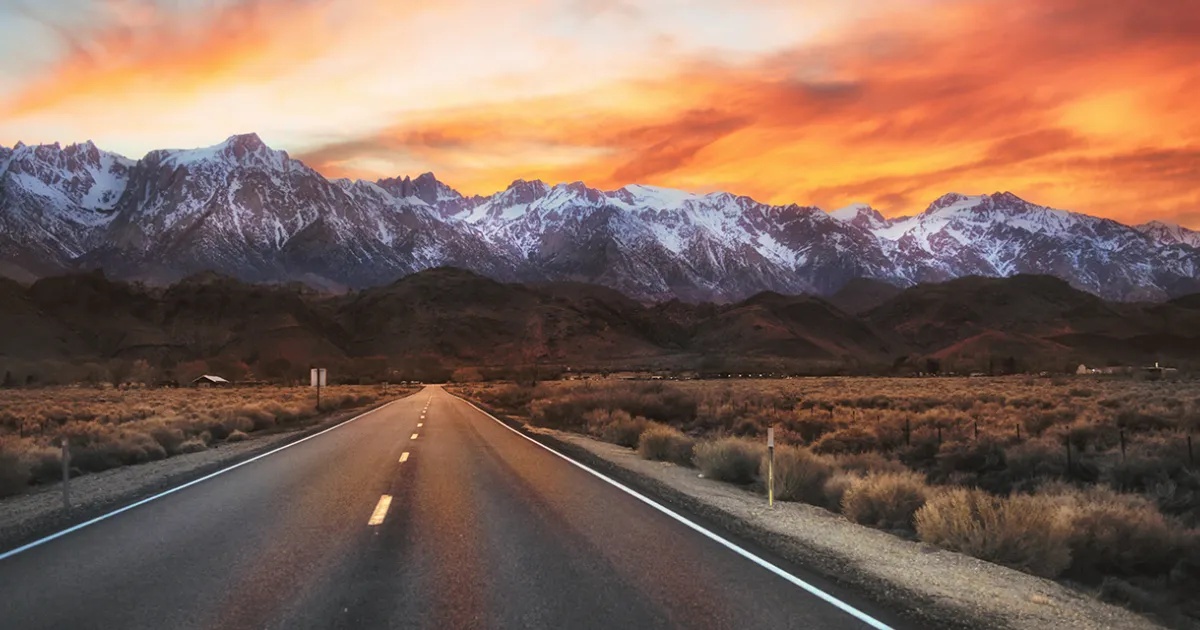
Lone Pine is a small, high-desert town of roughly 2,000 residents in Inyo County, California, tucked against the eastern face of the Sierra Nevada in the broad Owens Valley. It has the feel of a classic Western outpost: a few low-slung blocks of cafés, motels, and outfitters framed by cottonwoods and backed by the jagged peaks of the highest range in the lower 48. The town is best known as the principal gateway to Mount Whitney, the tallest mountain in the contiguous United States, and as a base for travelers exploring the Eastern Sierra and the eastern side of Death Valley National Park. From Los Angeles, Lone Pine is roughly a four-hour drive north via U.S. Route 395.
Towering over the western edge of town, Mount Whitney draws climbers, hikers, and day-trippers from around the world. The 14,505-foot summit is reached via the Mount Whitney Trail, whose trailhead at Whitney Portal sits about 13 miles west of Lone Pine on a winding mountain road. Even visitors who do not attempt the summit often drive up to the portal for the dramatic alpine views, fishing in nearby lakes, and access to shorter trails in the Inyo National Forest.
Just west of town lie the Alabama Hills, a sprawling landscape of weathered granite boulders and rock arches that has served as a backdrop for hundreds of films and television shows since the early days of Hollywood. The area is crisscrossed by dirt roads popular with photographers, particularly at sunrise and sunset, and offers easy access to natural hot springs, slot-like canyon slots, and the whimsical arches for which the hills are famous. The local Lone Pine Film History Museum documents this cinematic legacy with costumes, photographs, and memorabilia from productions filmed in the surrounding mountains and desert.
To the east, the entrance to Death Valley National Park lies about 45 minutes away via State Route 136 and Route 190, opening onto the vast salt flats, colorful badlands, and towering dunes of one of America's most iconic desert parks. Visitors commonly make Lone Pine a two-park base, returning in the evening to cooler, well-provisioned lodgings after a day of sightseeing in the valley below sea level.
Lone Pine appeals to short-term-rental investors because its appeal is unusually concentrated: a small town with limited hotel inventory sits between three of California's most dramatic landscapes—Mount Whitney, the Alabama Hills, and Death Valley. Steady demand from hikers in summer, photographers and film buffs in spring and fall, and snow-seekers in winter gives the market a long, varied season. Its strong sense of place, cinematic pedigree, and proximity to multiple bucket-list destinations make it a natural fit for travelers who want a quiet small-town base paired with world-class outdoor access.
Want to know if a property in Lone Pine is a good investment?
Enter an address to get instant revenue potential and comps.