
La Jolla, California
Want to see how La Jolla compares to other top cities in California? Explore all city regulations in California. →
La Jolla, CA
Challenging To Investors

STR Regulations for La Jolla, California
Overview: Are Short-Term Rentals Allowed in La Jolla, CA?
Yes, short-term rentals are allowed in La Jolla, CA, but with significant regulations and restrictions. La Jolla is located within the City of San Diego, which means it falls under the City's comprehensive Short-Term Residential Occupancy (STRO) Ordinance. The City has implemented a tiered licensing system with caps on the number of whole-home short-term rentals, requiring investors to navigate a complex regulatory environment.
As of October 2025, there are 8,247 active STRO licenses issued across all tiers in San Diego, with Tier 3 and Tier 4 licenses having caps (913 remaining Tier 3 licenses available, 0 Tier 4 licenses available). The application period for Tier 4 (Mission Beach whole-home) licenses is currently closed.
What do Airbnb hosts actually earn in La Jolla?
La Jolla hosts earn a median $91,936/year with $442 ADR and 74% occupancy.
Top performers pull in $142,056+ per year.
See the full La Jolla market breakdownHow to Start a Short-Term Rental Business in La Jolla
Step 1: Determine Your License Tier
La Jolla properties fall under one of four STRO license tiers:
- Tier 1 (Part-Time): Rent for 20 days or less per year
- Tier 2 (Home Sharing): Rent rooms while residing onsite for more than 20 days per year
- Tier 3 (Whole Home, excluding Mission Beach): Rent entire home for more than 20 days per year, not residing onsite
- Tier 4 (Mission Beach Whole Home): Only for properties in Mission Beach CPA
Step 2: Meet Prerequisites
Before applying for an STRO license, ensure you have:
- Active Transient Occupancy Tax (TOT) Certificate
- Active & Paid Rental Unit Business Tax (RUBT) Account
- Business Tax Certificate (if you're not the property owner)
Step 3: Apply for STRO License
- Application period is currently open for Tiers 1, 2, and 3
- Tier 4 applications are closed (waitlist exhausted)
- Applications submitted through the Accela Citizen Portal
- All fees are non-refundable
- Licenses expire after 2 years
Step 4: Comply with Operating Requirements
- Post required signage (8.5 x 11 inches, visible from sidewalk)
- Designate a local contact who responds within 1 hour to complaints
- Submit quarterly reports (Tier 3 & 4 only)
- Maintain good neighbor policies
- Complete human trafficking awareness training
Required Documents, Permits, Licenses, and Guidelines
Primary Licenses and Permits
-
STRO License
- Tier 1: Application Fee $33, License Fee $193
- Tier 2: Application Fee $33, License Fee $284
- Tier 3: Application Fee $41, License Fee $1,129
- Tier 4: Application Fee $41, License Fee $1,129 (when available)
-
Transient Occupancy Tax (TOT) Certificate
- No application fee
- Required for all STR operations
- 10.50% tax rate on gross rental income
- Monthly remittance required
-
Rental Unit Business Tax (RUBT)
- Base fee plus per-unit fee
- Required for properties rented more than 6 days per year
- Contact: 619-615-1545 or rtax@sandiego.gov
-
Business Tax Certificate
- Required if host is not property owner
- $34 for 12 or fewer employees
- $125 + $5 per employee for 13+ employees
Required Documentation
- Proof of TOT compliance
- RUBT payment confirmation
- Business Tax Certificate (if applicable)
- Host signage template completion
- Human trafficking awareness training certificate
- Local contact information
- Good Neighbor Policy distribution
Specific Regulations: City, County, and State
City of San Diego Regulations
License Caps and Availability
- Tier 3: Capped at 1% of San Diego's total housing units outside Mission Beach (4,638 issued, 913 remaining)
- Tier 4: Capped at 30% of Mission Beach housing units (1,097 issued, 0 remaining)
- Tier 1 & 2: No caps (unlimited licenses available)
Operating Requirements
- Host Limitations: One license per person, cannot operate multiple properties
- Minimum Stay Requirements: Two-night minimum for whole-home rentals (Tier 3 & 4)
- Utilization Requirements: Tier 3 & 4 hosts must rent for minimum 90 days per year
- Prohibited Uses: ADUs, JADUs, recreational vehicles, temporary structures
Signage and Contact Requirements
- Exterior signage: 8.5 x 11 inches, all caps, 20-point font, bold black
- Must include TOT number, STRO license number, contact information
- Local contact must respond within 1 hour to complaints
Reporting Requirements
- Tier 3 & 4: Quarterly reports on rental activity required
- Tier 1 & 2: No quarterly reporting required
- All hosts must maintain records for 4 years
County-Level Regulations
La Jolla falls within San Diego County, but county-level STR regulations are minimal compared to city ordinances. The City of San Diego's STRO Ordinance supersedes county regulations for properties within city limits.
State of California Regulations
California state law does not have specific STR regulations, but hosts must comply with:
- AB 3182: Tenant Protection Act (affects rent control areas)
- Health and Safety Code: Standard housing habitability requirements
- Revenue and Taxation Code: State tax obligations
- Civil Code: Anti-discrimination laws and guest rights
Contact Information for Local Authority
Primary STRO Administration
- Phone: 619-615-6120
- Email: stro@sandiego.gov
- Website: https://www.sandiego.gov/treasurer/short-term-residential-occupancy
Enforcement Questions
- Building and Land Use Enforcement (BLUE) Team
- Phone: 619-533-6489
- Email: dsdstrocomplaint@sandiego.gov
- Report Violations: Get It Done Portal
Tax Administration
-
Transient Occupancy Tax (TOT)
- Phone: 619-615-1530
- Email: sdtot@sandiego.gov
-
Rental Unit Business Tax (RUBT)
- Phone: 619-615-1545
- Email: rtax@sandiego.gov
-
Business Tax Compliance
- Phone: 619-615-1539
- Email: compliance@sandiego.gov
Additional Resources
- Active License Lookup: OpenData STRO Licenses
- License Map: Active STRO License Map
Links to Source Pages
Official City Resources
- City of San Diego STRO Homepage
- STRO License Application Portal
- STRO Ordinance Full Text
- Transient Occupancy Tax Information
- Rental Unit Business Tax Information
Forms and Guidelines
- Host Operating Requirements Checklist
- Host Signage Template
- Good Neighbor Policy
- License Cancellation Form
Educational Resources
Community and News Sources
Important Notes for Investors:
- La Jolla is a high-value market but faces increased regulatory scrutiny
- The 1% cap on whole-home rentals outside Mission Beach means limited availability
- Strong enforcement exists, with active monitoring and complaint systems
- Consider the significant upfront costs ($226-$1,170 for licenses alone)
- Factor in ongoing compliance costs and administrative requirements
- Market conditions remain competitive despite regulatory constraints
Next step
Found a property in La Jolla?
Paste any address and get estimated revenue, cash-on-cash return, and comparable STR performance in under 5 minutes. 3 free analyses per day.
Free brief
Get the free La Jolla STR Investment Brief
Revenue data, top neighborhoods, seasonal trends, and the key regulations for La Jolla, California in one email.
La Jolla
Market Saturation Score
Photos of La Jolla


Overview of La Jolla
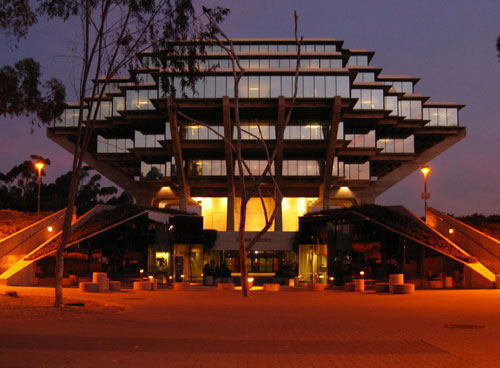
La Jolla is an affluent coastal community within the city of San Diego, located in San Diego County in Southern California. With a population of roughly 46,000, it is one of the most recognizable neighborhoods on the San Diego coastline, known for its dramatic sea cliffs, sandy coves, and a polished, residential character that blends beach town atmosphere with upscale dining and shopping. La Jolla is widely regarded as a gateway to San Diego's northern coast, and it sits about 12 miles, or roughly a 20-minute drive, north of downtown San Diego via Interstate 5. The community is also home to several major institutions, including the University of California, San Diego, and the Salk Institute, giving it a distinct academic and research-driven identity alongside its beach-town appeal.
One of the most photographed stretches of shoreline in Southern California is La Jolla Cove and the surrounding sea cliffs, where small protected beaches meet sandstone bluffs and tidal pools teem with marine life. Sea lions and harbor seals haul out on the rocks year-round, and the adjacent coastline along Coast Boulevard draws visitors who come to watch the surf, snorkel in the marine reserve, and walk the paved paths that connect to Windansea Beach and La Jolla Shores. The cove sits within the community itself, just minutes from most residential streets, and is consistently one of the highest-traffic natural attractions in the San Diego area.
Just north of La Jolla, Torrey Pines State Natural Reserve protects one of the rarest pine forests in the United States along a rugged stretch of coastline overlooking the Pacific. The reserve offers several miles of marked hiking trails across sandstone bluffs and badlands, with frequent whale sightings during the winter and spring migrations. It is roughly a 10-minute drive from central La Jolla and also includes Torrey Pines State Beach, a popular spot for surfing and beachcombing. Adjacent to the reserve, the Torrey Pines Golf Course is one of the most celebrated municipal courses in the country.
For visitors interested in marine science, the Birch Aquarium at Scripps Institution of Oceanography sits on the bluff above La Jolla Shores and serves as the public outreach center for UC San Diego's ocean research institute. Its exhibits focus on the Pacific waters off the California coast, with a notable kelp forest display, seahorse propagation programs, and outdoor tide-pool exhibits that appeal to families. The aquarium is about a 10-minute drive from La Jolla Cove and is a frequent stop for both tourists and school groups.
La Jolla's combination of natural beauty, established institutions, and proximity to downtown San Diego makes it a particularly strong base for short-term rental owners. Guests can spend mornings hiking Torrey Pines, afternoons snorkeling the cove or touring Birch Aquarium, and evenings catching a performance at the Tony Award-winning La Jolla Playhouse or exploring the galleries of the Museum of Contemporary Art San Diego. With San Diego International Airport less than 30 minutes away and easy freeway access to the rest of Southern California, the community offers a rare mix of walkable coastal character, year-round mild weather, and a deep bench of nearby attractions that supports steady demand from leisure travelers, university visitors, and regional tourists alike.
Want to know if a property in La Jolla is a good investment?
Enter an address to get instant revenue potential and comps.