
Julian, California
Want to see how Julian compares to other top cities in California? Explore all city regulations in California. →
Julian, CA
Generally Investor Friendly

STR Regulations for Julian, California
Short answer up front: Yes — short-term rentals are allowed in Julian, California. Julian is an unincorporated community within San Diego County, and the sources reviewed show no city-level STR ordinance. STR operation is governed by San Diego County rules (notably Transient Occupancy Tax registration and rules affecting noise, parking, and occupancy), and by statewide requirements that apply to all California hosts.
1) Allowed or Not? Legal Status
- Allowed: Short-term rentals (including platforms like Airbnb and VRBO) may operate in Julian, subject to county and state rules. Sources indicate a relatively low regulation environment and no local (city-specific) STR restrictions in Julian.
- County oversight applies because Julian is not an incorporated city; planning, zoning, and TOT oversight are county functions.
- April Fool’s caution: one of the provided URLs is an April 1 “joke” article describing limits on vacation rentals. Treat it as satire, not fact. For regulatory decisions, rely on San Diego County guidance.
Sources:
- “Low STR regulations” and no listing licenses in Julian
- “No specific local laws directly governing the operation of Airbnbs or short-term rentals” in Julian; hosts comply with San Diego County requirements
- TOT registration and general county rules for hosts
What do Airbnb hosts actually earn in Julian?
Julian hosts earn a median $39,355/year with $288 ADR and 48% occupancy.
Top performers pull in $58,884+ per year.
See the full Julian market breakdown2) How to Start an STR Business in Julian
- Step 1: Verify property eligibility
- Confirm that short-term rentals are a permitted use on your parcel under San Diego County zoning. Sources note the County has zoning ordinances that may limit where STRs can operate.
- Step 2: Register for Transient Occupancy Tax (TOT)
- Obtain a Transient Occupancy Registration Certificate from San Diego County.
- Collect TOT from guests (commonly around 10.5% of the rental rate in the county) and remit on schedule.
- Step 3: Comply with life-safety and standards
- Ensure functional smoke and carbon monoxide alarms, adequate heating, hot water, and safe egress. Sources emphasize these amenities as essential for guest safety and booking success.
- Step 4: Set house rules and guest expectations
- Establish quiet hours, parking limits, maximum occupancy, and pet policies to align with community norms and reduce conflicts.
- Step 5: Prepare your listing and operations
- Professional photography, dynamic pricing, quick response to inquiries, reliable housekeeping, and clear check-in instructions. Sources highlight seasonality (apple harvest, winter snowfall) and suggest pricing and minimum-stay strategies aligned with peak/shoulder/low seasons.
- Step 6: Ongoing compliance and local engagement
- Monitor county updates, collect and remit TOT, maintain property standards, and be responsive to neighbor concerns.
Sources:
- Zoning ordinances may limit STRs in certain areas
- TOT certificate and tax collection/remittance required
- Noise, parking, and maximum occupancy rules to minimize community impact
- Essential amenities (smoke/CO alarms, heating, hot water) and market-operating best practices
3) Required Documents, Permits, Licenses, and Guidelines
- Transient Occupancy Registration Certificate (San Diego County)
- Required to legally collect and remit TOT.
- Business registration (as required by county tax/TOT processes)
- Obtain and retain documentation showing TOT registration and tax remittance history.
- Zoning/planning verification
- Confirm that STR use is allowed for your property under county zoning; if needed, request a zoning verification from the County.
- Insurance
- Maintain property and liability coverage suitable for a short-term rental business.
- Life-safety compliance
- Smoke alarms, carbon monoxide alarms, functional heating, and hot water (these are also highlighted as essential guest amenities).
- Platform compliance
- Platform registration or host requirements (e.g., Airbnb/VRBO) as applicable.
- Taxes
- Collect and remit TOT from guests; maintain records for auditing.
Sources:
- County TOT certificate and tax remittance
- Zoning ordinances may limit STRs
- Noise, parking, maximum occupancy rules
- Essential amenity requirements (smoke/CO alarms, heating, hot water)
- Hosts encouraged to familiarize with county rules to avoid fines
4) Specific Regulations (City, County, State) that Apply to STRs in Julian
- City-level (Julian): None identified in the sources. Julian has no city government; it is unincorporated. Therefore, there is no city STR ordinance.
- County-level (San Diego County):
- TOT certificate and TOT remittance (typically around 10.5%).
- Zoning compliance; STRs may be restricted in certain zones or areas.
- Rules regarding noise, parking, and maximum occupancy to minimize community impacts.
- State-level (California):
- Platform aggregation and reporting: Platforms that facilitate bookings for listings in California are generally required to collect and remit TOT (or similar transient taxes) and report host activity. Hosts should consult the California Department of Tax and Fee Administration (CDTFA) for current requirements.
- Safety/disclosure standards: Ensure compliance with state health and safety standards and any applicable disclosure requirements for STRs.
Sources:
- No city-level STR ordinance
- County TOT, zoning, noise, parking, occupancy
- Statewide platform tax collection and reporting (refer to CDTFA)
5) Local Authority Contacts and Resources
- San Diego County TOT/Transient Occupancy
- Department of the Treasurer-Tax Collector or the County’s TOT program (check the San Diego County website).
- San Diego County Planning and Zoning
- County planning and development services (for zoning verification and potential permit requirements related to STRs or land use).
- California Department of Tax and Fee Administration (CDTFA)
- State-level transient occupancy tax guidance and platform compliance.
- Useful resources (general):
- Platforms for listing and management (e.g., Airbnb/VRBO).
- Data and market guides that summarize local STR dynamics and amenities.
Notes:
- Phone and email are not provided in the sources. For current contacts, refer to the San Diego County website and CDTFA portal. If you require specific staff contacts, obtain the latest listings from those official sites.
6) Operational Guidance and Investor Takeaways
- Seasonality: Peak demand in fall (apple harvest) and winter (snow, holiday season). Adjust pricing and minimum stays accordingly.
- Amenities: Provide essential safety items and guest-favored features (e.g., reliable Wi-Fi, parking, heating). Properties with fireplaces/outdoor fire pits and full kitchens often perform well.
- Management: Quick guest communication, professional cleaning, and local recommendations improve ratings and repeat bookings.
- Low regulation environment: Sources classify Julian’s STR regulations as “low,” but county rules still apply. Maintain TOT compliance and consider zoning constraints.
Sources:
- Market-level performance and seasonality (ADR, occupancy, peak months)
- STR regulation level (low) and licensing signals (no listing licenses)
- Best-practice management guidance and amenity recommendations
7) Source Links (as provided)
- April 1, 2024 satire on county limits and a new high-rise hotel in Julian (not regulatory guidance):
- Market overview, seasonality, and county TOT overview for Julian:
- STR regulation level, licensing status, performance metrics, and seasonality for Julian:
- TOT registration need, typical TOT rate, and confirmation of no city-specific STR laws in Julian:
Important: Before operating, verify the latest requirements and rates directly with San Diego County and the California Department of Tax and Fee Administration, as rules and tax rates can change.
Next step
Found a property in Julian?
Paste any address and get estimated revenue, cash-on-cash return, and comparable STR performance in under 5 minutes. 3 free analyses per day.
Free brief
Get the free Julian STR Investment Brief
Revenue data, top neighborhoods, seasonal trends, and the key regulations for Julian, California in one email.
Julian
Market Saturation Score
Photos of Julian

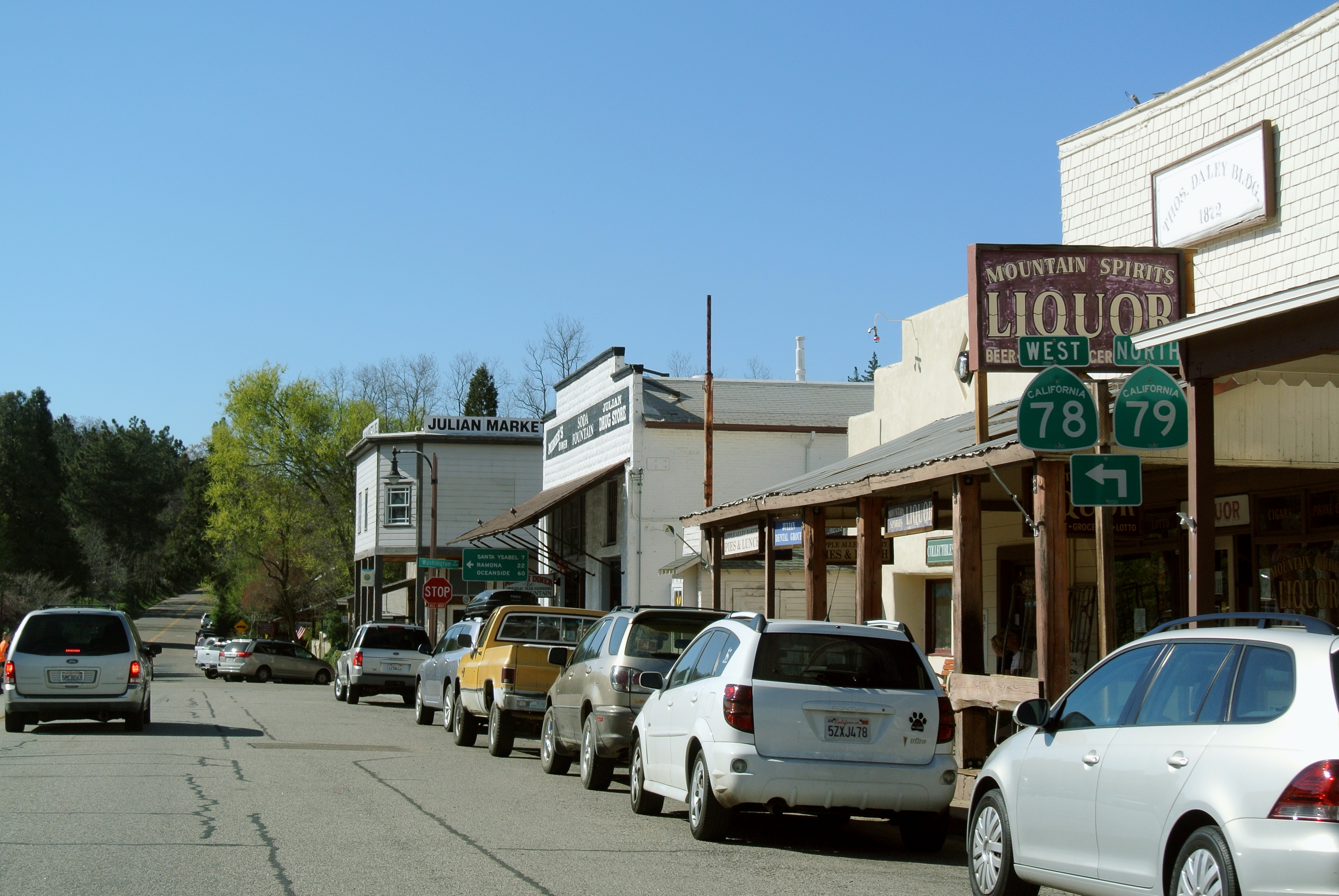

Overview of Julian
Julian is a small historic mountain town nestled in the Cuyamaca Mountains of San Diego County, California, with a year-round population of roughly 1,500 residents. Once a nineteenth-century gold-mining settlement, it has reinvented itself as a charming getaway known for its hilltop setting, four-season climate, and notably for its apples and old-fashioned apple pies. With its tidy Main Street lined with restored false-front buildings, country bakeries, and tasting rooms, Julian carries the feel of a New England village dropped into Southern California backcountry. It lies approximately 60 miles east-northeast of downtown San Diego, an easy drive for weekend visitors escaping the coast.
A short walk from almost anywhere in town, Julian's historic Main Street is the heart of the community, with locally owned shops, pie houses, and a number of preserved 1870s-era buildings from the gold rush era. The Julian Pioneer Museum, housed in a former hospital and jail, offers exhibits on pioneer life, mining, and the town's early apple industry. A short drive north takes visitors into the pine and oak woodlands of Cuyamaca Rancho State Park, where roughly 25 miles of hiking trails wind through meadows, past creeks, and up to viewpoints such as Stonewall Peak; the park is about a 20-minute drive from downtown Julian.
A bit farther afield, roughly an hour's drive east, the vast Anza-Borrego Desert State Park opens up with badlands, wildflower fields in spring, and slot canyons, offering a striking contrast to Julian's forested hills. Closer to town, the surrounding backcountry draws hikers, horseback riders, and cyclists, while Lake Cuyamaca, a recreational reservoir about 15 minutes away, is a popular spot for fishing, picnicking, and trout stocking in cooler months. The region also features numerous small family-run apple ranches and pumpkin patches that become especially busy during the fall harvest, when aspen and oak leaves turn the surrounding hillsides gold and crimson.
Julian is a compelling base for short-term rentals because it offers a distinctive four-season character unusual for Southern California, paired with reliable year-round visitor interest. Weekenders from San Diego and Orange County come for the pie shops, antique stores, and crisp mountain air, while outdoor travelers use the town as a launching point for state-park adventures and stargazing in the surrounding dark-sky country. The combination of a walkable historic core, a celebrated food specialty, proximity to two large and very different state parks, and easy access back to the coast gives the market a steady mix of leisure demand that translates well into a strong short-term-rental story.
Want to know if a property in Julian is a good investment?
Enter an address to get instant revenue potential and comps.