
Harbor City, California
Want to see how Harbor City compares to other top cities in California? Explore all city regulations in California. →
Harbor City, CA
Challenging To Investors
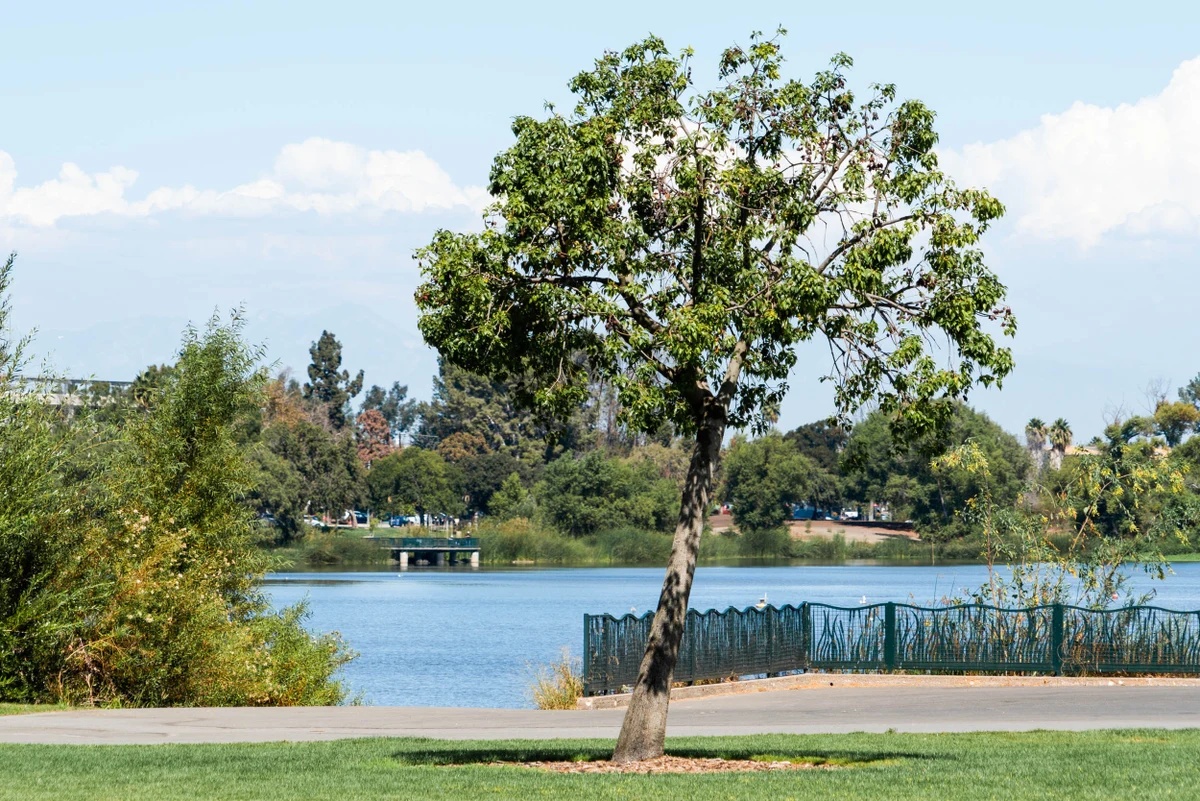
STR Regulations for Harbor City, California
Overview — Are STRs allowed in Harbor-City, CA? Short-term rentals are explicitly allowed in Harbor-City (City of Long Beach), subject to a comprehensive set of local regulations. Long Beach permits two classes of STR registrations—Primary Residence and Non-Primary Residence—subject to eligibility, caps, occupancy limits, documentation, inspections, tax remittance, and compliance with posted information and nuisance standards. Non-Primary Residence STRs are capped citywide at 800 active registrations; Primary Residence registrations are unlimited but restricted to the host’s primary residence and subject to type-of-activity limits (hosted vs. un-hosted) and annual caps for un-hosted activity. Accessory Dwelling Units (ADUs) are not permitted as STRs. All STR hosts must collect and remit Long Beach Transient Occupancy Tax (TOT) at 13%, and the City enforces requirements via registration, inspections, complaint handling, and penalties.
- How to start a short-term rental business in Harbor-City (Long Beach)
- Step 1 — Confirm eligibility and registration type
- Determine whether your property qualifies as a Primary Residence STR (on the same parcel as your permanent residence) or a Non-Primary Residence STR (a residential property you own that is not your primary residence).
- Review the permitted rental activity: Hosted (host on-site) or Un-hosted (host not on-site).
- Step 2 — Verify your property is a qualified dwelling unit
- Only legally permitted habitable structures qualify. Common qualified structures include single-family dwellings, individual units in multi-family properties, guest houses, maid quarters, and apartments (or portions thereof).
- Accessory Dwelling Units (ADUs) and Junior ADUs are not eligible for STRs. Rumpus rooms, garages, storage rooms, pool houses, casitas, and live-work units are not eligible.
- If you are unsure about your structure’s permitted status, check City building records and contact the City before applying (application fees are non-refundable).
- Step 3 — Review operating limits and caps
- Primary Residence STR:
- Hosted: unlimited days per year.
- Un-hosted: maximum 90 days per registration period.
- Non-Primary Residence STR:
- Hosted or Un-hosted: unlimited days per registration period.
- Property-level caps: The number of STRs allowed on a property or development is limited by the number of qualified dwelling units:
- 1–10 units: 1 STR allowed.
- 11–50 units: 10% of units allowed as STRs.
- 51–100 units: 12% allowed as STRs.
- 101+ units: 15% allowed as STRs.
- Primary Residence STR:
- Step 4 — Prepare required documents
- Primary Residence: Two residency proofs, Primary Residence Certification and Indemnification Form (wet signature), Assessor Identification Number (AIN), Property Owner Authorization if you are a renter.
- Non-Primary Residence: Driver’s license; if applicant is a legal entity, Business Entity Applicant Authority and Agreement; Property Owner Authorization for renters or agents; proof of good standing with the California Secretary of State for the entity.
- Step 5 — Submit your registration
- Non-Primary Residence: Submit an Application of Interest first; the City issues Reservations until the citywide cap of 800 is reached; otherwise you are placed on a waiting list.
- Primary Residence: Apply directly via the City’s registration portal.
- Application and review fees apply ($500). Applications not completed within 45 days of request for additional items are invalid and fees are forfeited.
- Step 6 — Undergo inspection if required
- The City may require inspection of any areas accessed by guests to identify hazardous or unsafe conditions. Corrective actions must be completed to the City’s satisfaction before registration approval.
- Step 7 — Collect and remit Transient Occupancy Tax (TOT)
- TOT rate is 13% of gross receipts. Report and pay monthly by the 10th of the month following the rental month.
- Airbnb has a voluntary collection agreement and remits TOT on behalf of listings hosted on that platform. Hosts using other platforms must collect and remit TOT directly.
- Late reporting/payment penalties: 25% of tax due on the first day of the second month following the reporting month; 50% on the first day of the third month.
- Step 8 — Post required information and comply with operations
- Display the City-issued STR registration number on all listings/advertisements.
- Post guest-facing notices inside the unit with occupancy, parking, trash/recycling, local contact (24/7 availability), emergency contacts, and an evacuation plan.
- Maintain 24/7 responsiveness and be able to remedy complaints within one hour. Enforce outdoor pool/spa/hot tub quiet hours (10 p.m.–7 a.m.). No exterior advertising signage.
- Step 9 — Renewal and ongoing compliance
- Renew 30 days before expiration. Renewal fee ($500) is paid prior to review; fees are non-refundable once reviewed. No pending citations, outstanding code enforcement fines, or unpaid fees.
- Step 10 — Handle occasional events
- To host events exceeding occupancy, obtain an Occasional Event Permit from the Long Beach Special Events office. Maximum of four per registration year.
- Required documents, permits, licenses, and guidelines
- STR Registration
- Type: Primary Residence or Non-Primary Residence (one of each allowed per individual).
- Fee: $500 for review (non-refundable once reviewed).
- Term: 1 year from approval.
- Application: Submitted via City portal; for Non-Primary, submit Application of Interest first.
- Documentation — Primary Residence (Owner or Renter)
- Two residency proofs showing your name and address (e.g., driver’s license, voter registration, utility bill, tax documents, motor vehicle registration).
- Primary Residence Certification and Indemnification Form (wet signature; no digital signatures).
- Assessor Identification Number (AIN) from Los Angeles County Assessor records.
- Property Owner Authorization (notarized) if the applicant is a renter/lessee.
- Documentation — Non-Primary Residence (Owner or Renter/Agent)
- Driver’s License matching the applicant’s name on the registration.
- If applying as a legal entity (e.g., LLC), the individual applicant must submit the STR Legal Entity/Business Structure Applicant Authority and Agreement (notarized).
- Property Owner Authorization (notarized) if the applicant is a renter/lessee; if applying under a business, the authorization must reference the business name.
- Business entity must be registered and in good standing with the California Secretary of State.
- Occupancy and Safety
- Maximum occupancy: Two persons per bedroom plus two more, capped at eight total; studio units count as zero bedrooms with max occupancy of two (inclusive of host and guests’ children).
- Inspection may be required for guest-access areas; corrective action must be completed prior to approval.
- Advertising and Guest Information
- Display the STR registration number on all listings.
- Post inside the unit: occupancy limit, parking rules, trash/recycling schedule, local contact (24/7), emergency contact numbers, and an evacuation plan with exits and fire extinguisher location.
- Transient Occupancy Tax (TOT)
- 13% TOT applied to gross room rental fees.
- Due monthly by the 10th day of the month following the rental month.
- Airbnb remits on behalf of hosts using its platform; hosts using other platforms must remit directly.
- Penalties: 25% on first day of the second month; 50% on first day of the third month after the reporting month.
- Occasional Event Permit
- Required to accommodate events exceeding maximum occupancy; maximum of four permits per registration year.
- Specific regulations for short-term rentals (Long Beach city and California state)
- City of Long Beach STR regulations
- Registration classes and caps:
- Primary Residence STR: unlimited hosted days; un-hosted capped at 90 days per registration period.
- Non-Primary Residence STR: capped at 800 citywide; hosted or un-hosted unlimited days once registered.
- Eligibility:
- Qualified dwelling units only (no ADUs/JADUs).
- Property owner consent required for non-owners.
- No active or pending code enforcement actions; no unpaid code citation fees.
- Inspection may be required prior to approval and/or renewal.
- Operating requirements:
- TOT collection and monthly remittance at 13%.
- Emergency contact availability 24/7 with one-hour response to City-forwarded complaints and corrective action.
- Occupancy limits (two per bedroom plus two, max eight; studios max two).
- Outdoor pools/spas/hot tubs prohibited 10 p.m.–7 a.m.
- No exterior signage advertising the STR.
- Prohibited Buildings List: Property owners/HOAs can prohibit STRs on their properties via self-certification; check the City’s Prohibited Buildings List.
- Nuisance provisions:
- Operators and property owners are jointly responsible for nuisance violations. Repeated violations constitute a nuisance under Long Beach Municipal Code Chapter 9.37.
- Advertising:
- All listings must display the City-issued STR registration number.
- Registration classes and caps:
- California state-level considerations (applicability and investor guidance)
- TOT is a statewide framework applied by cities/counties; rates and administration vary by jurisdiction. Long Beach’s TOT is 13%.
- Housing policy context: California has enacted legislation affecting HOA restrictions and short-term rental activity, and cities are authorized to regulate STRs for neighborhood character, housing stock preservation, and nuisance control.
- Platform cooperation: Cities increasingly require hosting platforms to validate registration numbers and share data. Long Beach relies on such cooperation for enforcement and tax compliance.
- Compliance expectations: While the City’s rules govern operations, investors must also track any state statutory changes that may affect HOA restrictions or local regulatory authority.
- Local authority contact information and operational channels
- Short-Term Rentals — Program Contact
- Victoria Bueno, Assistant Administrative Analyst
- Phone: 562.570.6141
- Email: shorttermrentals@longbeach.gov
- Website: City of Long Beach STR page (see “Links to source pages”)
- Code Enforcement Bureau (General and 24/7 hotline)
- Phone: 562.570.CODE (2623)
- Address: 411 W. Ocean Blvd., 4th Floor, Long Beach, CA 90802
- Hours: Monday–Friday, 8:00 a.m.–4:00 p.m.
- STR Complaint Hotline (24/7): 562.568.8665
- Non-emergency Police: 562.435.6711
- Emergency: 911
- Transient Occupancy Tax (TOT) — Reporting and Payment
- Email: STR-TOT@LongBeach.gov
- Monthly reminders and portal access are provided via HostCompliance (no-reply@mg.hostcompliance.com)
- Due date: 10th of each month; penalties apply after due date
- Special Events Office — Occasional Event Permits
- Address: 5001 Airport Plaza Drive, Suite 130, Long Beach, CA 90815
- Phone: 562.570.5333
- After-hours Line: 562.570.5339
- Fax: 562.570.5335
- Website: Occasional Event Permits (see “Links to source pages”)
- Links to source pages (primary and secondary)
- City of Long Beach — Short-Term Rentals (STRs): longbeach.gov/lbcd/enforcement/strs/
- Long Beach Municipal Code — STR Ordinance: library.municode.com/ca/long_beach/ordinances/municipal_code?nodeId=1346216
- Long Beach Transient Occupancy Tax (TOT) information: longbeach.gov/finance/business-info/business-licenses/transient-occupancy-tax/
- Coastal Zone Property Lookup (for HOA opt-outs in the Coastal Zone): longbeachca.maps.arcgis.com/apps/webappviewer/index.html?id=98c8e5c14a3e400f9661bc0f9a07dff1
- Los Angeles County Assessor Map (AIN lookup): maps.assessor.lacounty.gov/m/
- Zoning and Land Use GIS Map: longbeachca.maps.arcgis.com/apps/webappviewer/index.html?id=17b68e7082ef4a4ea8ba6b0d04729758
- Long Beach Special Events — Occasional Event Permits: www.longbeach.gov/special-events-filming/occasional-event-permits-oep/
- Petition to Restrict Un-Hosted STRs (information & application): longbeach.gov/link/0f9aa31acb194a89a10b025cbd9f9bdb.aspx
- Prohibited Buildings List: longbeach.gov/link/7b7140e0de384e958ef4e70b87014869.aspx
- STR Property Owner Authorization (form): longbeach.gov/link/e84df7fe510a481284392973fca0e66e.aspx
- Primary Residence Certification and Indemnification Form: longbeach.gov/link/a4c0780af48f4620b44767fccb6c143d.aspx
- STR Legal Entity/Business Structure Applicant Authority and Agreement: longbeach.gov/link/04e14608a8ca4febad638370257d942f.aspx
- Los Angeles City Planning — Home-Sharing Staff Report (context on CA municipal approaches): planning.lacity.gov/ordinances/docs/HomeSharing/StaffRept.pdf
Operational checklist for investors
- Property assessment and documentation
- Confirm legal habitable status; exclude ADUs/JADUs; obtain AIN.
- Determine Primary vs. Non-Primary status and hosted vs. un-hosted activity.
- Secure property owner consent if you are not the owner; prepare notarized forms.
- Registration and compliance
- Submit correct application and fees; complete any requested items within 45 days.
- Pass inspection if required; correct hazards prior to approval.
- Display registration number on all listings; create in-unit guest information binder.
- Tax and reporting
- Register for and manage TOT; set up monthly reporting and payment routines.
- Monitor platform remittances (Airbnb) vs. self-remittance (other platforms).
- Operations and community relations
- Enforce occupancy limits and quiet hours; maintain 24/7 response capability.
- Proactively address complaints; avoid exterior signage and nuisance activity.
- Track expiration and renew 30 days early; maintain a clean compliance record.
- Events and expansions
- If hosting events beyond occupancy, obtain Occasional Event Permits (max four/year).
- For non-primary properties, monitor the citywide cap; join the queue if needed.
This guide reflects current Long Beach STR regulations and California state considerations pertinent
What do Airbnb hosts actually earn in Harbor City?
Harbor City hosts earn a median $26,811/year with $177 ADR and 58% occupancy.
Top performers pull in $32,083+ per year.
See the full Harbor City market breakdownNext step
Found a property in Harbor City?
Paste any address and get estimated revenue, cash-on-cash return, and comparable STR performance in under 5 minutes. 3 free analyses per day.
Free brief
Get the free Harbor City STR Investment Brief
Revenue data, top neighborhoods, seasonal trends, and the key regulations for Harbor City, California in one email.
Harbor City
Market Saturation Score
Photos of Harbor City


Overview of Harbor City
Harbor City is a small, primarily residential community in the southern portion of Los Angeles, situated in Los Angeles County, California. Part of the larger Los Angeles Harbor Region, it is home to tens of thousands of residents and has a working-class, multicultural character. The neighborhood is notable for its significant Korean-American population, and the surrounding area is sometimes informally referred to as the "Korea Town of the South Bay." Harbor City is best known as a quiet residential pocket within easy reach of the bustling Port of Los Angeles, and it sits roughly 20 miles south of downtown Los Angeles.
Just to the west and south of Harbor City lies the Port of Los Angeles in neighboring San Pedro, one of the busiest container ports in the United States and a major draw for visitors interested in maritime activity. The port area features cruise terminals, commercial fishing operations, and viewing areas for working ships, all within about five to ten minutes' drive from Harbor City. Nearby, the historic downtown of San Pedro has been undergoing a long revitalization, with a growing collection of galleries, restaurants, and a waterfront promenade that includes the Korean Friendship Bell and Angels Gate Park.
A short drive southwest of Harbor City, perched on the bluffs of the Palos Verdes Peninsula, stands the Point Vicente Lighthouse and its accompanying interpretive center. The lighthouse, which has stood since 1926, is a favorite spot for whale watching during the annual gray whale migration, and the adjacent center offers exhibits on local maritime and natural history. The drive from Harbor City to Point Vicente is roughly 20 to 25 minutes, and the surrounding Palos Verdes Peninsula features dramatic coastal cliffs and ocean views that feel a world away from urban Los Angeles.
Also on the peninsula, visitors can find Abalone Cove Shoreline Park and the adjacent Portuguese Point area, which offer tide pooling, hiking trails, and spectacular views of Catalina Island on clear days. These coastal preserves are about 20 to 25 minutes from Harbor City and provide a tranquil contrast to the industrial energy of the nearby port. To the east, the city of Long Beach, with its aquarium, waterfront, and the historic Queen Mary, is roughly 15 to 20 minutes away.
Harbor City makes a compelling base for short-term rental guests who want a quieter, more affordable alternative to staying directly in central Los Angeles or the coastal beach cities. Its central position within the Harbor Region places it within easy reach of the working port, the dramatic coastal scenery of the Palos Verdes Peninsula, and the cultural attractions of Long Beach, while downtown Los Angeles and LAX are both reachable in roughly 30 minutes by car. For travelers seeking a residential feel with convenient access to a diverse mix of coastal, maritime, and urban experiences, Harbor City offers an appealing balance.
Want to know if a property in Harbor City is a good investment?
Enter an address to get instant revenue potential and comps.