
Bradley, California
Want to see how Bradley compares to other top cities in California? Explore all city regulations in California. →
Bradley, CA
Generally Investor Friendly
STR Regulations for Bradley, California
Overview: Are short‑term rentals allowed in Bradley, CA?
- Explicit answer: Short‑term rentals (rentals for fewer than 30–31 consecutive nights) are allowed in Bradley, CA, provided you comply with applicable homeowners association (HOA) rules (if any), county regulations, and California state law.
- Bradley is an unincorporated community in Monterey County. It does not have its own municipal STR program. Investors should therefore proceed under the Monterey County framework (if applicable to your property) and California state requirements (transient occupancy tax, business registration, and safety standards).
- Important HOA context: The California appellate decision in Watson v. Oak Shores Community Association (a community in Bradley) upheld HOA restrictions on STRs, including a seven‑day minimum rental period and additional annual fees for STR owners. This decision underscores the legal enforceability of HOA rules that limit or regulate STR activity.
- Bottom line: Even if county/state rules permit STRs, your HOA’s governing documents may impose additional restrictions, minimum rental periods, or fees that supersede or supplement local rules.
How to start a short‑term rental business in this market
- Verify HOA permissions and restrictions
- Review your HOA’s CC&Rs, bylaws, and rules. HOAs commonly limit transient rentals (e.g., minimum 7 days), cap the number of STR permits in the community, impose occupancy limits, or charge additional fees for STR activity.
- Confirm any insurance or liability requirements for rentals.
- Confirm the permitting authority and county rules
- Because Bradley is in Monterey County, determine whether your property falls within any county‑implemented STR/vacation rental permit requirements. Monterey County oversees unincorporated areas, while incorporated cities have their own processes.
- Obtain required permits and licenses
- Apply for any county STR permit and business license as required. Follow local instructions and provide all documentation (proof of ownership, safety certifications, insurance, etc.).
- Register for and collect Transient Occupancy Tax (TOT)
- Register with Monterey County for a TOT account. Collect TOT from guests at the prevailing rate and remit on schedule (monthly/quarterly).
- Ensure safety and habitability standards
- Confirm compliance with state and local fire, health, and safety requirements, including posted evacuation plans and applicable occupancy limits.
- Set up operations and comply with state/local rules
- Implement policies and procedures for occupancy, parking, noise, trash, and guest communications.
- Maintain records of permits, licenses, tax filings, and guest logs.
Required documents, permits, licenses, and guidelines
- HOA documentation
- HOA approval/authorization (if required).
- Proof of compliance with HOA rules (e.g., membership in good standing, payment of assessments).
- Local permits and licenses
- Monterey County STR permit (if applicable to your property and as defined by the county’s current STR program).
- Business license/registration (per county requirements).
- State and local tax obligations
- Monterey County Transient Occupancy Tax registration and remittance.
- Sales/use tax considerations for any taxable goods or services (consult the California Department of Tax and Fee Administration as applicable).
- Insurance and safety
- Liability insurance appropriate for STR operations (if required by HOA, county, or lender).
- Evacuation plan posting and adherence to fire/safety codes (California Health and Safety Code and local fire district guidance).
- Guest and property standards
- Occupancy limits aligned with HOA and county rules.
- Parking, noise, trash, and light control plans.
- Written guest rules and check‑in/out procedures.
Specific regulations for short‑term rentals (city/county/state)
- City level (Bradley): No city‑specific STR regulations; Bradley is unincorporated.
- County level (Monterey County):
- STR operations in unincorporated Monterey County are subject to county program requirements (permits, business licenses, TOT registration, and local standards). Always confirm current Monterey County rules and forms directly.
- State level (California):
- Health and Safety Code requires posted evacuation plans and related safety measures for transient lodging.
- Transient Occupancy Tax (TOT) regime applies to STRs; operators must register and remit taxes to the appropriate county tax collector.
- Sales/use tax obligations may apply depending on amenities or services offered.
- HOA rules and enforcement:
- HOAs can impose and enforce restrictions on STRs, including minimum rental periods, additional fees, occupancy caps, parking limits, and amenity access rules. As validated in Watson v. Oak Shores Community Association (Bradley), such restrictions are generally enforceable when adopted in accordance with the HOA’s governing documents and California law.
Contact information for the local authority in charge of STRs
- Monterey County Transient Occupancy Tax (TOT)
- Phone: Contact Monterey County’s Tax Collector’s office for TOT inquiries.
- Website: Monterey County Tax Collector – Transient Occupancy Tax (search for “Transient Occupancy Tax” on the county website).
- Email: Use the official TOT email address listed on the county website for registration and remittance questions.
- Monterey County Planning/Code Enforcement (for unincorporated areas and STR permits/standards, where applicable)
- Phone: General planning/code enforcement line for Monterey County.
- Website: Monterey County Planning and Building (search for STR/vacation rental information).
- Monterey County Fire Prevention (for safety/evacuation requirements)
- Contact your local fire district for inspection and safety guidance (e.g., posted evacuation plans, smoke detectors, fire extinguishers, address signage).
- To identify your specific fire district and contact details in and around Bradley/Monterey County:
- Phone: Contact Monterey County’s general information line and request the relevant fire district contact.
Links to source pages (available)
- California Court Upholds HOA Short‑Term Rental Restrictions (Watson v. Oak Shores Community Association, Bradley, CA): www.hoaleader.com/public/California-Court-OKs-ShortTerm-Rental-Restrictions-Related-Fees.cfm
- Short‑Term Rental Permit Information (regional comparison for CA counties, including links to Placer, Nevada, El Dorado, and others): www.tluxp.com/short-term-rental-permit-information
- Sonoma County STR Regulations (example of county‑level rules, caps, and exclusion zones for comparative context): permitsonoma.org/boardofsupervisorsvotestochangevacationrentalregulationsandrulesfortimeshares
Practical considerations for investors in Bradley
- Confirm HOA rules before acquisition; they often dictate the viability and economics of STR operations (minimum rental periods, fees, and caps).
- Confirm whether your property is within Monterey County’s unincorporated STR program and which fire district has jurisdiction for safety standards.
- Register for TOT promptly, set up remittance schedules, and maintain accurate guest records.
- Implement robust guest communications and on‑site policies (occupancy, noise, parking) to prevent violations and preserve community relations.
This guide reflects information available as of the provided sources. Regulations change frequently; always confirm the latest requirements with Monterey County and your HOA before operating.
What do Airbnb hosts actually earn in Bradley?
Bradley hosts earn a median $40,328/year with $519 ADR and 42% occupancy.
Top performers pull in $51,895+ per year.
See the full Bradley market breakdownNext step
Found a property in Bradley?
Paste any address and get estimated revenue, cash-on-cash return, and comparable STR performance in under 5 minutes. 3 free analyses per day.
Free brief
Get the free Bradley STR Investment Brief
Revenue data, top neighborhoods, seasonal trends, and the key regulations for Bradley, California in one email.
Bradley
Market Saturation Score
Photos of Bradley
Overview of Bradley
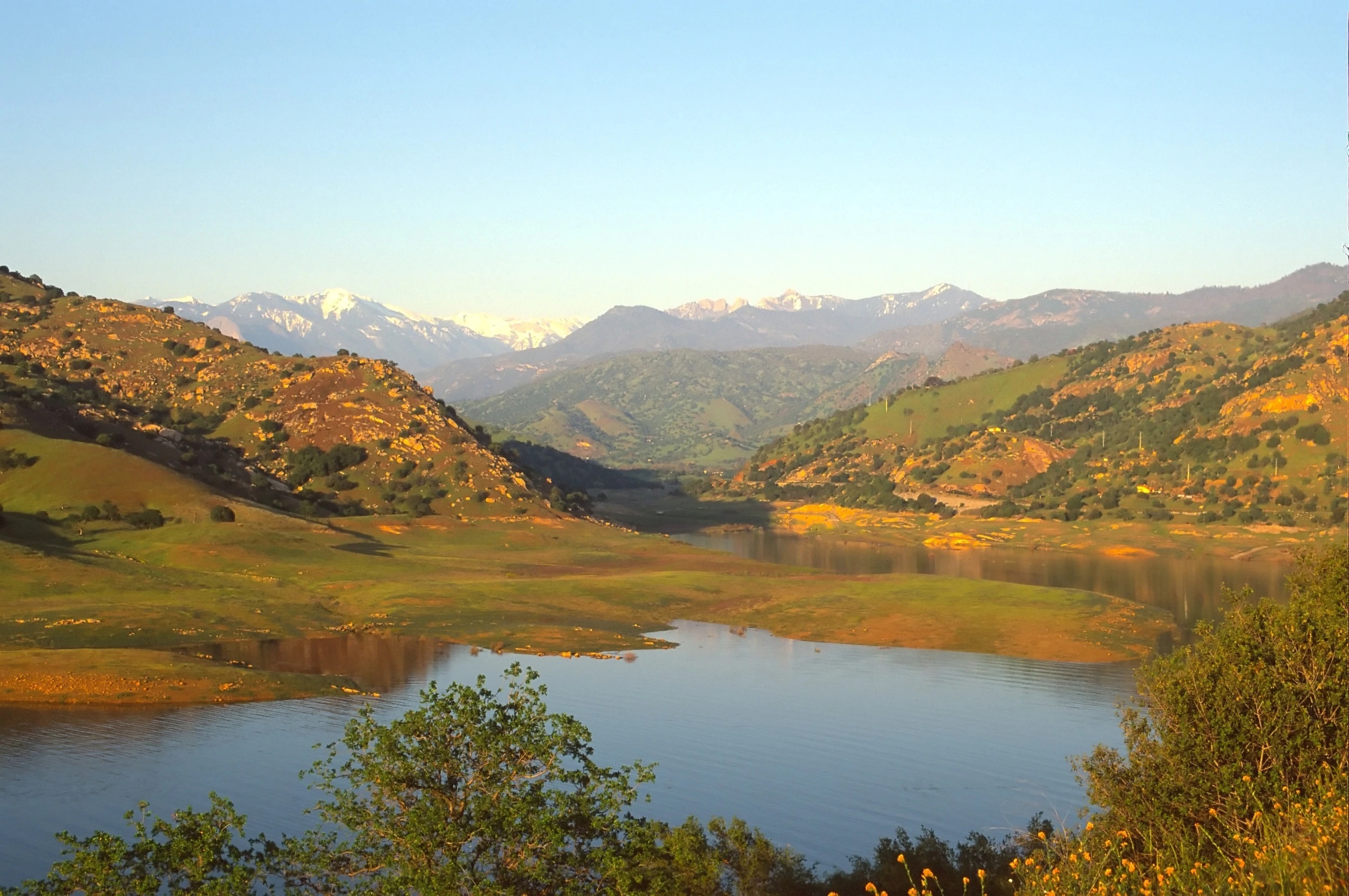
Bradley is a small unincorporated community in Monterey County, California, tucked into the upper Salinas Valley along U.S. Route 101. With only a few hundred residents, it has the quiet, unhurried feel of a Central Coast ranching stopover, framed by oak-covered hills and the slow curve of the Salinas River. Best known as a gateway to Lake Nacimiento and the back roads of southern Monterey County, Bradley sits roughly twenty miles north of Paso Robles, the nearest city of any real size, and about 150 miles south of San Francisco.
About ten minutes west of Bradley, Lake Nacimiento is the area's marquee outdoor draw, a long, winding reservoir threaded into the foothills of the Santa Lucia Range. The lake is popular for warm-water swimming, waterskiing, houseboating, and bass fishing, and the surrounding shoreline is dotted with private cabins, small resorts, and public launch ramps. For short-term rental guests, it provides a true lake-vacation experience within easy striking distance of Bradley's lodgings.
A short drive further west, within the training grounds of Fort Hunter Liggett, stands Mission San Antonio de Padua, one of the oldest of the Spanish missions in California, founded in 1771. The mission's restored adobe church, museum, and tranquil creek-side setting offer a contemplative counterpoint to the outdoor recreation nearby, and the site remains an active parish as well as a popular stop for travelers tracing the historic El Camino Real.
About twenty-five minutes south along Highway 101, the Paso Robles wine region unfolds across rolling golden hills, with more than two hundred tasting rooms clustered around the town's handsome downtown square. The region is particularly known for Rhône-style reds and zinfandel, alongside olive oil tasting rooms, farm-to-table restaurants, and weekend farmers' markets. Visitors who stay in Bradley enjoy a peaceful, traffic-free base from which to explore these wineries and then retreat back to the calm of the countryside at day's end.
Bradley's appeal as a short-term rental market rests on this blend of rural quiet and remarkable geographic range. Within an hour or two, guests can reach Pacific viewpoints near San Simeon, the rugged coastline of Big Sur, the missions and tasting rooms of the Central Coast, and a long, sunny lake perfect for family recreation. For travelers who prefer open space, starry skies, and a slower pace over hotels and crowds, Bradley offers an inviting home base in one of California's most varied landscapes.
Want to know if a property in Bradley is a good investment?
Enter an address to get instant revenue potential and comps.