
Laveen, Arizona
Want to see how Laveen compares to other top cities in Arizona? Explore all city regulations in Arizona. →
Laveen, AZ
Very Investor Friendly
STR Regulations for Laveen, Arizona
Short-Term Rental (STR) Regulatory Guide for Laveen, Arizona
Overview: Are Short-Term Rentals Allowed in Laveen?
Explicit answer: Yes—short-term rentals are allowed in Laveen, Arizona. Laveen is an unincorporated community within Maricopa County; it does not have its own municipal short-term rental ordinance. As a result, STR operations in Laveen are governed by state-level Arizona statutes (A.R.S. § 9-500.39) and any applicable county-level rules. The sources provided do not include Maricopa County’s specific STR regulations; therefore, this guide focuses on the state-level requirements and the permitting/tax framework that applies broadly across Arizona. Always confirm any county-specific rules directly with Maricopa County.
What do Airbnb hosts actually earn in Laveen?
Laveen hosts earn a median $30,408/year with $199 ADR and 68% occupancy.
Top performers pull in $47,501+ per year.
See the full Laveen market breakdownHow to Start a Short-Term Rental Business in Laveen
Because Laveen is not a city with its own STR permitting system, your legal pathway is anchored in Arizona state law. Your core compliance steps are:
- Obtain an Arizona Transaction Privilege Tax (TPT) license from the Arizona Department of Revenue. This is required before you rent your property to transient guests. [A.R.S. § 9-500.39(B)(5)(c)].
- Register and update your property’s status with the Maricopa County Assessor’s Office so the property is appropriately classified for tax purposes and occupancy status.
- Collect and remit state Transaction Privilege Tax (TPT) and any county excise tax on your gross rental receipts. Your TPT license authorizes tax collection and filing.
- Comply with the statutory requirements of A.R.S. § 9-500.39, which sets the baseline rules that cities and towns may further regulate; in unincorporated Laveen, these state rules are your primary obligations (unless Maricopa County has adopted its own rules not captured in the sources).
Practical takeaway: Treat your Arizona TPT license and tax compliance as your operational foundation. The STR-specific state rules—such as advertisement disclosures, contact information, and anti-nuisance restrictions—must be followed as well.
Required Documents, Permits, Licenses, and Guidelines
The sources provided do not include Laveen-specific or Maricopa County-specific forms. At the state level, Arizona requires the following from STR owners:
- Arizona TPT License (from AZ Department of Revenue) — authorizes collection and remittance of TPT on transient rentals.
- Emergency Contact Information for the owner or owner’s designee, who must respond in a timely manner before offering the STR for rent (in person if required by public safety personnel, by phone or email at any hour). [A.R.S. § 9-500.39(B)(4)].
- Advertisement Disclosure — display your TPT license number on each STR advertisement (if your jurisdiction does not require a separate local permit/license). [A.R.S. § 9-500.39(B)(7)].
- Proof of Compliance — proof of TPT license status is required if any local permit/license is conditioned on it. [A.R.S. § 9-500.39(B)(5)(c)].
- Acknowledgment and Agreement — you must acknowledge agreement to comply with applicable laws, regulations, and ordinances. [A.R.S. § 9-500.39(B)(5)(e)].
- Liability Insurance — maintain liability insurance with aggregate coverage of at least $500,000, or ensure your listing is offered through an online lodging marketplace providing equal or greater coverage. [A.R.S. § 9-500.39(B)(8)].
- Sex Offender Notification — if your county or city requires background checks for guests, the requirement must be waived if the online marketplace performs the check. [A.R.S. § 9-500.39(E)].
Important: Cities and towns can require a local permit/license up to $250, but this requirement only applies within incorporated municipalities. Since Laveen is unincorporated, you do not need a city STR permit. Maricopa County may have additional requirements; the provided sources do not include them.
Specific Regulations for Short-Term Rentals (State, County, City)
Arizona State Regulations (A.R.S. § 9-500.39)
- Non-Prohibition: Cities and towns may not prohibit vacation rentals or short-term rentals. [A.R.S. § 9-500.39(A)].
- Allowed Regulatory Scope (applied consistently with other similar property uses):
- Public health and safety rules (fire, building, health and sanitation, traffic control, solid/hazardous waste, pollution). [A.R.S. § 9-500.39(B)(1)].
- Use and zoning ordinances, including noise, welfare protection, property maintenance, and nuisance ordinances applied the same as for other similar properties. [A.R.S. § 9-500.39(B)(2)].
- Prohibitions on certain uses: housing sex offenders; sober living homes; selling illegal drugs; liquor control; pornography/indecent entertainment; adult-oriented businesses. [A.R.S. § 9-500.39(B)(3)].
- Owner or designee emergency contact information, with civil penalty up to $1,000 for every 30 days of non-compliance after 30-day notice. [A.R.S. § 9-500.39(B)(4)].
- Local permits/licenses (up to $250 fee, seven-day decision requirement) and narrowly scoped application requirements (owner/agent info, STR address, TPT proof, contact info, acknowledgement). [A.R.S. § 9-500.39(B)(5)].
- Neighbor notification before first offering for rent, with attestation to the municipality documenting compliance. In multifamily buildings, notification to residents on the same floor suffices. [A.R.S. § 9-500.39(B)(6)].
- Advertisement requirements: show the local permit/license number, or if none is required, the TPT license number. [A.R.S. § 9-500.39(B)(7)].
- Liability insurance requirement ($500,000 aggregate minimum), or coverage through an online lodging marketplace. [A.R.S. § 9-500.39(B)(8)].
- Owner-residency requirement for properties with accessory dwelling units (ADUs) that received final approval on or after September 14, 2024; does not apply to ADUs approved on or before September 13, 2024. [A.R.S. § 9-500.39(B)(9)].
- Permit Processing: Seven business days to issue or deny, with defined denial grounds (incomplete application, fee non-payment, suspended permit/license, false information, or the owner/designee being a registered sex offender or having certain recent felony convictions). [A.R.S. § 9-500.39(C)].
- Administrative Suspension: Cities/towns that issue permits may initiate an administrative process to suspend a permit for up to 12 months for verified violations (e.g., three verified violations in 12 months; specified felonies or serious incidents). [A.R.S. § 9-500.39(D)].
- Civil Penalties (for verified violations within a 12-month period):
- First violation: up to $500 or one night’s rent (whichever is greater).
- Second violation: up to $1,000 or two nights’ rent (whichever is greater).
- Third and subsequent violations: up to $3,500 or three nights’ rent (whichever is greater). [A.R.S. § 9-500.39(F)].
- Operation Cessation and Additional Penalties: Failure to apply for a required local permit/license within 30 days of the application process being available triggers cessation of operations and potential monthly penalties up to $1,000. [A.R.S. § 9-500.39(G)].
- Verified Violation Aggregation: Multiple violations arising from the same incident are counted as one for penalty and suspension purposes. [A.R.S. § 9-500.39(H)].
- Citation Notice: Cities/towns must make a reasonable attempt to notify the owner/designee within seven business days after issuing a citation if contact information was provided. [A.R.S. § 9-500.39(I)].
- Residential Rental Property Reporting: STR owners must still maintain county-assessor-reported information as required under Title 33. [A.R.S. § 9-500.39(J)].
- Nonresidential Use Prohibition: STRs may not be used for nonresidential purposes (e.g., special events requiring a permit/license; retail, restaurant, banquet space). [A.R.S. § 9-500.39(K)].
Maricopa County
The provided sources do not include Maricopa County’s STR regulations. If county rules exist, they may add local requirements beyond state law (e.g., neighborhood notification standards, additional occupancy or safety standards, or a local permit system for unincorporated areas). Investors should confirm with Maricopa County’s planning/zoning or code enforcement offices.
City of Phoenix
Phoenix-specific regulations apply only within Phoenix city limits and are not applicable to Laveen, which is outside Phoenix jurisdiction. If you evaluate Phoenix properties in addition to Laveen, note that Phoenix requires:
- A short-term rental permit (permit fee $250).
- Neighbor notice by certified mail to adjacent properties and registered associations within 600 feet.
- Permit number on advertisements.
- Enhanced civil penalties and enforcement by the Neighborhood Services Department. [Phoenix STR Registry; Municipal Code § 10-195; Steadily article (contextual only)]
Contact Information (Phone, Email, Website)
Because Laveen is governed at the state and county level, use the following authoritative contacts for core obligations:
-
Arizona Department of Revenue (TPT License and Tax Filing)
- Website: azdor.gov/business/transaction-privilege-tax
- Phone: Not provided in the sources
-
Maricopa County Assessor (Property Status Updates)
- Website: mcassessor.maricopa.gov/
- Phone: Not provided in the sources
-
Neighborhood Organizations Search (context for any neighbor outreach you choose to conduct proactively)
- City of Phoenix tool: nsdonline.phoenix.gov/NeighborhoodOrgs/ByAddress
Important: The provided sources do not include Maricopa County STR enforcement or code compliance contacts. If you need county-specific permitting or enforcement information, contact Maricopa County directly.
Links to Source Pages
- Phoenix Short-Term Rental Registry — www.phoenix.gov/administration/departments/pdd/registration-licensing/short-term-rental-registry.html
- Phoenix City Code § 10-195 — phoenix.municipal.codes/CC/10-195
- Arizona Revised Statutes § 9-500.39 — www.azleg.gov/ars/9/00500-39.htm
- Arizona Department of Revenue — Transaction Privilege Tax — azdor.gov/business/transaction-privilege-tax
- Maricopa County Assessor’s Office — mcassessor.maricopa.gov/
- Neighborhood Organizations Search (Phoenix) — nsdonline.phoenix.gov/NeighborhoodOrgs/ByAddress
Note: Laveen-specific municipal regulations do not exist because Laveen is unincorporated. The Phoenix sources are included to illustrate municipal-level controls that apply only inside Phoenix, not to Laveen.
If you are considering properties in Phoenix as well, consult the Phoenix STR permit process and enforcement structure. For Laveen, your compliance strategy should prioritize obtaining and maintaining your Arizona TPT license, staying current on all state statutory requirements, and confirming any Maricopa County rules with the county directly.
Next step
Found a property in Laveen?
Paste any address and get estimated revenue, cash-on-cash return, and comparable STR performance in under 5 minutes. 3 free analyses per day.
Free brief
Get the free Laveen STR Investment Brief
Revenue data, top neighborhoods, seasonal trends, and the key regulations for Laveen, Arizona in one email.
Laveen
Market Saturation Score
Photos of Laveen


Overview of Laveen
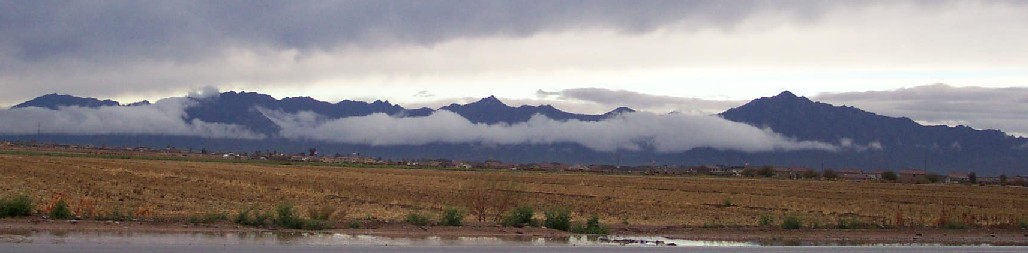
Laveen is a community in Maricopa County, Arizona, located in the southwestern part of the Phoenix metropolitan area with a population of roughly 40,000. The neighborhood blends historic agricultural roots with newer suburban development, and retains a noticeably more open, semi-rural feel than many of the surrounding districts of Phoenix. Set at the base of a long ridge of desert mountain, Laveen is best known as a jumping-off point for the sprawling preserve that flanks it to the north, and it sits about ten miles southwest of downtown Phoenix.
The marquee attraction adjacent to Laveen is South Mountain Park and Preserve, one of the largest municipal parks in the United States. The preserve covers tens of thousands of acres of Sonoran Desert and offers more than 50 miles of hiking, mountain biking, and horseback riding trails, as well as a scenic summit road that climbs to Dobbins Lookout for sweeping views of the Valley of the Sun. Visitors can reach the main trailheads and park entrances in just a few minutes from anywhere in Laveen, making it a natural anchor for outdoor-oriented guests.
Roughly ten to fifteen miles to the northeast, downtown Phoenix offers a denser urban counterpoint with sports venues, museums, and a growing arts and dining scene. Highlights within an easy drive include the Phoenix Art Museum, the Heard Museum (celebrating Native American art and culture), Chase Field, and the Footprint Center. A trip from Laveen to the central business district typically takes about twenty minutes by car outside of peak traffic.
A short drive east of Laveen brings guests to the Tempe area and the main campus of Arizona State University, along with the restaurants, nightlife, and Tempe Town Lake waterfront. Closer to Laveen, the area around 51st Avenue and Baseline Road is home to spring training facilities and a stretch of suburban amenities, while Phoenix Sky Harbor International Airport is also conveniently located just a few miles to the north, easing arrivals and departures for short-term rental guests.
Laveen makes a compelling base for short-term rentals because it offers something few Phoenix neighborhoods do: immediate access to a major desert preserve paired with a short, straightforward drive to the region's urban core. Guests can hike a South Mountain summit at sunrise and still make a downtown dinner reservation, a sporting event, or a museum visit the same evening. The community's quieter, more spacious character gives the rental experience a residential feel that contrasts nicely with the denser, hotel-dominated parts of the metro area, while the proximity to the airport and main Valley freeways keeps the rest of central Arizona within easy reach.
Want to know if a property in Laveen is a good investment?
Enter an address to get instant revenue potential and comps.