
Lake Village, Arkansas
Want to see how Lake Village compares to other top cities in Arkansas? Explore all city regulations in Arkansas. →
Lake Village, AR
Very Investor Friendly
STR Regulations for Lake Village, Arkansas
Overview: Are STRs allowed in Lake Village, AR?
- Yes. Based on the sources reviewed, short-term rentals (STRs) are allowed in Arkansas and there are no city‑specific or county‑specific regulations identified for Lake Village (Chicot County). You must comply with applicable state-level rules and general Arkansas laws, including safety standards, insurance, taxes, and any state lodging tax requirements.
How to start a short-term rental business in this market
- Confirm zoning and lawful use. Confirm that the property’s zoning permits short‑term rental use. When city or county rules are absent, default to residential zoning and avoid creating a nuisance. If your property is in an HOA or a planned community (e.g., Lake Chicot Estates/Arkansas City), obtain written HOA approval and follow community rules.
- Classify your STR and scope your business model. Choose between operating your primary residence (Type 1) or a dedicated investment unit (Type 2). See “Regulations for short‑term rentals in Arkansas (state level)” for safety, insurance, and tax implications.
- Obtain required insurance. Arkansas cities that regulate STRs require STR owners to carry commercial general liability and property coverage; standard homeowner policies typically do not meet requirements for operating an STR. Many investors obtain a commercial policy that includes premises liability, fire/dwelling, loss of rental income, and business personal property coverage.
- Secure business licensing and local authorizations. If your city or county requires a business license for STRs, apply and renew annually. Where local portals exist (e.g., Fayetteville’s Citizen Self‑Service portal), file through those channels. Follow the re‑inspection or Certificate of Occupancy renewal cadence required by your jurisdiction.
- Implement safety and building standards. Install smoke alarms on every level and in each sleeping room; install carbon monoxide detectors if the home uses gas or has an attached garage; maintain safe egress, handrails, and guards as required by state code. Where local inspections are mandated, schedule and pass before leasing.
- Register for lodging and sales taxes. Collect and remit state and local lodging taxes (often “hotel/motel” or “HMR” taxes) and applicable sales taxes. If you use major platforms, they may collect and remit on your behalf; otherwise, you are responsible for collection and timely filing. Pricing should anticipate tax obligations.
- Establish operations and guest communications. Publish house rules, quiet hours, occupancy limits, and emergency contacts. Keep all documentation accessible to guests in‑home and online. Build a local contact/manager plan.
- Track regulatory changes and compliance. Subscribe to local government or state STR updates. Schedule license renewals and inspection dates. Maintain a compliance file with insurance, permits, and tax records.
Required documents, permits, licenses, and guidelines
- Business license/STR registration (if applicable in your jurisdiction).
- Proof of ownership or valid lease.
- Commercial general liability and property insurance for the STR operation.
- Smoke alarms and carbon monoxide detectors in required locations.
- Property condition documentation for inspections or re‑inspections where required.
- Lodging and sales tax registration and filings.
- Emergency and local information signage for guests (if required by local ordinance).
Regulations for short‑term rentals in Arkansas (city/county/state)
- State‑level baseline and trends:
- STRs are defined as furnished residential dwellings let for fewer than 30 days. Statewide, cities and counties may impose local rules; Lake Village and Chicot County have no identified city‑ or county‑specific STR regulations.
- Safety: smoke alarms are required; CO detectors are required if gas appliances/heating are present or an attached garage exists.
- Insurance: standard homeowner policies generally are insufficient; AR municipalities with STR rules require proof of commercial liability coverage.
- Taxes: State and local lodging taxes apply; some cities also collect a 2% HMR (Hotel/Motel/Restaurant) tax for STRs (e.g., Fayetteville). Your exact lodging tax rate varies by jurisdiction and should be verified before launch.
- Legislative activity: Arkansas has considered statewide legislation to limit local restrictions on STRs (e.g., Senate Bill 197). Local rules vary, with some cities adopting caps and inspections.
- City‑ and county‑specific rules (for reference only; Lake Village not covered):
- Hot Springs: Residential zone cap of 400 licenses, annual inspections, CO inspections only if occupancy changed from license, no waitlist once cap is met. Non‑residential zones are exempt from the cap (C‑TR, CN, CMU, CG, CBD, IL, IH, IMU) as are HPR/condos recorded before 1/18/2022. Hot Springs publishes a GIS map of STRs and requires signage with local rules and emergency contacts inside each unit.
- Fayetteville: Two STR categories (Type 1: primary residence; Type 2: dedicated STR). Owners must provide proof of commercial liability insurance and register for the city’s 2% HMR tax. Fayetteville issues and renews STR licenses via its Citizen Self‑Service portal and re‑inspection may apply. STR licenses expire annually.
- North Little Rock: Has proposed restrictions/ moratoriums affecting STRs; verify the current status with city authorities before planning any listing.
Contact information for the authority in charge of STRs (Lake Village/Chicot County)
- City of Lake Village (Chicot County seat)
- City Hall: (870) 265‑2973
- Email: cityhall@cityoflav.com (verify with the city for current contacts)
- Chicot County Courthouse: (870) 655‑8630
- For state tax registration and lodging tax questions, contact the Arkansas Department of Finance and Administration (DFA). See links below.
- Short‑Term Rental complaint and hotline (Hot Springs reference): 24‑hour hotline 501‑621‑4665 (not applicable to Lake Village; provided here as an example of local enforcement channels in Arkansas).
Links to source pages
- Weekender Management – Arkansas Short‑Term Rental Laws: www.weekendermanagement.com/arkansas-short-term-rental-laws/
- Steadily – Airbnb & STR Laws and Regulations in Arkansas: www.steadily.com/blog/airbnb-short-term-rental-laws-and-regulations-in-arkansas
- City of Hot Springs – Short‑term Rental Information: www.hotspringsar.gov/1265/Short-term-Rental-Information
- Proper Insurance – Arkansas Airbnb/STR Laws (Fayetteville and Hot Springs): www.proper.insure/airbnb-laws-arkansas/
- Fayetteville – Short‑Term Rentals: www.fayetteville-ar.gov/3801/Short-Term-Rentals
- Arkansas Department of Finance and Administration (DFA) – Hospitality/Tourism Tax Information: www.dfa.arkansas.gov/
- Arkansas Municipal League – Municipal Code Links: www.arkansas.gov/arkansas-united/
- State of Arkansas – Official Tourism/Visit Arkansas: www.arkansas.com/
Notes for STR investors
- With no identified city or county STR rules in Lake Village, default to state safety and tax requirements and any HOA rules that govern short‑term leasing.
- Tax rates and licensing requirements vary by jurisdiction. Confirm local lodging taxes with the DFA and your county/city finance office prior to listing.
- Because regulations change, subscribe to state and municipal updates and monitor local enforcement channels.
What do Airbnb hosts actually earn in Lake Village?
Lake Village hosts earn a median $26,095/year with $117 ADR and 70% occupancy.
Top performers pull in $27,027+ per year.
See the full Lake Village market breakdownNext step
Found a property in Lake Village?
Paste any address and get estimated revenue, cash-on-cash return, and comparable STR performance in under 5 minutes. 3 free analyses per day.
Free brief
Get the free Lake Village STR Investment Brief
Revenue data, top neighborhoods, seasonal trends, and the key regulations for Lake Village, Arkansas in one email.
Lake Village
Market Saturation Score
Photos of Lake Village


Overview of Lake Village
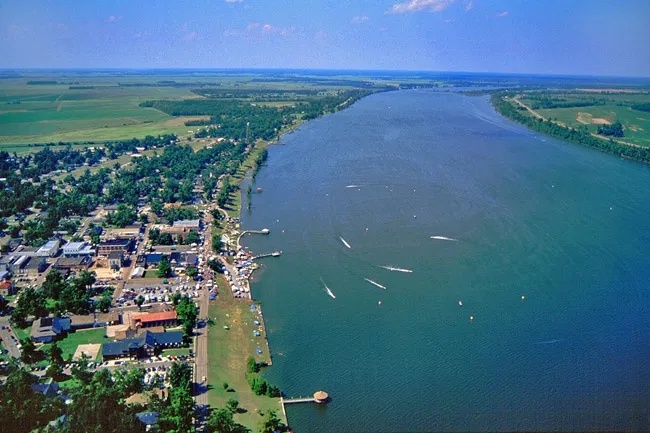
Lake Village is a small city in the Mississippi Delta region of southeastern Arkansas, serving as the county seat of Chicot County. With a population of approximately 2,500 residents, the community has a quiet, unhurried character that reflects its deep ties to the surrounding agricultural landscape and the slow-moving waters of the Mississippi River system. The town is best known as a gateway to Lake Chicot, the largest natural lake in Arkansas and one of the largest oxbow lakes in North America, and it sits roughly 130 miles southeast of Little Rock, the nearest major city.
Lake Chicot and the adjoining Lake Chicot State Park are the central draws for visitors to the area. The roughly twenty-mile-long lake was originally a bend in the Mississippi River that was cut off when the river shifted course, and it now supports excellent fishing for crappie, bass, and catfish, as well as boating and bird-watching along its wooded shoreline. The state park, located just outside town, offers lakeside cabins, a campground, a swimming pool, a marina, and a visitor center with exhibits on the lake's natural history. It is a short drive from nearly any point in Lake Village and provides an accessible base for exploring the surrounding bottomland forests and wetlands.
Just minutes from the heart of Lake Village, the historic Lakeport Plantation offers a window into the antebellum history of the Arkansas Delta. Restored to reflect its mid-nineteenth-century appearance, the Greek Revival-style home is one of the few surviving antebellum houses on the Arkansas side of the Mississippi River and is operated as a museum by Arkansas State University. Visitors can tour the residence and its grounds to learn about the cotton plantation economy, the lives of enslaved laborers, and the families who shaped the region, making it a popular stop for heritage travelers touring the Delta.
To the north and east, the Mississippi River forms the state's border with Tennessee and Missouri, and the riverfront communities, wildlife management areas, and bayous in the surrounding countryside add to the area's appeal for outdoor enthusiasts. The Delta Heritage Trail, a state-maintained rail-trail, passes through the region and offers a flat, scenic route for cyclists and hikers. Across the river in Mississippi, the town of Greenville provides additional dining, riverfront walking, and gaming options, and is roughly a thirty-minute drive from Lake Village.
Lake Village's combination of small-town character, lakefront recreation, and rich Delta heritage makes it a thoughtful base for short-term rental guests seeking a slower, more contemplative side of Arkansas. Travelers who might otherwise overlook the southeastern corner of the state find in Lake Village a place where fishing, history, and the wide horizons of the Mississippi Delta come together within a few hours' drive of larger cities like Little Rock and Memphis.
Want to know if a property in Lake Village is a good investment?
Enter an address to get instant revenue potential and comps.