
Skagway, Alaska
Want to see how Skagway compares to other top cities in Alaska? Explore all city regulations in Alaska. →
Skagway, AK
Very Investor Friendly
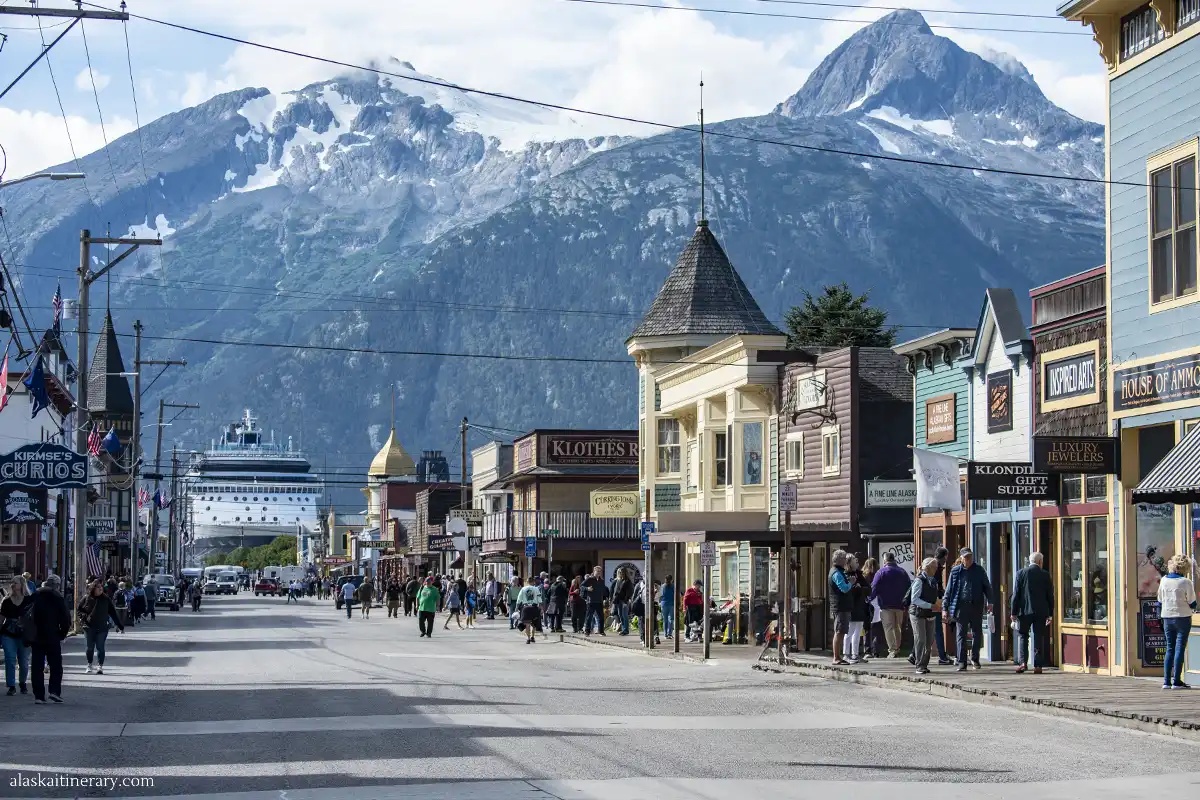
STR Regulations for Skagway, Alaska
Overview: Are short-term rentals allowed in Skagway?
Short-term rentals are explicitly recognized in Skagway’s code and are treated as taxable lodging. The Municipality defines “short-term rental” as an accessory dwelling unit or a room within a dwelling rented for compensation for transient occupancy for a period of less than nine months. Vacation rentals, bed and breakfasts in private homes, and guest rooms in a dwelling are included in that definition. In short, STRs are allowed in Skagway subject to business licensing and sales tax obligations for lodging.
What do Airbnb hosts actually earn in Skagway?
Skagway hosts earn a median $29,487/year with $269 ADR and 55% occupancy.
Top performers pull in $46,137+ per year.
See the full Skagway market breakdownHow to start a short-term rental business in Skagway
- Select the property and determine whether the operation is an accessory dwelling unit, a room within a dwelling, or a guest room, ensuring it fits within the municipality’s definition of a short-term rental.
- Apply for and obtain a local business license. Ordinance No. 24-12 (SMC 5.04) established specific licensing for transient or itinerant businesses and clarifies general licensing requirements.
- Register with the municipality for sales tax. Ordinance No. 18-18 and Ordinance No. 24-12 (SMC 4.08) address lodging taxes, including taxation of overnight accommodation rentals of less than thirty consecutive days and short-term rental tax.
- Set up systems to collect lodging taxes, file returns, and maintain records. Ordinance No. 24-12 outlines collection, return, and enforcement duties.
- Align leases and pricing structures with the definition of short-term versus long-term rentals (nine months or more), ensuring consistent tax and compliance treatment.
- Keep the property compliant with zoning and any building or fire safety requirements that apply to the property’s current classification and intended use.
- Monitor updates to SMC titles 4 and 5 for changes to tax definitions, rates, licensing requirements, or enforcement.
Required documents, permits, licenses, and guidelines
- Skagway Borough business license (general business license; transient or itinerant business licensing may apply under SMC 5.04).
- Sales tax registration for lodging (SMC 4.08).
- Evidence of property ownership or authorization to operate the STR (lease or property management agreement, if applicable).
- Standard lease/rental agreement template with language reflecting short-term rental status and applicable taxes.
- Internal recordkeeping for booking revenue, taxes collected, exemptions, and returns (SMC 4.08.100).
- Compliance records to facilitate investigative procedures (SMC 4.08.130).
Specific regulations for short-term rentals (city and state)
- Definition and scope: Short-term rentals are defined as a single accessory dwelling unit, or a room within a dwelling, rented by or on behalf of the owner for transient occupancy for a period of less than nine months. Vacation rentals, bed and breakfasts in private homes, and guest rooms are included.
- Tax treatment and collection:
- Lodging and STRs are subject to Skagway’s sales tax regime; the code explicitly addresses taxation of overnight accommodation rentals of less than thirty consecutive days (Ord. 18-18) and governs lodging taxes in SMC 4.08 (Ord. 24-12).
- Ordinance No. 24-12 updated definitions for digital and marketplace sales and clarified the taxability of tour product sales, but the core obligations for lodging remain under SMC 4.08 with standard collection, return, and enforcement provisions.
- Business licensing:
- Local business licenses are required; Ordinance No. 24-12 added SMC 5.04.040, specifically creating transient or itinerant business licensing requirements, and clarified license definitions and renewal procedures (SMC 5.04.010, .020, .030).
- Sales tax considerations:
- Ordinance No. 24-12 amended provisions governing levy, rate, exemptions, returns, and collection enforcement in SMC 4.08. While the short-term rental lodging tax treatment is clear, the effective combined rates and exemptions should be verified directly in SMC 4.08 prior to setting pricing.
- Enforcement:
- SMC 4.08 includes investigative procedures, assessments for failure to make returns, enforcement, and bond provisions. Operators should maintain accurate records and timely filings.
- Long-term vs. short-term:
- Long-term residential rentals are defined as nine months or more, and those rentals are exempt from sales tax under the municipality’s sales tax framework. Short-term rentals remain taxable lodging.
Note on state-level rules: The materials provided focus on Skagway’s municipal code and do not specify Alaska state-level lodging or STR regulations beyond the municipal sales tax regime.
Contact information for local authority
- Municipality of Skagway Borough
- Website: www.skagway.org
- Business licensing and tax questions are administered under SMC titles 4 and 5. For direct staff contact, use the Municipality of Skagway website portal listed above.
Source pages
- Ordinance No. 18-18 (short-term rental tax clarification): skagway.municipal.codes/enactments/Ord18-18
- Ordinance No. 24-12 (sales tax and business license updates, including transient or itinerant licensing): skagway.municipal.codes/enactments/Ord24-12
- Chilkat Valley News article (context on long-term rental tax exemption and STR definition): www.chilkatvalleynews.com/2018/09/13/sales-tax-now-exempt-for-renters/
Next step
Found a property in Skagway?
Paste any address and get estimated revenue, cash-on-cash return, and comparable STR performance in under 5 minutes. 3 free analyses per day.
Free brief
Get the free Skagway STR Investment Brief
Revenue data, top neighborhoods, seasonal trends, and the key regulations for Skagway, Alaska in one email.
Skagway
Market Saturation Score
Photos of Skagway


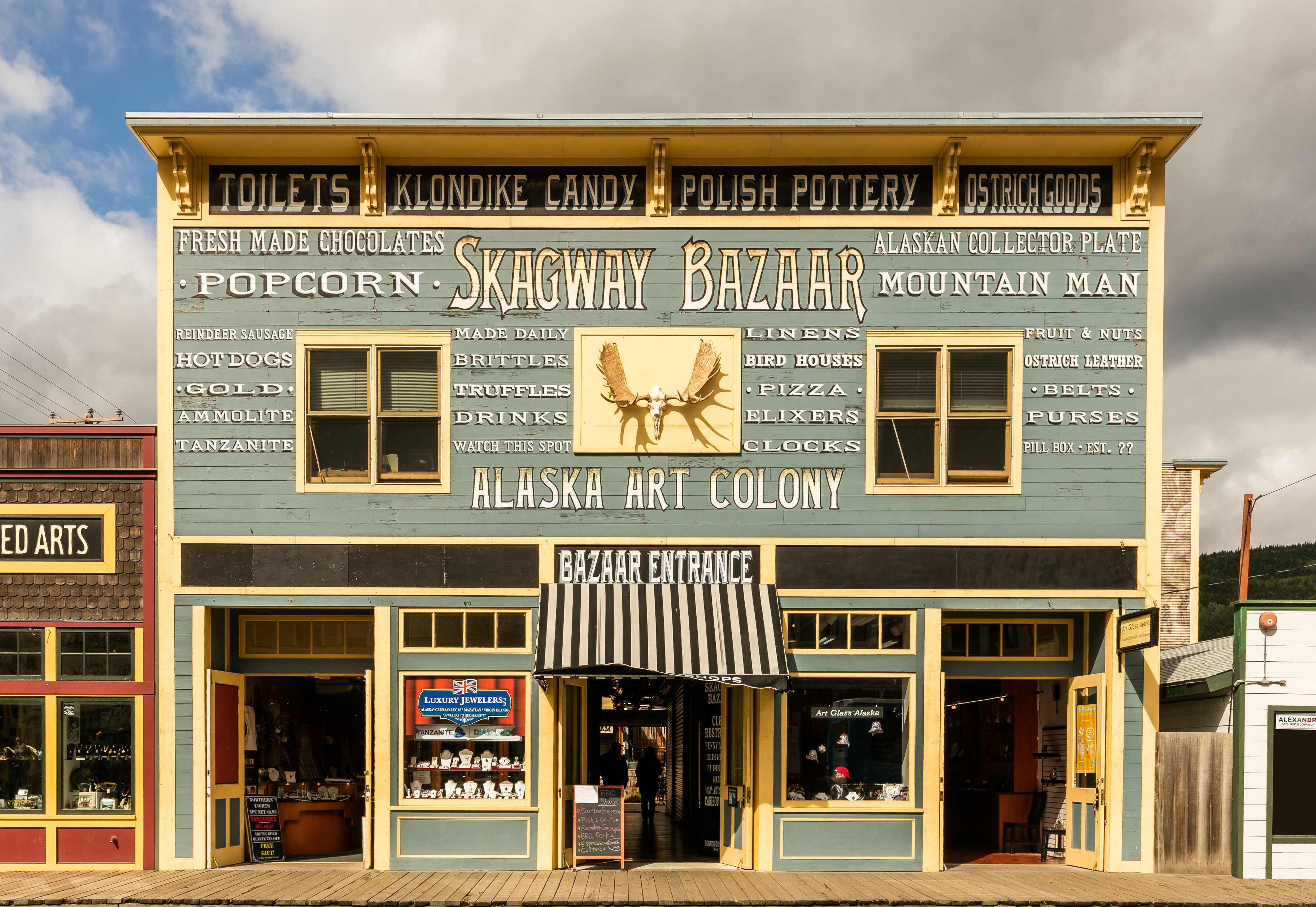
Overview of Skagway
Skagway is a small, historic community tucked into the northern end of Alaska's Inside Passage, organized as the City and Borough of Skagway — a consolidated municipality that functions as its own county-equivalent. The town has a year-round population of roughly 1,200 residents, though that number swells dramatically each summer when cruise ships dock at its deepwater port. Skagway's character is part frontier, part working seaport: weathered false-front buildings line a compact downtown of boardwalk streets, while the surrounding mountains rise straight out of saltwater. It is best known as the northern terminus of the Alaska cruise corridor and as a primary gateway into the Klondike Gold Rush story. The nearest major Alaska city is Juneau, the state capital, which lies about 80 miles to the southeast across the Lynn Canal — close as the crow flies, but reachable only by ferry, small aircraft, or a longer detour through the Yukon.
The Klondike Gold Rush National Historical Park preserves and interprets the 1897–98 stampede that briefly transformed the town into one of the largest settlements in the Alaska territory. The park's visitor center, historic trail remnants, and restored buildings sit within easy walking distance of the cruise docks, making it the most accessible cultural attraction in town. Just a short walk beyond the core, the White Pass and Yukon Route Railroad departs from its depot near the waterfront, climbing the same mountain pass that gold seekers once struggled over with a ton of supplies apiece. The route runs partially into Canada and is one of the most celebrated scenic rail journeys in North America, with vintage parlor cars, open-air observation platforms, and dramatic views of gorges and glaciers.
A short drive north of town lies Dyea, the abandoned rival port to Skagway and the southern trailhead of the Chilkoot Trail. The road ends in a quiet valley of spruce and cottonwood where little remains besides interpretive trails, the old Slide Cemetery, and a sense of the scale of the 1897–98 exodus. Hikers tackling the 33-mile Chilkoot into the Yukon still register at the trailhead near Dyea during the summer season. The surrounding Tongass National Forest, the largest national forest in the United States, frames the entire area and provides a backdrop of temperate rainforest, salmon streams, and bear country that appeals to visitors looking beyond the historic core.
For short-term rental owners, Skagway's appeal is concentrated but powerful: a tiny population, a single dominant draw, and a visitor flow heavily weighted toward the May-through-September cruise season, with a quieter shoulder season of rail and adventure travelers in spring and fall. The combination of walkable Gold Rush history, world-class rail scenery, glacier country within day-trip range, and its role as the southern end of the Klondike Highway into the Yukon gives the town a distinctive identity that doesn't easily compete with the larger Southeast Alaska ports — exactly the kind of focused, story-driven destination where a well-located property can stand out.
Want to know if a property in Skagway is a good investment?
Enter an address to get instant revenue potential and comps.