
Dillingham, Alaska
Want to see how Dillingham compares to other top cities in Alaska? Explore all city regulations in Alaska. →
Dillingham, AK
Challenging To Investors
STR Regulations for Dillingham, Alaska
Note: This guide is for Dillingham (Lake and Peninsula Borough; Dillingham Census Area). City-specific STR registration or licensing requirements were not identified in the provided materials; therefore, the guidance below reflects state-level Alaska law and general regulatory context. Always verify current local rules and requirements with the City of Dillingham and the Lake and Peninsula Borough before listing.
Overview: Are STRs allowed in Dillingham, AK?
Yes. Short-term rentals are allowed under Alaska law. Dillingham-specific ordinances for STR permits or registrations were not identified in the provided sources, and no separate STR license requirements were found. However, STR operators must comply with:
- State landlord-tenant law for rentals that create a landlord-tenant relationship (generally 30+ days and not transient lodging).
- State fire and life safety requirements (e.g., smoke and carbon monoxide alarms).
- Any general business licensing and tax obligations.
- Zoning and local land-use rules (verify with the City of Dillingham and Lake and Peninsula Borough).
If the property is listed/transacted as transient lodging (e.g., stays shorter than seven days, operating like a hotel/motel), the Alaska Uniform Residential Landlord and Tenant Act typically does not apply. For stays at least 30 days, the Act generally governs.
What do Airbnb hosts actually earn in Dillingham?
Dillingham hosts earn a median $10,735/year with $291 ADR and 31% occupancy.
Top performers pull in $23,237+ per year.
See the full Dillingham market breakdownHow to Start a Short-Term Rental Business in This Market
- Confirm zoning and land-use status. Verify with the City of Dillingham and the Lake and Peninsula Borough that short-term lodging is permitted on your parcel. Do not rely on HOA or community covenants without reviewing them; obtain legal advice before listing.
- Decide your operational model and insurance:
- Consider the Alaska Hotel-Motel and Restaurant/Bar Act (AS 08.62) if operating a lodging business; consult the Department of Commerce for licensing.
- Obtain appropriate property/casualty and liability insurance and consider landlord and listing-platform protections.
- Obtain business licenses:
- Alaska Business License: required for any business in Alaska. Apply via MyAlaska Business Online Center (business.alaska.gov).
- Dillingham City Business License (City of Dillingham requires many business activities to be licensed; contact the City Clerk at (907) 842-5214 or city.clerk@dillinghamak.us).
- If applicable, consider Alaska professional or occupational licensing for real estate-related services; consult the Department of Commerce.
- Taxes and reporting:
- Sales tax and state reporting obligations may apply to lodging services and fees; register through the Department of Revenue (tax.alaska.gov).
- Maintain detailed records of gross receipts, refunds, refunds, and local taxes.
- Safety and compliance:
- Install and maintain smoke alarms and carbon monoxide detectors per AS 18.70.095; ensure fire safety and habitability consistent with state law (e.g., AS 34.03.100).
- Financial and tenant frameworks:
- If the stay is 30 days or more and not a transient lodging arrangement, follow Alaska’s Uniform Residential Landlord and Tenant Act (AS 34.03.010–380).
- Property and building checks:
- Confirm property tax status and any borough-level requirements with the Dillingham Census Area (Lake and Peninsula Borough Assessor—verify the correct assessor’s contact via the borough; not provided in sources).
- Listing platforms:
- Review host/owner agreements and any “community rules” applicable to STR platforms.
Required Documents, Permits, Licenses, and Guidelines
- State:
- Alaska Business License (required to operate any business in Alaska).
- Sales tax/motel tax registration as applicable (Department of Revenue).
- Any applicable professional or occupational licenses if operating a lodging business (Department of Commerce).
- Local:
- City of Dillingham Business License (contact City Clerk).
- Verification of zoning compliance for STR use (City of Dillingham; Lake and Peninsula Borough).
- Property and operations:
- Insurance: property/casualty, general liability, host protection (as applicable).
- Safety equipment: smoke alarms and CO detectors per AS 18.70.095.
- Rental agreements:
- For transient lodging: use concise occupancy terms and clear house rules; ensure compliance with applicable lodging statutes.
- For 30+ day tenancies: comply with the Alaska Landlord and Tenant Act; include required disclosures (e.g., premises condition statement; security deposit terms; lead-based paint disclosures for pre-1978 housing).
- Operational policies:
- Refund/cancellation policy and guest screening criteria.
- Fire safety and emergency procedures; contact information for local emergency services.
- Trash, noise, occupancy, and parking rules consistent with local ordinances.
Specific Regulations: Short-Term Rentals (City, County/Borough, and State)
- State—Landlord and Tenant Act (AS 34.03):
- Applies when there is a landlord-tenant relationship (typically 30+ days and not transient lodging).
- Key provisions:
- Premises fit and habitable; common areas safe; utilities maintained; removal of waste (AS 34.03.100).
- Required premises condition statement and inventory for move-in/move-out (statutory framework; see PUB-30).
- Security deposits: generally limited to two months’ rent plus an additional pet deposit as permitted; held in trust; itemized accounting within specified time frames (AS 34.03.070).
- Notice periods:
- Month-to-month: 30 days for termination or rent increases (AS 34.03.290).
- Week-to-week: 14 days (AS 34.03.290).
- Nonpayment: 7-day notice (AS 34.03.220).
- Substantial damage, nuisance/illegal activity: 5-day or shorter notices as specified (AS 34.03.220).
- Access: 24-hour notice required for non-emergency entry (AS 34.03.140).
- Evictions (F.E.D.): court-ordered only; consult the Alaska Court System booklet CIV-720 (Eviction).
- Retaliation and discrimination: illegal under state law; Anti-retaliation provisions (AS 34.03.310).
- State—Fire and Life Safety:
- Smoke and carbon monoxide detection devices must be installed and maintained per AS 18.70.095.
- Alaska has a statewide fire code; many communities adopt local codes—confirm with the City of Dillingham.
- Transient lodging:
- The Landlord and Tenant Act generally does not apply to rooming houses, hotels, motels, or temporary housing. STRs marketed as transient lodging typically fall outside the Act, but remain subject to health, safety, and local codes. STRs resembling tenant arrangements (e.g., 30+ days) are covered by the Act.
- Local—Dillingham/Lake and Peninsula Borough:
- City business licensing requirements may apply (contact City Clerk for details).
- Zoning and land-use rules for STRs are not specified in the provided materials; verify locally. Borough-level property taxation applies.
- Federal:
- Lead-based paint disclosures and requirements for pre-1978 housing (see definitions and disclosure provisions in PUB-30).
- Fair housing protections apply to residential rental activity; consult the Alaska State Commission for Human Rights.
Contact Information (Local Authority in Charge of STRs)
- City of Dillingham
- Phone: (907) 842-5214
- Website: www.dillinghamak.us
- Notes: No separate STR registry found in provided sources; verify zoning and local business licensing requirements.
- Lake and Peninsula Borough (Dillingham Census Area)
- Website: www.lakeandpeninsula.org (verify current contact details for planning/zoning and assessor)
- State—Business and Tax
- Alaska Department of Commerce: MyAlaska Business Online Center (business.alaska.gov)
- Alaska Department of Revenue (Tax): tax.alaska.gov
- Legal and Fair Housing
- Alaska State Commission for Human Rights
- Address: 800 A Street, Suite 204, Anchorage, AK 99501-3669
- Complaint Hotline: (800) 478-4692 (toll-free)
- TTY/TDD: 711
- Office Line: (907) 276-7474
- Fax: (907) 278-8588
- Website: humanrights.alaska.gov
- Alaska State Commission for Human Rights
- Utilities and Emergency
- Bristol Bay Telephone Company (wireless and VOIP services): www.bbtc.com
- Alaska Power & Telephone Company (electric, telephone, internet): www.aptd.com
- Dillingham Airport Information: www.flydillingham.com
- Dillingham City Phone Directory (general contacts): (907) 842-5214
- Low-income legal assistance (tenant disputes, eviction matters)
- Alaska Legal Services Corporation—Bristol Bay (Dillingham)
- Phone: (907) 842-1452
- Toll-Free: (888) 391-1475
- Website: www.alsc-law.org
- Alaska Legal Services Corporation—Bristol Bay (Dillingham)
Links to Source Pages
- Alaska Court System—Eviction Booklet (CIV-720)
- Alaska Court System—Alaska Landlord and Tenant Act (PUB-30, 10/2018)
Key takeaways:
- STRs are allowed in Dillingham. If operating as transient lodging, the Alaska Landlord and Tenant Act may not apply, but safety, local zoning, licensing, and tax obligations remain. For stays of 30 days or more that create a landlord-tenant relationship, the Act governs obligations such as habitability, security deposits, notice periods, access rules, and eviction procedures.
- City- or borough-specific STR licenses/registrations were not identified; verify current local requirements with the City of Dillingham and the Lake and Peninsula Borough before listing.
Next step
Found a property in Dillingham?
Paste any address and get estimated revenue, cash-on-cash return, and comparable STR performance in under 5 minutes. 3 free analyses per day.
Free brief
Get the free Dillingham STR Investment Brief
Revenue data, top neighborhoods, seasonal trends, and the key regulations for Dillingham, Alaska in one email.
Dillingham
Market Saturation Score
Photos of Dillingham


Overview of Dillingham
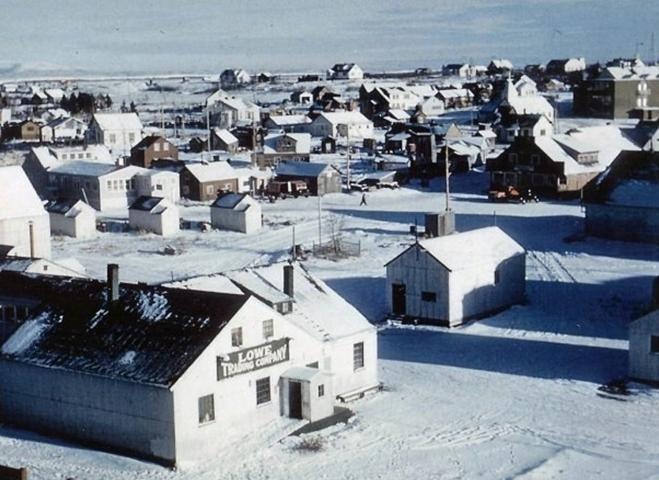
Dillingham is a small coastal city in southwestern Alaska, serving as the borough seat of the Bristol Bay Borough and home to roughly 2,300 residents. The town sits on the shore of Nushagak Bay and carries a strongly working-class, frontier character, shaped by commercial fishing, subsistence traditions, and the rhythms of the salmon runs that draw visitors from across the world. It is best known as the gateway to the legendary Bristol Bay salmon fishery and the vast wilderness of the surrounding tundra and lake country, and it functions as the main supply and transportation hub for dozens of nearby Native Yup'ik villages. The nearest major city is Anchorage, which lies roughly 325 air miles to the northeast; there is no road connection between the two, so most travelers arrive by plane through Dillingham Airport.
Just north of town lies Wood-Tikchik State Park, the largest state park in the United States and one of the largest contiguous protected wilderness areas in the country. The park is accessible from Dillingham via a short drive on a gravel road that reaches the southern lakes, and it offers exceptional opportunities for sport fishing, kayaking, hiking, and wildlife viewing across a chain of glacially carved lakes. Outfitters and lodges in town arrange trips deeper into the park throughout the summer.
The Nushagak and Wood rivers, which empty into Nushagak Bay just outside Dillingham, are renowned for some of the finest king salmon and sockeye salmon fishing on the planet. Anglers come from around the world to wade these rivers during the summer runs, and the town fills with guided clients, sportfishing vessels, and processing operations. Charter boats also head offshore for halibut, while visitors can experience the commercial side of the fishery at the receiving docks during peak season.
To the west and southwest of Dillingham stretches the Togiak National Wildlife Refuge, a vast landscape of tundra, mountains, and rivers that protects moose, caribou, brown bears, walrus, and seabirds. The refuge is generally accessed by small aircraft or boat from Dillingham, and it offers backcountry hunting, photography, and float-trip adventures for visitors prepared for true remote travel.
Dillingham is a compelling base for short-term rentals because it combines genuinely world-class outdoor attractions with the limited supply of accommodations found in rural Alaska. Anglers, hunters, and adventure travelers arriving for the summer season need places to stay, and the town's role as a regional hub means it captures visitors who might otherwise have nowhere to overnight before flying, boating, or driving onward to lodges and trailheads across Bristol Bay.
Want to know if a property in Dillingham is a good investment?
Enter an address to get instant revenue potential and comps.