
Anchorage, Alaska
Want to see how Anchorage compares to other top cities in Alaska? Explore all city regulations in Alaska. →
Anchorage, AK
Generally Investor Friendly
STR Regulations for Anchorage, Alaska
Overview: Are Short-Term Rentals Allowed in Anchorage, AK?
Yes, short-term rentals are explicitly allowed in Anchorage, Alaska under a comprehensive licensing and regulatory framework. The Municipality of Anchorage has established a well-defined short-term rental licensing system that permits properties to operate legally when all requirements are met.
Anchorage defines short-term rentals as residential properties rented for fewer than 30 consecutive days. This explicit authorization includes single-family homes, condos, apartments, and individual rooms in homes, but excludes rentals in commercial or industrial spaces, recreational vehicles, and unfinished living spaces. The city operates one of Alaska's most structured regulatory frameworks for vacation rentals, requiring proper licensing, safety compliance, insurance coverage, and ongoing adherence to operational standards.
The regulatory landscape continues to evolve, with active discussions in 2025 about additional taxation measures and enhanced compliance requirements. Despite these ongoing changes, Anchorage maintains a clear pathway for legally operating short-term rentals within established guidelines.
What do Airbnb hosts actually earn in Anchorage?
Anchorage hosts earn a median $30,553/year with $182 ADR and 65% occupancy.
Top performers pull in $41,876+ per year.
See the full Anchorage market breakdownHow to Start a Short-Term Rental Business in Anchorage
Starting a short-term rental business in Anchorage requires navigating a multi-step process that ensures full compliance with municipal regulations. The following step-by-step approach outlines the essential components for establishing a legal and profitable operation:
1. Research Local Zoning and Property Eligibility
Begin by verifying that your target property is located in a zone that permits short-term rentals. While Anchorage generally allows STRs in residential zones, specific neighborhood restrictions and density limitations may apply. Contact the Municipality of Anchorage Planning and Zoning Department to confirm your property's eligibility and understand any additional neighborhood-specific requirements.
2. Obtain Required State Business License
All short-term rental operators in Alaska must obtain an Alaska Business License from the Department of Commerce, Community, and Economic Development. This $50 annual license establishes your legal business status and serves as a prerequisite for local permits. The application can be completed online through the MyAlaska portal and requires basic business and owner information.
3. Apply for Anchorage Short-Term Rental License
Submit a comprehensive application for the Anchorage Short-Term Rental License through the Planning and Zoning Department. This process involves providing detailed property information, safety inspection certifications, insurance documentation, and payment of applicable fees. The application typically requires 30-45 days for processing, so plan accordingly if you want to begin operations during peak tourism seasons.
4. Complete Required Safety Inspections
Schedule and pass any required safety inspections to verify compliance with Anchorage's building and fire codes. These inspections typically cover smoke detectors, carbon monoxide alarms, fire extinguishers, emergency exit plans, and heating systems appropriate for Alaska's climate.
5. Secure Adequate Insurance Coverage
Obtain commercial liability insurance with minimum coverage of $500,000 per occurrence. Standard homeowner's insurance typically doesn't cover short-term rental activities, making specialized STR insurance policies essential. Consider additional coverage for property damage, loss of income, and Alaska-specific risks like earthquakes and extreme weather events.
6. Establish Local Management Structure
Designate a 24-hour emergency contact person who can respond promptly to guest issues, neighbor complaints, maintenance needs, and compliance matters. This requirement is mandatory for all Anchorage STRs and particularly important for out-of-state property owners.
7. Register for Tax Collection and Remittance
Register with the Municipality of Anchorage Tax Division to collect and remit the 12% room tax on all stays shorter than 30 days. Establish systems for proper tax collection, record-keeping, and monthly filing requirements, even during periods with no rental activity.
8. Develop Operational Standards
Implement comprehensive operational procedures that exceed minimum compliance requirements, including guest screening, noise monitoring, cleaning protocols, and rapid response systems for any issues. This proactive approach helps maintain neighborhood relationships and reduces regulatory scrutiny.
Required Documents, Permits, Licenses, and Guidelines
Operating a short-term rental in Anchorage requires maintaining specific documentation to demonstrate compliance with state and local regulations. The following materials are essential for both initial licensing and ongoing operations:
State-Level Requirements
- Alaska Business License: $50 annual license from the Department of Commerce, Community, and Economic Development
- Proof of Business Registration: Documentation confirming legal business entity status (if applicable)
Municipal Licensing Requirements
- Anchorage Short-Term Rental License: $400 fee, valid for two years
- Property Deed or Ownership Documentation: Proof of legal right to operate the rental
- Detailed Property Information: Address, parcel number, floor plans, and property characteristics
- Fire Safety Inspection Certificate: Verification of compliance with local safety standards
- Insurance Documentation: Proof of minimum $500,000 liability coverage
- 24-Hour Emergency Contact Information: Local contact details for guest and neighbor issues
Compliance Documentation
- Building Code Compliance Certifications: Documentation verifying adherence to municipal building standards
- Zoning Approval Documentation: Written confirmation that STR use is permitted in the property's zone
- Safety Equipment Certifications: Receipts or certificates for smoke detectors, carbon monoxide alarms, and fire extinguishers
- Guest Registration and House Rules: Formal agreements outlining property standards and guest expectations
Tax Registration and Remittance
- Municipal Tax Account Registration: Account establishment with the Anchorage Tax Division
- Room Tax Collection Records: Documentation of 12% bed tax collection and remittance
- Sales Tax Registration (if applicable): Account for 3% sales tax on rental income
- Monthly Tax Filing Documentation: Records of timely tax remittance and supporting financial documentation
Operational Records
- Guest Booking and Communication Records: Documentation of guest interactions and service delivery
- Cleaning and Maintenance Logs: Records demonstrating proper property upkeep
- Complaint Resolution Documentation: Records of any neighbor complaints and corrective actions taken
- Financial Transaction Records: Detailed income and expense documentation for tax and regulatory compliance
Specific Regulations for Short-Term Rentals in Anchorage
Anchorage has implemented comprehensive regulations governing short-term rental operations that cover licensing, operational standards, and ongoing compliance requirements. These regulations reflect the city's balance between supporting tourism accommodation and maintaining neighborhood quality of life.
Licensing and Operational Standards
Short-Term Rental License Requirements
- Mandatory licensing for all properties rented for fewer than 30 consecutive days
- License fee of $400, valid for two years with annual renewal requirements
- Mandatory display of license numbers in all online advertisements and listings
- Processing time of 30-45 days through the Planning and Zoning Department
Insurance Requirements
- Minimum commercial liability coverage of $500,000 per occurrence
- Proof of coverage required for initial licensing and renewal
- Standard homeowner's insurance policies don't satisfy commercial rental requirements
Local Management Obligations
- 24-hour emergency contact requirement for all STR properties
- Local contact must be available to respond to guest issues and neighbor complaints
- Contact information must be prominently displayed in all rental listings
Safety and Building Compliance
Safety Equipment Requirements
- Working smoke detectors in all sleeping areas and common spaces
- Carbon monoxide detectors in properties with fuel-burning appliances
- Fire extinguishers accessible on every floor
- Emergency evacuation plans posted in each unit
- Maximum occupancy limitations based on property size and safety capacity
Building Code Compliance
- Adherence to municipal building codes for residential properties
- Proper heating systems suitable for Alaska's extreme climate conditions
- Electrical and plumbing systems meeting local safety standards
- Regular inspection requirements to maintain compliance
Tax and Financial Obligations
Room Tax Requirements
- 12% room tax on all stays shorter than 30 days
- Monthly filing requirements with the Municipality of Anchorage Tax Division
- Registration with municipal tax authority before beginning operations
- Detailed record-keeping of all rental income and taxable transactions
Sales Tax Requirements
- 3% sales tax on rental income for properties within Anchorage city limits
- Quarterly filing requirements with the municipal tax office
- Integration with existing business tax registration systems
Zoning and Density Restrictions
Residential Zone Limitations
- STRs permitted in most residential zones with specific limitations
- Properties in R-1 zones limited to maximum six guests
- R-2A and R-2M zones allow up to eight guests with adequate parking
- Compliance with neighborhood-specific density requirements
Parking Requirements
- One parking space required for every two guests
- On-site parking must accommodate guest vehicles
- Street parking restrictions may apply in certain neighborhoods
Advertising and Listing Standards
License Number Display
- Municipal license number must appear in all online listings
- Consistent display across all booking platforms (Airbnb, VRBO, etc.)
- Compliance monitoring of major booking platforms
Listing Content Requirements
- Accurate property descriptions and amenities
- Proper pricing disclosure including taxes and fees
- House rules and occupancy limits clearly stated
Contact Information for Local STR Authorities
For questions, applications, and compliance assistance, contact the following Anchorage authorities:
Municipality of Anchorage - Planning and Zoning Department
Address: 4700 Elmore Road, Anchorage, AK 99507
Phone: (907) 343-7925
Email: planning@muni.org
Website: www.muni.org/planning
Hours: Monday-Friday, 8:00 AM - 4:30 PM
Municipality of Anchorage - Tax Division
Address: 632 W 6th Avenue, Suite 440, Anchorage, AK 99501
Phone: (907) 343-6985
Email: tax@muni.org
Website: www.muni.org/finance/tax
Hours: Monday-Friday, 8:00 AM - 4:30 PM
Municipality of Anchorage - Business License Office
Address: 632 W 6th Avenue, Suite 440, Anchorage, AK 99501
Phone: (907) 343-4300
Email: business.license@muni.org
Website: www.muni.org/finance/business-license
Hours: Monday-Friday, 8:00 AM - 4:30 PM
Alaska Department of Commerce, Community, and Economic Development
Address: 550 W 7th Avenue, Suite 1700, Anchorage, AK 99501
Phone: (907) 269-8000
Email: contact@commerce.alaska.gov
Website: www.commerce.alaska.gov
Hours: Monday-Friday, 8:00 AM - 5:00 PM
Municipality of Anchorage - Code Enforcement
Address: 4700 Elmore Road, Anchorage, AK 99507
Phone: (907) 343-4123
Email: code.enforcement@muni.org
Website: www.muni.org/code-enforcement
Hours: Monday-Friday, 8:00 AM - 4:30 PM
Links to Source Pages
- Checkmate Rentals: Alaska Short-Term Rental Regulations (2025)
- Alaska News Source: Rental regulations raise discussion at Anchorage Assembly
- Jaken Finance Group: Anchorage Short-Term Rental Laws 2026
Important Note for Investors: This regulatory landscape continues to evolve, with active discussions in 2025 about additional taxation measures and enhanced compliance requirements. Always verify current requirements with municipal authorities before making investment decisions or beginning operations. The information provided represents current regulations as of the latest available sources, but changes may occur without notice.
Next step
Found a property in Anchorage?
Paste any address and get estimated revenue, cash-on-cash return, and comparable STR performance in under 5 minutes. 3 free analyses per day.
Free brief
Get the free Anchorage STR Investment Brief
Revenue data, top neighborhoods, seasonal trends, and the key regulations for Anchorage, Alaska in one email.
Anchorage
Market Saturation Score
Photos of Anchorage



Overview of Anchorage
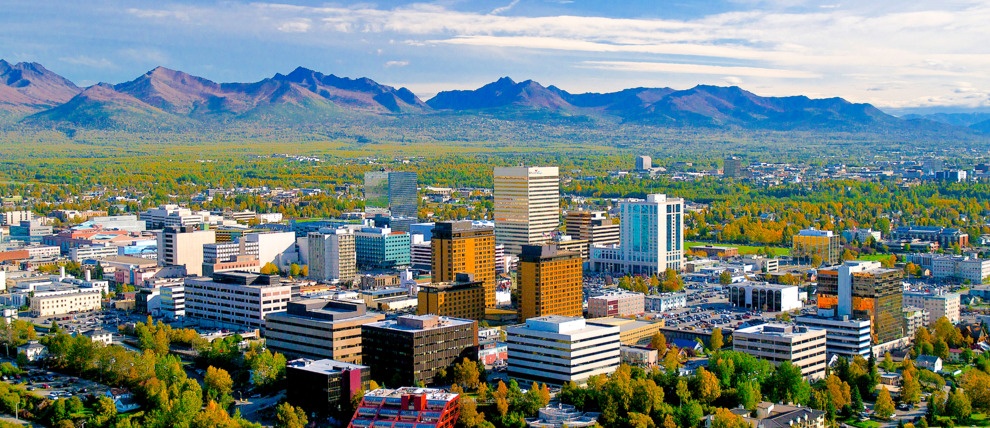
Anchorage is the largest city in Alaska, a consolidated city-borough that hugs the shores of Cook Inlet in the south-central part of the state, with the Chugach Mountains rising dramatically to the east. Home to roughly 290,000 residents, it is by far Alaska's most populous municipality and a rare urban outpost in a state otherwise defined by vast wilderness. Anchorage is best known as a year-round basecamp for adventure travelers, a hub for cruise lines sailing the Gulf of Alaska and the Inside Passage, and a convenient gateway to many of the state's marquee destinations. It sits roughly 360 miles south of Fairbanks and is separated from the contiguous United States by more than 1,800 miles, with Seattle serving as the nearest major lower-48 metropolis.
Just east of the city limits, Chugach State Park — one of the largest urban state parks in the country — offers half a million acres of alpine tundra, glaciers, and boreal forest within an hour's drive of downtown. Locals and visitors head there for front-country hikes such as Flattop Mountain as well as longer backcountry routes, and the park functions as Anchorage's everyday backyard for skiing, snowshoeing, and wildlife watching in every season.
Downtown, the Tony Knowles Coastal Trail follows an eleven-mile paved path along the bluffs of Knik Arm and Cook Inlet, beginning near the city center and running past Earthquake Park to Kincaid Park. In summer it draws joggers, cyclists, and moose-spotting tourists; in winter it transforms into a cross-country ski track with sweeping views across the inlet toward the Alaska Range on clear days.
A short drive north on the Glenn Highway brings travelers to the Alaska Native Heritage Center, where exhibits, films, and full-scale traditional dwellings introduce the cultures of the state's Indigenous peoples. The site is roughly a twenty-minute drive from downtown and offers an important cultural counterpoint to the wilderness-driven itinerary that draws most visitors.
For travelers willing to rent a car, Denali National Park and Preserve is the state's signature longer-distance draw, sitting about four to five hours north of Anchorage along the Parks Highway. The park protects a single colossal mountain — Denali, the tallest peak in North America — along with caribou, grizzly bears, wolves, and a working sled-dog kennel that operates in summer. Many short-term-rental guests book an Anchorage address as a comfortable staging point for one or two nights of city amenities before or after a Denali road trip, or as a launchpad for the rail-and-bus routes that continue into the interior.
Anchorage works particularly well as a short-term-rental market because it pairs genuine urban infrastructure — restaurants, museums, a working harbor, and a busy regional airport — with immediate access to landscapes that feel a thousand miles from anywhere. Summer brings the heaviest demand from cruise passengers, RV road-trippers, and international visitors, while shoulder seasons appeal to skiers, aurora chasers, and winter adventurers. Its dual identity as both a real American city and the front door to Alaska's wilderness gives owners a wide variety of guest profiles to welcome throughout the year.
Want to know if a property in Anchorage is a good investment?
Enter an address to get instant revenue potential and comps.